
Operation Iron Lantern | TMP Covert Ops
There’s something hypnotic about a carousel. The color, the glow, the music — it all feels timeless. So when I arrived at Glen Echo Park, I expected silence and dust. An abandoned amusement park frozen mid-spin. Instead, the air was alive with laughter. Children raced past me, their parents juggling coffee cups and tote bags. The carousel was running, brass poles gleaming, horses prancing like they hadn’t aged a day since 1921.
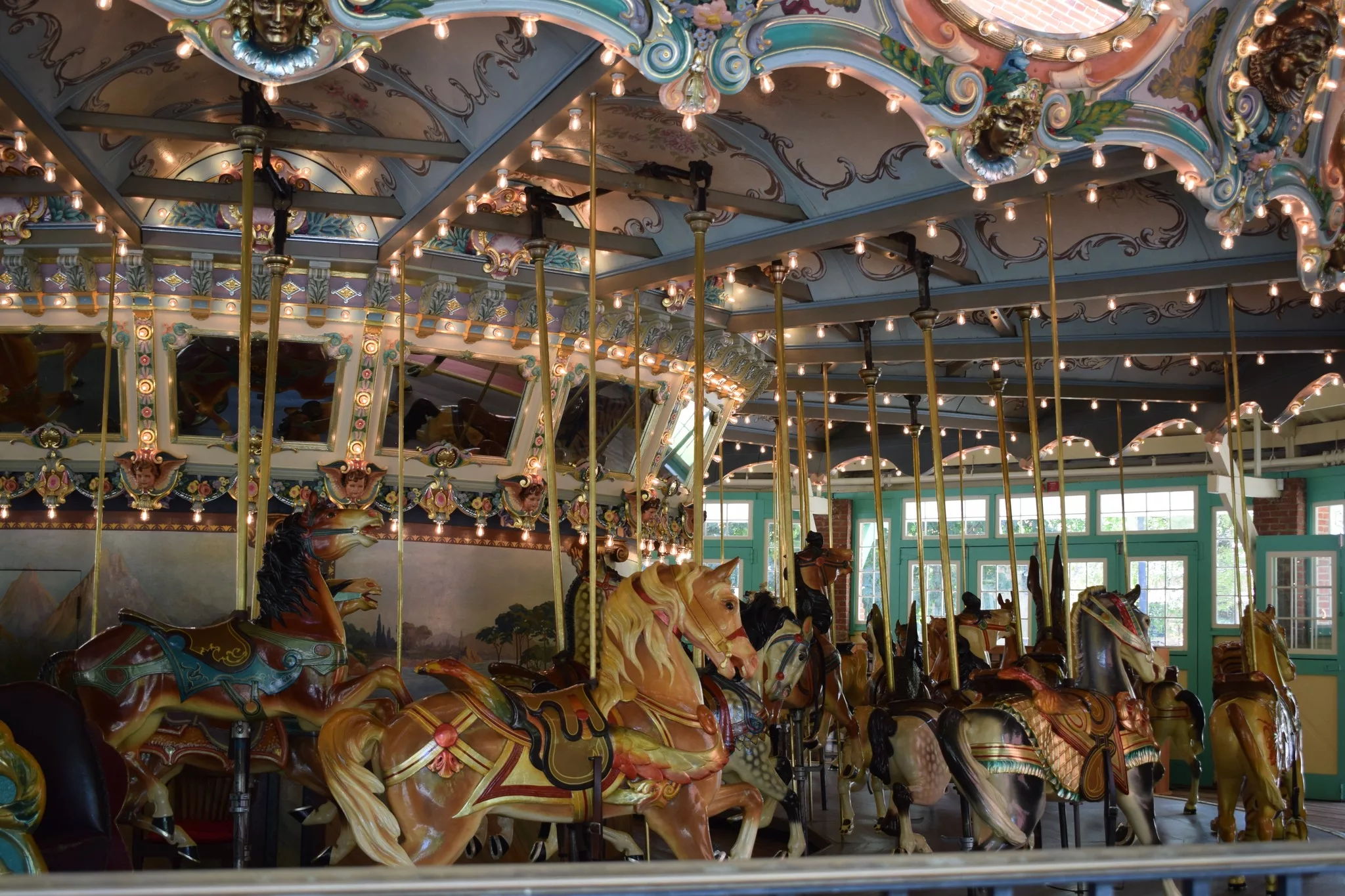
It was beautiful. And it threw me off completely.
I had come expecting ghosts — maybe even solitude — but instead, I walked into a space that felt almost willfully cheerful. It took a few minutes before I remembered the real reason Glen Echo had earned a pin on my map. Underneath the paint and the calliope music, this park carries a century of stories — some hopeful, some haunting, and a few that refuse to stay buried.
From Dreams to Thrills
Back in 1891, Glen Echo wasn’t meant to be a playground at all. It began as part of the Chautauqua movement — a kind of open-air university where people came to learn, sing, debate, and better themselves. For one bright summer, the bluff above the Potomac buzzed with lectures and lanterns. But idealism doesn’t pay bills. The Chautauqua folded almost as soon as it began, and the land fell silent until a streetcar company saw its potential.
By the early 1900s, Glen Echo had reinvented itself as a full-blown amusement park — roller coasters, midway games, a massive swimming pool, and that now-famous carousel. For decades, it was the summer escape for Washington D.C. families. But not all families were welcome.
Segregation at the Turnstile
For nearly fifty years, Glen Echo operated under an unofficial but unyielding rule: white patrons only. Black families could watch from across the road, hear the laughter, maybe even smell the popcorn — but they weren’t allowed through the gate.
That changed one hot afternoon in June 1960, when a group of Howard University students decided enough was enough. Led by Laurence Henry, they bought carousel tickets, linked arms, and tried to ride. They were arrested within minutes, sparking eleven weeks of protests that drew national attention — and plenty of hate. Members of the American Nazi Party even showed up to counter-protest, a chilling reminder of how deep the divide still ran.

But by the next summer, the park had desegregated. A small victory, perhaps, but a powerful one. The echoes of those chants — “We want to ride!” — still seem to hang in the humid air.
Whispers and What-Ifs
History here isn’t neat; it’s layered. There are rumors of cross burnings on nearby fields, and local stories about a tuberculosis ward that never actually existed. Paranormal investigators have spent nights chasing phantom music through the Spanish Ballroom and swear the carousel sometimes starts on its own at 3 a.m.
I can’t confirm any of that. But I can tell you there’s a weight to this place — a vibration under the laughter, like history humming in the floorboards.
Decay, Renewal, and Reckoning
The amusement park finally shut its gates in 1968. For years, it sat abandoned — windows broken, rides rusting, raccoons patrolling where ticket sellers once stood. Then in the 1980s, the community stepped in to save it. Locals restored the carousel, transformed the buildings into art studios, and reopened the Spanish Ballroom as a performance space.

Today, Glen Echo Park draws more than 400,000 visitors a year. They come for classes, concerts, and family photos — often unaware that this cheerful park once symbolized both exclusion and progress. Maybe that’s part of its magic: it doesn’t hide its past, but it doesn’t live in it either.
Echo’s Corner
Did You Know?
The 1960 protests at Glen Echo led directly to a landmark Supreme Court case: Griffin v. Maryland (1964). The Court ruled that the arrests made during the sit-ins violated the protesters’ rights under the Fourteenth Amendment — setting a precedent for future civil rights demonstrations across the country.
Visiting Glen Echo Park
📍 Address: 7300 MacArthur Blvd, Glen Echo, Maryland
🕰️ Hours: Open year-round; carousel operates seasonally (May–September)
💵 Admission: Free; carousel rides are ticketed
🎨 Today’s Focus: Arts, music, dance, and community events
🌙 Pro Tip: Visit at golden hour — the light through the carousel windows is hauntingly beautiful.
Reflection
For me, Glen Echo Park wasn’t the abandoned relic I expected — but maybe that’s the point. History doesn’t always announce itself in decay. Sometimes, it hides beneath the laughter of children and the hum of a century-old carousel, waiting for someone willing to listen.

🕯️ Operation Iron Lantern: Mission Log
Glen Echo Park was Stop #5 in my first TMP Covert Ops journey through Maryland — a classified side quest carved between conference calls. Not haunted in the way I imagined, but haunted all the same.
Join Ki and Dusty as they uncover the strange, sacred, and sometimes spooky across the South — one backroad at a time.
→ Subscribe for field notes, new videos, and the next mission drop straight to your inbox.
If you see this after your page is loaded completely, leafletJS files are missing.