
An adventure I missed, a memory they brought home.
Some of the most memorable places from our travels are the ones we experienced firsthand. We remember the scenery, the sounds, the unexpected discoveries, and sometimes the mishaps that become stories of their own.
But occasionally, a place becomes part of our travel history even when we never actually visit it.
La Torre de Piedra, also known as the Santa Ana Observation Tower, is one of those places for me.
During our family trip to Puerto Rico in May 2016, I broke my ankle shortly after visiting the Río Camuy Cave Park. And when I say broke my ankle, I don’t mean a minor fracture that required a little rest.
I did a spectacular job of it.
While I was recovering, my son and his Grampa continued exploring Puerto Rico. One of their destinations was a remarkable stone tower perched high in the mountains of western Puerto Rico.
I wasn’t there to climb its stairs or admire the view. But they brought home sixteen photographs documenting their visit on May 28, 2016.
And nearly ten years later, those photographs led me to discover the fascinating history behind this unusual landmark.
A Stone Tower Hidden in Puerto Rico’s Mountains
Deep within the mountainous landscape of western Puerto Rico lies Maricao State Forest, a protected area encompassing approximately 10,800 acres across portions of Maricao, San Germán, and Sabana Grande.
Established as a forest reserve in 1919, it is the largest state forest in Puerto Rico.
The landscape is characterized by forested mountains, winding roads, and sweeping views across the island’s western interior.
And tucked away among those mountains stands a structure that looks remarkably like a miniature medieval castle.
La Torre de Piedra.
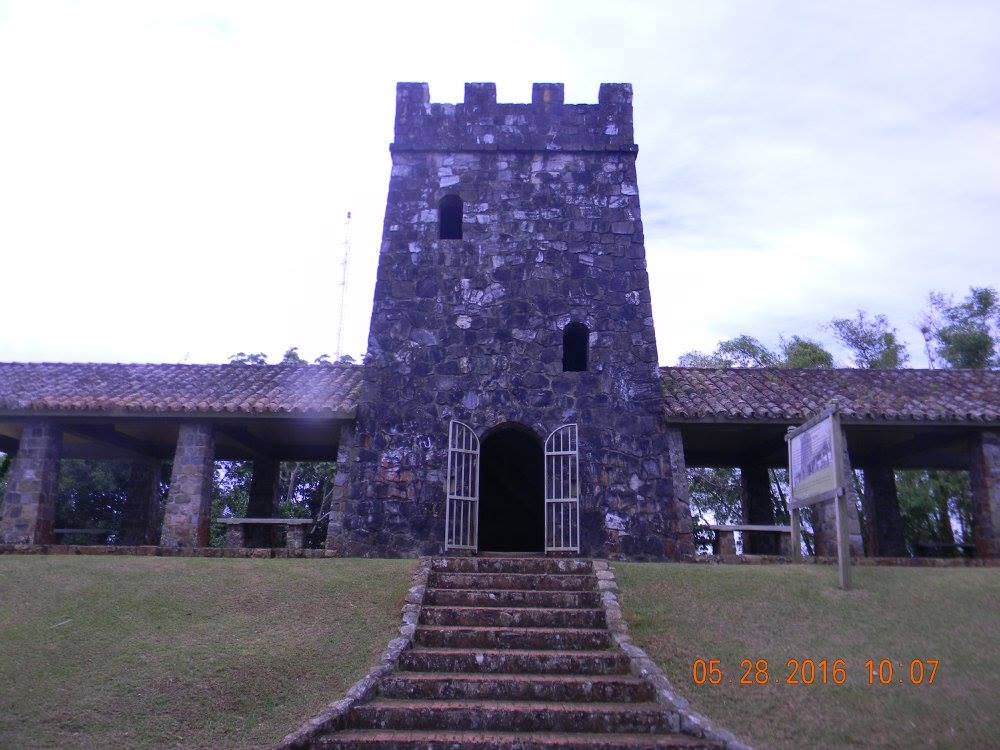
The tower, officially known as the Santa Ana Observation Tower, stands approximately thirty feet tall. Its heavy stone walls, narrow windows, and castle-like battlements give it an appearance quite unlike the observation platforms visitors might expect to encounter in a forest.
But its most impressive feature isn’t necessarily its height.
It’s the location.
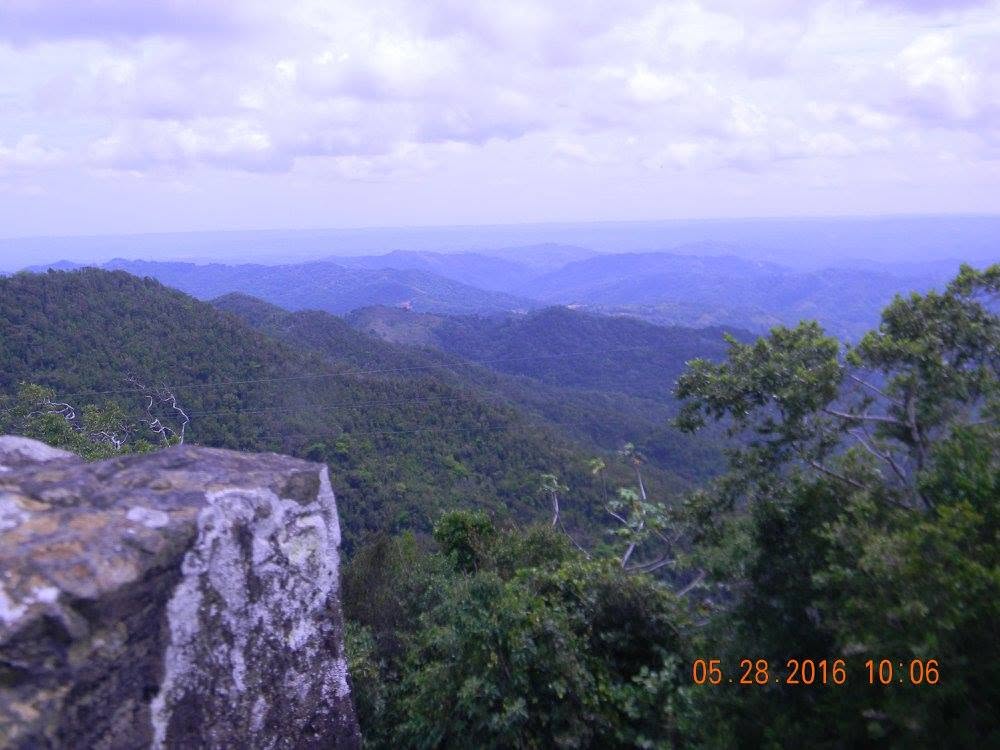
Perched high on Santa Ana Peak, the tower overlooks a landscape of mountain ridges and forested valleys stretching toward the horizon.
Judging by the photographs my son and his Grampa brought home, the scenery was spectacular.
But the tower wasn’t built simply to provide visitors with a beautiful view.
Its history reaches back to one of the most difficult periods in American and Puerto Rican history.
The Great Depression and Puerto Rico’s New Deal
During the 1930s, the Great Depression devastated economies around the world.
Puerto Rico was particularly vulnerable.
The island’s economy relied heavily on agriculture, especially sugar and coffee production, and widespread poverty had already created difficult living conditions for many families.
As the Depression deepened, unemployment and economic hardship became even more severe.
In 1933, President Franklin D. Roosevelt introduced the New Deal, a collection of federal programs intended to provide economic relief, create employment opportunities, and stimulate recovery.
Among those programs was the Civilian Conservation Corps, commonly known as the CCC.
The program employed men to undertake conservation and public improvement projects, including planting trees, constructing roads, developing parks, and building recreational facilities.
Across the United States, CCC workers helped create infrastructure that continues to serve visitors generations later.
And the program extended to Puerto Rico.
On the island, the Civilian Conservation Corps became known as Las Tres C, or the Three Cs.
Eligibility requirements were adapted to local economic circumstances, allowing some older and married men to participate.
Approximately thirty CCC camps operated across Puerto Rico during the program’s existence.
Their work helped improve the island’s forests, protect natural resources, and develop recreational areas.
One of those areas was Maricao State Forest.
Building La Torre de Piedra
Although Maricao had been established as a forest reserve in 1919, the arrival of the Civilian Conservation Corps brought additional development to the area.
Workers constructed roads, improved trails, and created facilities that made the forest more accessible to visitors.
Among their projects was an observation tower on Santa Ana Peak.
An earlier lookout structure had occupied the site, but in 1940, the CCC completed a more permanent replacement.
The Santa Ana Observation Tower.
Built with stone, the structure was designed to complement its rugged mountain surroundings while providing visitors with an elevated viewpoint.
Its architectural classification is associated with the Bungalow/Craftsman style, a design approach commonly found in New Deal-era recreational buildings.
But the tower also features something unexpected.
Battlements.
Those squared stone projections along the roofline give the building the appearance of a small fortress.
And honestly, if you’re going to build an observation tower on top of a mountain, why not make it look like a castle?
The surrounding picnic shelters, with their tiled roofs and stone supports, complement the tower’s distinctive appearance.
Together, these structures created more than a simple lookout point.
They created a destination.
A place where visitors could stop, enjoy the mountain scenery, and experience the natural beauty of Puerto Rico’s interior.
More than eighty years later, that’s exactly what my son and his Grampa went there to do.
Inside the Santa Ana Observation Tower
One of the things that caught my attention while reviewing their photographs was the tower’s interior.
The stone walls are thick and rugged, with narrow windows allowing light to enter the structure.
A staircase leads upward toward the observation deck.
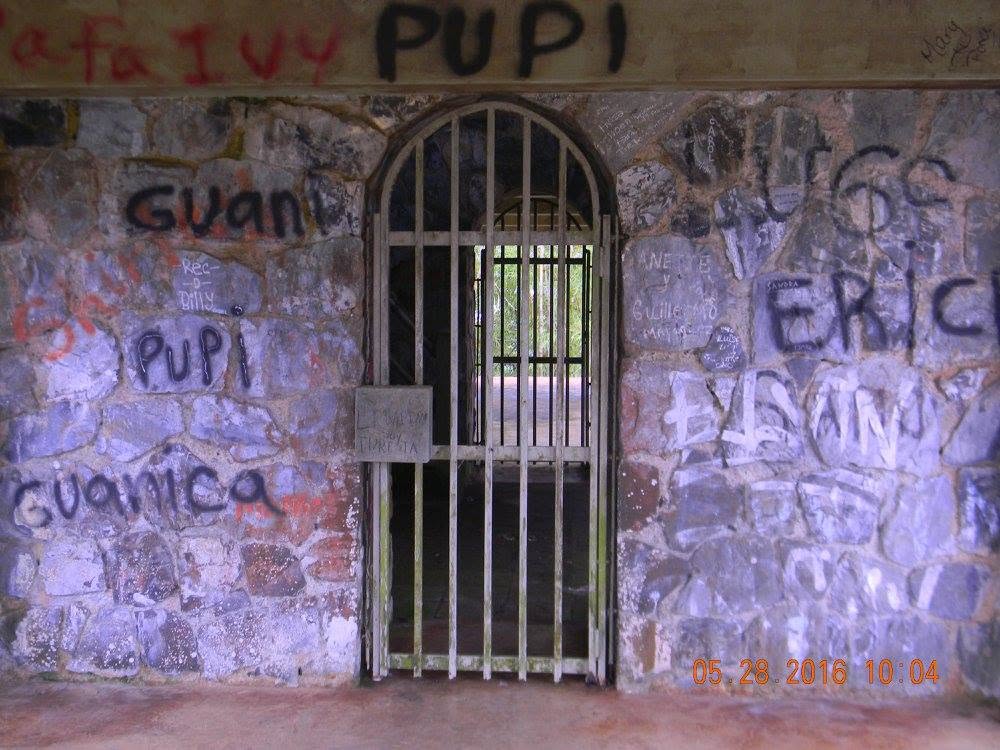
The photographs show the interior stonework, stairway, and views looking down through the building.
They also document something less appealing.
Graffiti.
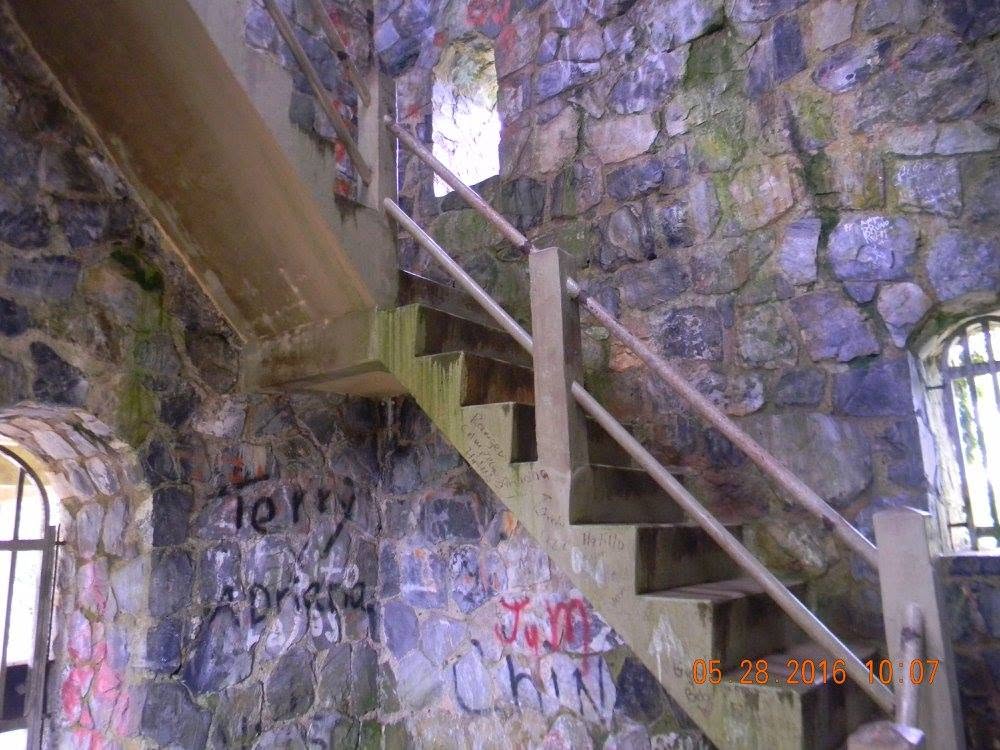
By the time my son and his Grampa visited in 2016, portions of the tower’s interior had been covered with names, markings, and other graffiti left by previous visitors.
It’s unfortunate to see a historic structure treated that way, particularly one built through the labor of conservation workers during the Great Depression.
But those photographs also provide an honest record of how the tower appeared during their visit.
Historic preservation isn’t always about documenting places at their most beautiful.
Sometimes it’s about documenting them as they actually exist.
And despite the graffiti, the tower’s craftsmanship remains evident in the stonework and architectural details.
The View from Santa Ana Peak
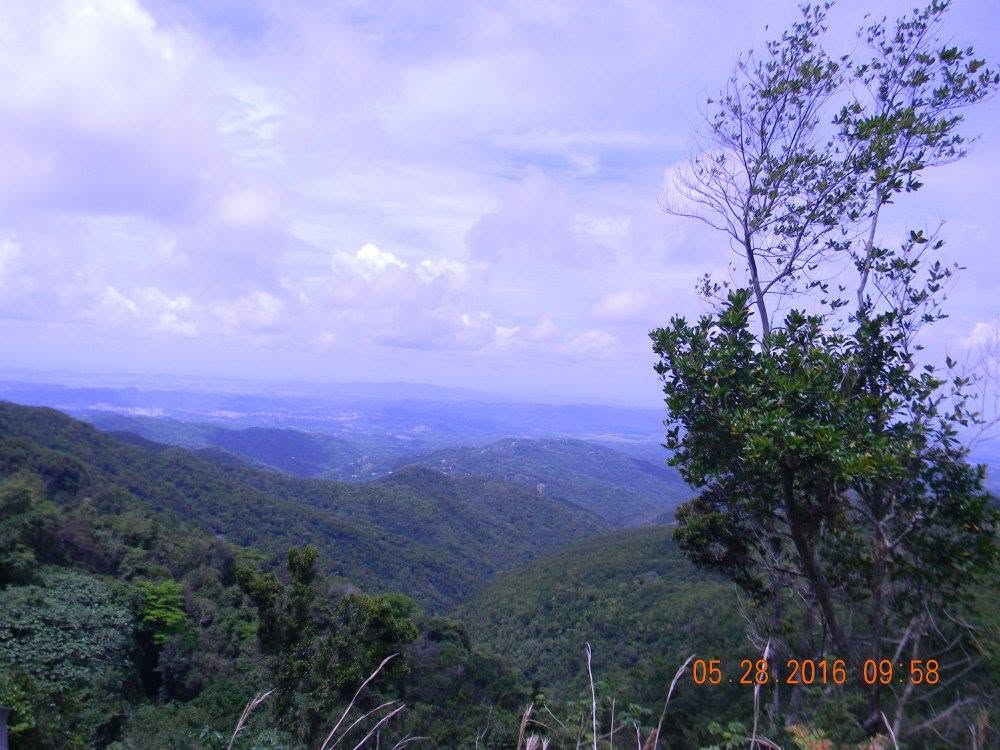
The reward for climbing the Santa Ana Observation Tower is the surrounding landscape.
From its elevated position, visitors can look out across the forested mountains of western Puerto Rico.
On particularly clear days, views may extend toward the island’s western and southern coastal regions.
The photographs from May 28, 2016, capture mountain ridges fading into the distance beneath a partly cloudy sky.
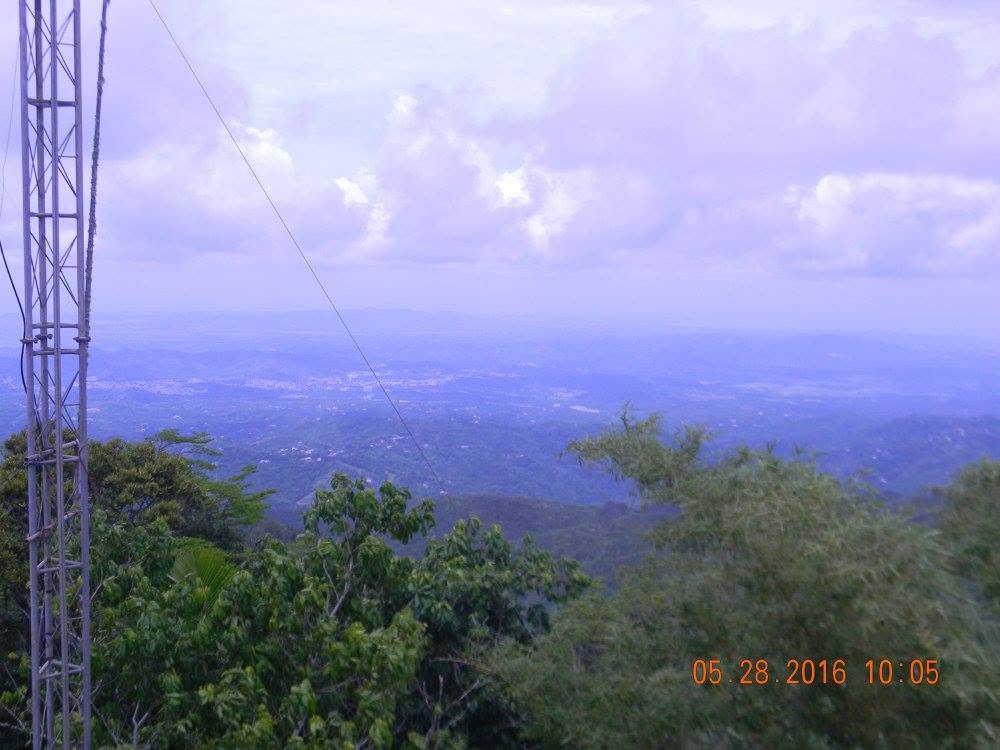
Some show the scenery framed by trees, while others reveal broad stretches of the surrounding countryside.
And then there’s one photograph that makes me smile.
My son, sitting on top of the tower’s stone battlements.
Apparently, while I was recovering from a rather unfortunate encounter with gravity, he was perfectly comfortable perched high above the ground.
I’m going to assume Grampa had everything under control.
Because that’s the version of the story that allows me to sleep at night.
Maricao State Forest: More Than a Scenic Destination
Although La Torre de Piedra is one of the forest’s recognizable historic landmarks, Maricao State Forest has importance beyond its recreational attractions.
The forest protects a diverse mountain ecosystem and provides habitat for numerous native plant and animal species.
It is particularly significant for bird conservation.
Among the rare birds associated with Puerto Rico’s forests is the endangered Puerto Rican Sharp-shinned Hawk, a small bird of prey whose survival depends on the protection of suitable forest habitats.
Maricao’s mountainous terrain and varied elevations support a range of ecological communities.
The forest also helps protect important watersheds.
These environmental benefits reflect the broader purpose of the conservation work undertaken during the New Deal era.
The Civilian Conservation Corps wasn’t simply building attractions for visitors.
Its workers were helping protect natural resources, restore landscapes, and create public spaces that could be enjoyed by future generations.
La Torre de Piedra remains one of the most visible reminders of that work.
A Historic Landmark Recognized in 2016
On May 1, 2016, the Santa Ana Observation Tower was added to the National Register of Historic Places.
The listing recognized the structure as part of the broader history of New Deal-era construction in Puerto Rico’s forest reserves.
Its official National Register name is simply Observation Tower.
The designation acknowledged the tower’s historical significance and its connection to the Civilian Conservation Corps.
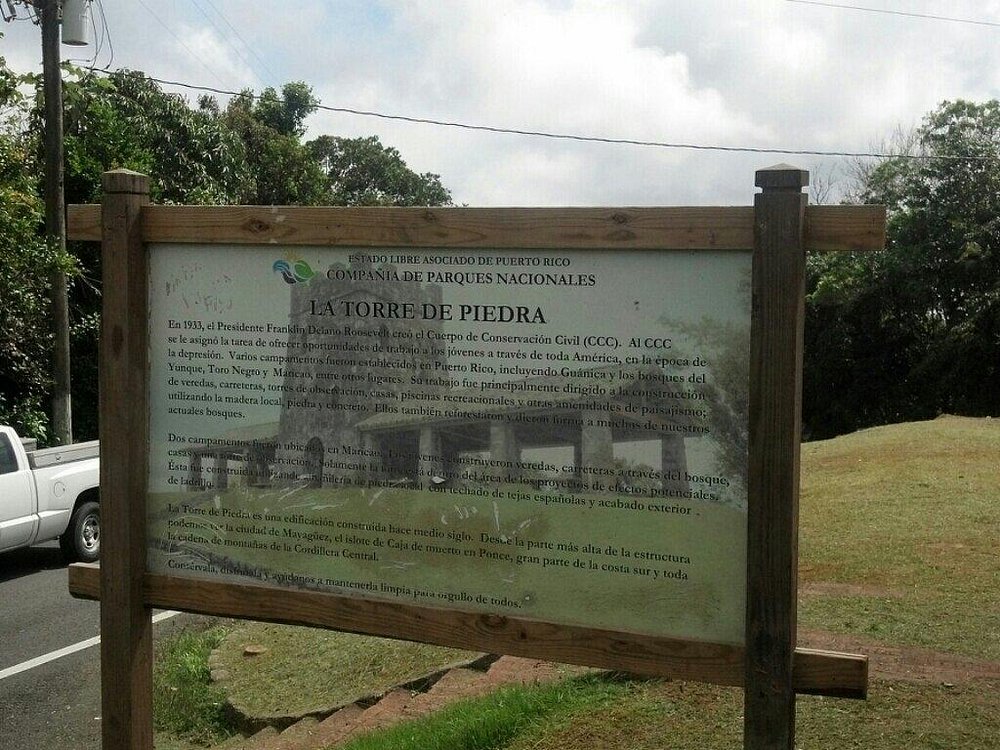
And there’s an interesting coincidence in our family’s travel timeline.
My son and his Grampa visited on May 28, 2016.
Less than a month after the tower received its National Register listing.
I doubt either of them realized that when they stopped to explore.
They were simply enjoying another day in Puerto Rico.
But that’s one of the wonderful things about revisiting old travel photographs.
Sometimes the history behind a place becomes even more meaningful years after the original visit.
An Adventure That Continued Without Me
When I think back on our 2016 Puerto Rico trip, breaking my ankle certainly wasn’t part of the itinerary.
There were places I wanted to visit, experiences I wanted to share, and adventures I had been looking forward to.
Instead, I spent much of the remainder of the trip recovering while my family continued exploring.
And while I missed some remarkable places, my son gained something valuable.
Time with his Grampa.
They traveled around the island together, discovered new destinations, and created memories of their own.
La Torre de Piedra was one of those destinations.
I don’t have a journal entry describing their drive through the mountains.
I can’t tell you what it felt like to climb the tower’s stairs or stand on the observation deck.
And I don’t have firsthand memories of the view.
What I have are sixteen photographs taken on May 28, 2016.
Photographs of a historic stone tower built during the Great Depression.
Photographs of Puerto Rico’s beautiful mountainous landscape.
And photographs of my son enjoying an adventure with his Grampa.
Sometimes that’s enough to preserve a story.
I did eventually make it back out for one more Puerto Rico adventure, although it looked a little different from the ones we’d originally planned. Our visit to Combate Beach became a chance to enjoy the island’s beautiful southwestern coastline while navigating the challenges of traveling on crutches. It certainly wasn’t how I’d imagined spending the remainder of our vacation, but it gave me another memory worth preserving.
Planning Your Own Visit to La Torre de Piedra
If you’re exploring western Puerto Rico, La Torre de Piedra is an interesting destination for travelers who enjoy history, architecture, and scenic mountain landscapes.
Location: Santa Ana Observation Tower, Maricao State Forest, in the Caín Alto area of San Germán, Puerto Rico, near Maricao.
Historic significance: Constructed in 1940 by the Civilian Conservation Corps and listed on the National Register of Historic Places in 2016.
What to expect: A stone observation tower with castle-like battlements, an interior staircase, adjoining picnic shelters, and panoramic mountain views.
Photography opportunities: The exterior stonework, architectural details, surrounding forest, and distant mountain ridges.
Before visiting: Check current forest access conditions, tower availability, and any temporary closures with Puerto Rico’s Department of Natural and Environmental Resources. Access conditions may have changed since our family’s 2016 visit.
Mountain roads can be narrow and winding, so allow additional travel time and use caution when navigating unfamiliar routes.
And while the battlements might look like an inviting place to sit for a photograph, I’d recommend appreciating them from a safer position.
I speak from a certain amount of personal experience regarding gravity.
What Stayed With Me
There are places I’ve visited that I remember vividly.
The sounds, the scenery, the conversations, and the unexpected moments that made the experience memorable.
Some of our Puerto Rico discoveries came with histories I never would have expected, like the Rincón Nuclear Dome, a striking reminder of the island’s experimental nuclear energy past. Others, like La Torre de Piedra, revealed stories of conservation and public works. Different landmarks, different chapters of history, but both reminders that there’s often much more to a place than what we see at first glance.
La Torre de Piedra is different.
I wasn’t there.
But the photographs my son and his Grampa brought home preserved a little piece of our family’s journey.
And years later, researching those photographs introduced me to a history I might otherwise never have discovered.
The story of the Civilian Conservation Corps.
The challenges of the Great Depression.
The conservation workers who helped shape Puerto Rico’s public forests.
And a stone tower that has stood on a mountain since 1940.
What began as an adventure I missed became another story worth telling.
Because travel memories don’t always belong to the person holding the camera.
Sometimes they belong to the people who bring those photographs home.
And sometimes, years later, we get to experience a little of their adventure through the stories those images preserve.
Final Thoughts
La Torre de Piedra is more than a scenic observation tower.
It’s a surviving reminder of the Civilian Conservation Corps and the lasting influence of New Deal-era public works in Puerto Rico.
For generations, visitors have climbed its stairs to admire the mountains and forests stretching across the island’s western interior.
And for our family, it represents a chapter of a vacation that didn’t unfold quite as planned.
I may never have stood at the top of that tower.
But thanks to my son and his Grampa, its story still became part of mine.
And now, nearly ten years later, it’s become part of Travel Made Personal.
Every place has a story. Every journey makes it personal.
🏰 A Forgotten Stone Tower & An Adventure I Missed!
Hidden in the mountains of Puerto Rico stands a remarkable stone tower with a history dating back to the Great Depression. While I was recovering from my spectacularly broken ankle in 2016, my son and his Grampa were off exploring this little piece of history!
This week on Travel Made Personal, we’re revisiting their photographs, uncovering the fascinating story of La Torre de Piedra, and remembering an adventure that continued without me.
📬 Love discovering forgotten history, hidden places, and the personal stories behind our travels? Join the Travel Made Personal mailing list for new adventures, historical discoveries, and stories delivered straight to your inbox!

If you see this after your page is loaded completely, leafletJS files are missing.