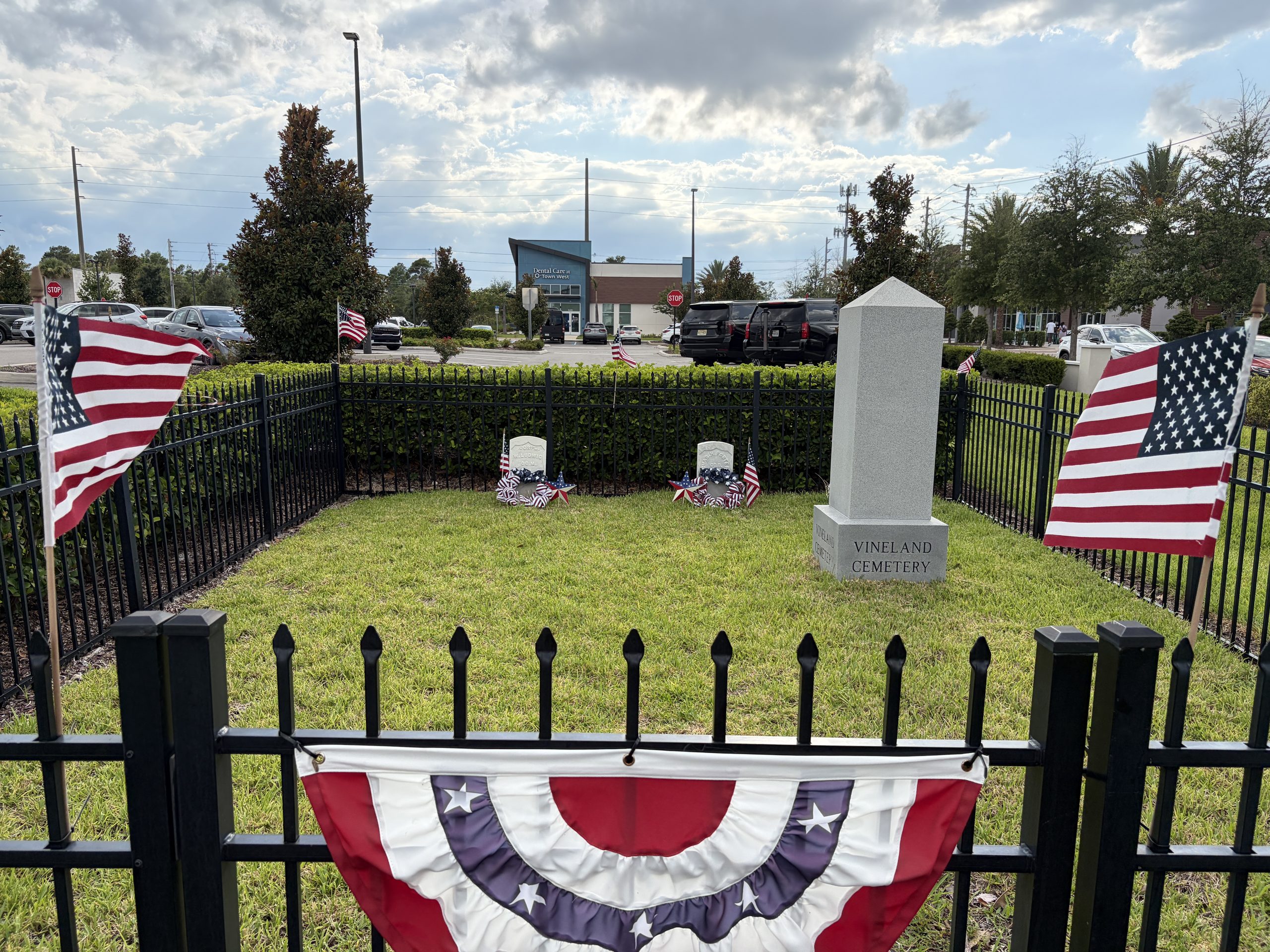
Two Civil War veterans, a forgotten Florida community, and one unforgettable Exploration Friday.
Imagine heading to Publix for a few groceries, pulling into the parking lot, and discovering a cemetery right in front of the store.
Not a historical marker commemorating something that once stood there. Not a decorative monument.
An actual cemetery.
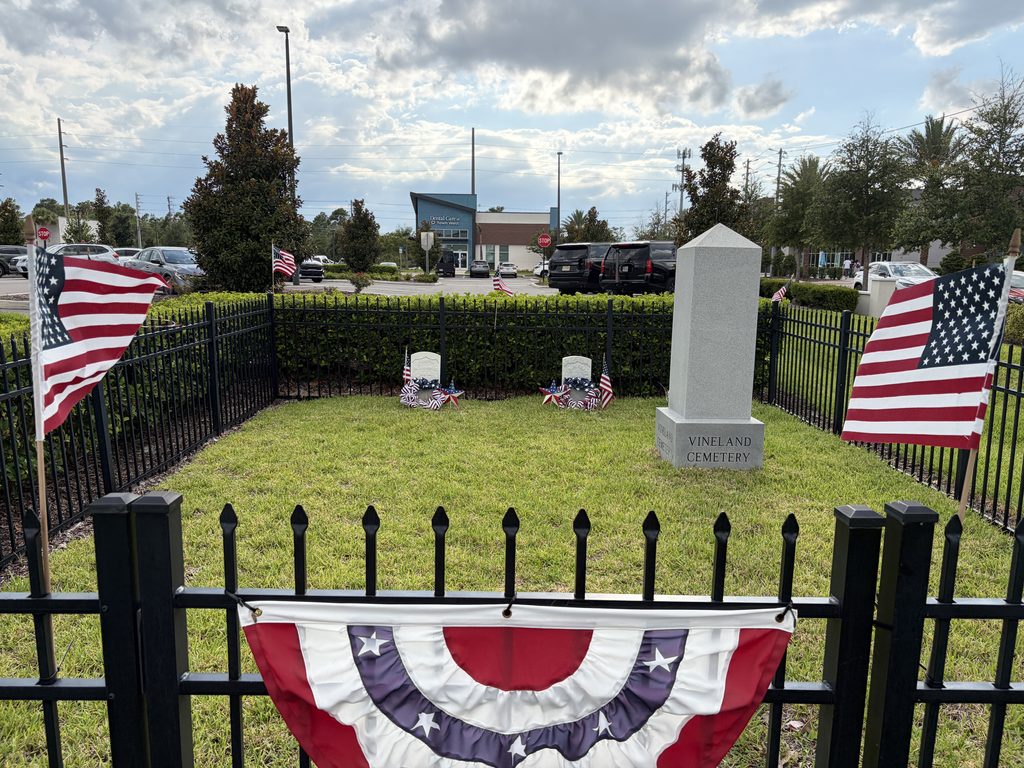
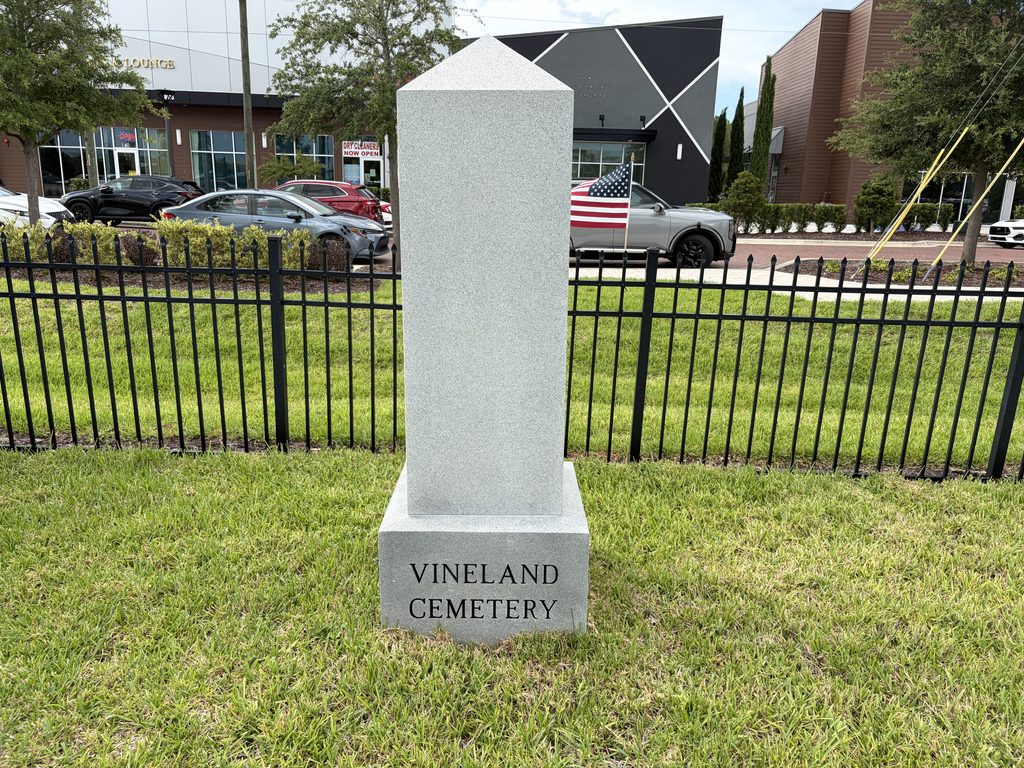
That’s exactly what you’ll find at Vineland Cemetery in Orlando, Florida, where two white military headstones stand behind a black iron fence, surrounded by the parking lots and businesses of modern Central Florida.
At first glance, it seems almost impossible that a cemetery could exist in such an unlikely location. But this tiny burial ground is more than a curiosity. It’s a surviving piece of a community that once called this part of Orange County home.
Long before the surrounding area became a bustling commercial district, there was a town called Vineland.
And while much of that community has disappeared from the landscape, its cemetery remains.
I visited Vineland Cemetery with my best friend, Dusty, during her very first Exploration Friday with me. It was the last stop of a long day filled with ghost towns, unexpected discoveries, and a few adventures we hadn’t planned.
What we found was a beautifully maintained little cemetery with a remarkable history.
And what happened afterward?
Well, let’s just say Dusty managed to make an already memorable day even more unforgettable.
A Cemetery in the Middle of Modern Orlando
Vineland Cemetery is located near Daryl Carter Parkway in the Orlando area, surrounded by modern commercial development.
The burial ground is remarkably small, occupying only about 500 square feet.
A black iron fence encloses a neatly maintained patch of grass. Two white military headstones stand near the back, while a granite monument identifies the site as Vineland Cemetery.
American flags and patriotic wreaths decorated the graves when I visited.
Beyond the fence, there were parked cars, busy roads, businesses, and people going about their everyday lives.
The contrast was extraordinary.
Inside the fence was a quiet reminder of nineteenth-century Florida. Outside it was the constant movement of the twenty-first century.
And if you weren’t specifically looking for this little cemetery, it would be remarkably easy to drive right past it.
That’s one of the things I find so fascinating about places like this.
We tend to imagine historic sites as places surrounded by old buildings, ancient trees, or peaceful countryside. We don’t necessarily expect to find them tucked between parking spaces and shopping centers.
But history doesn’t disappear simply because the world around it changes.
Sometimes, it survives in the most unexpected places.
Before Vineland: A Community Called Englewood
To understand why this cemetery exists, we have to go back to a time when this part of Central Florida looked very different.
In the late nineteenth century, much of the surrounding landscape was rural. Agriculture played an important role in the region, and small settlements developed around farms, roads, and railroad connections.
One of those settlements was associated with a stop on the Florida Midland Railway known as Englewood.
Railroads were essential to many early Florida communities.
Before the highways and transportation networks we depend on today, a railroad connection could determine whether a small settlement prospered or struggled.
It provided a way to transport agricultural products to larger markets, bring supplies into the community, and connect residents to other towns.
Englewood developed within that changing landscape.
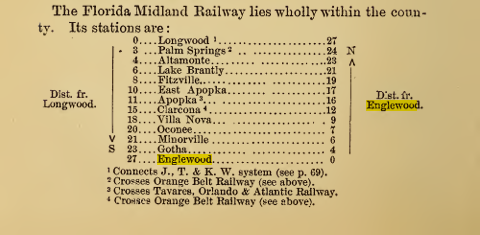
But the name wouldn’t last.
By 1911, the community was known as Orange Center, and a post office opened under that name in 1912.
There was just one problem.
Florida already had a town called Orange City.
According to historical accounts, the similarity between the names caused confusion, prompting another change.
In 1918, the post office was renamed Vineland.
By approximately 1924, the community itself had adopted the name.
And so, the settlement that had begun as Englewood and later became Orange Center was now known as Vineland.
The Florida Town That Slowly Disappeared
Vineland wasn’t a large city, but it was a community where people built their lives.
Historical accounts describe homes, a school, a church, and a railroad depot.
Families lived here. Children attended school. Neighbors formed relationships, celebrated milestones, and experienced the ordinary routines that make a place feel like home.
And like so many small Florida settlements, Vineland’s fortunes were closely connected to the changing transportation and economic landscape.
The community’s post office closed in 1940.
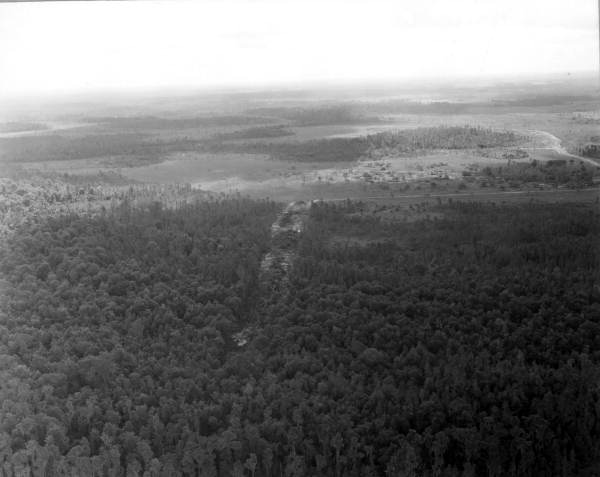
Around 1960, the railroad tracks were removed.
For a settlement whose early development had been tied to the railroad, that represented a significant change.
But an even larger transformation was coming.
During the late 1960s and early 1970s, Central Florida began changing dramatically as Walt Disney World took shape and the surrounding region experienced tremendous growth.
New roads, hotels, businesses, residential developments, and shopping centers transformed the landscape.
The quiet agricultural communities of old Florida increasingly gave way to a rapidly expanding metropolitan area.
Over time, much of Vineland’s original physical landscape disappeared beneath modern development.
Today, the name survives on roads such as Apopka-Vineland Road and Winter Garden-Vineland Road.
Those names are little reminders that the modern landscape wasn’t always what we see today.
And then there’s Vineland Cemetery.
A small piece of the community’s past that somehow survived.
Two Union Civil War Veterans Rest Here
At the back of Vineland Cemetery stand two white military headstones.
Both belong to veterans of the American Civil War.
The first marks the grave of Corporal Washington Ludwig, who served with the First New York Light Artillery.
The second belongs to Charles H. Foster, who served in Company B of the Third Massachusetts Cavalry.
Both men served the Union.
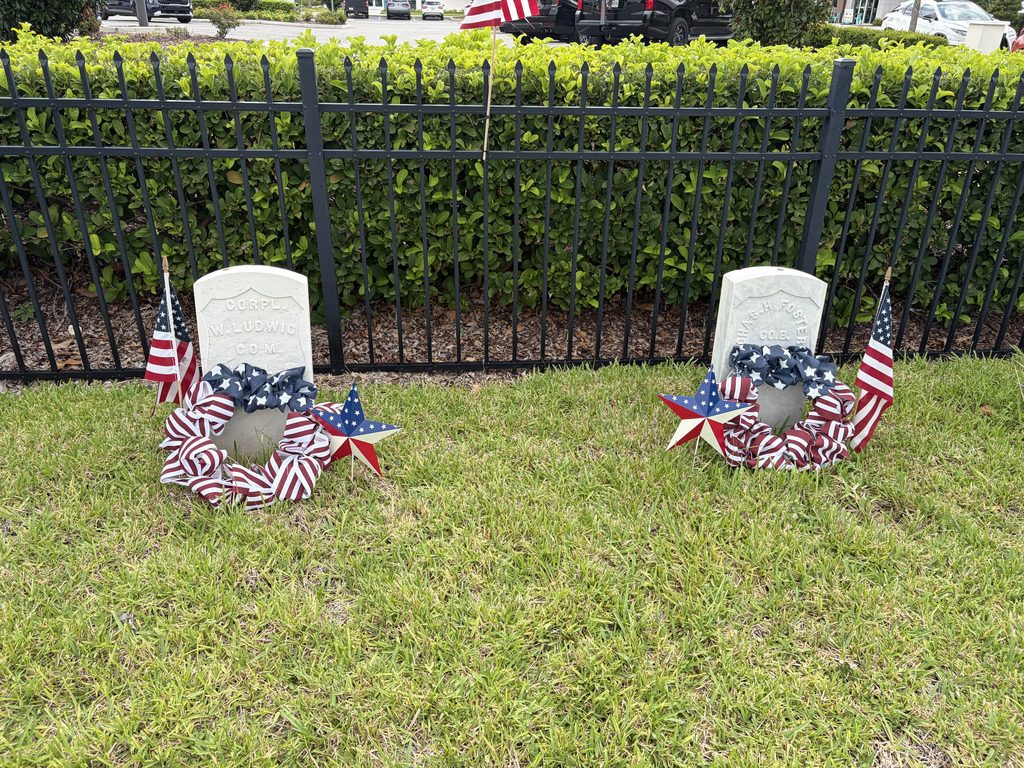
It’s an interesting reminder that Florida’s postwar history was shaped by people arriving from different parts of the country, including former Union soldiers who eventually made their homes in the South.
Standing in front of their headstones, I couldn’t help wondering about their lives.
What brought them to Florida?
Did they come seeking new opportunities, warmer weather, or a fresh start?
What were their experiences after the war?
And what did Vineland look like when they knew it?
Their military headstones preserve an important part of their identities, but they don’t tell us everything about the men themselves.
That’s something I often think about when visiting historic cemeteries.
A name and a military unit can tell us where someone served, but there was an entire life beyond that service.
Families. Friendships. Work. Hopes. Disappointments. Ordinary days that were never recorded in history books.
And those stories matter, too.
Were There More Than Two Burials?
Although only two marked graves are visible today, historical cemetery records suggest that additional people may have been buried here.
A 1956 cemetery transcription included references to John and Loma McGinnis, along with other possible unmarked burials.
That means the cemetery’s history may extend beyond the two military headstones visitors see today.
Without further documentation, it’s difficult to determine the full number of burials or exactly where every grave may be located.
But it’s a reminder that what survives above ground doesn’t always tell the complete story of a historic cemetery.
Sometimes, the records preserve names that the landscape no longer reveals.
The Fight to Preserve Vineland Cemetery
One of the most remarkable things about Vineland Cemetery is that it survived the commercial development surrounding it.
And that survival wasn’t simply a matter of luck.
A former landowner named Scott Henderson played an important role in protecting the cemetery.
Henderson had acquired property in the area during the 1970s, and as development plans progressed, he worked to ensure that the historic burial ground would remain protected.
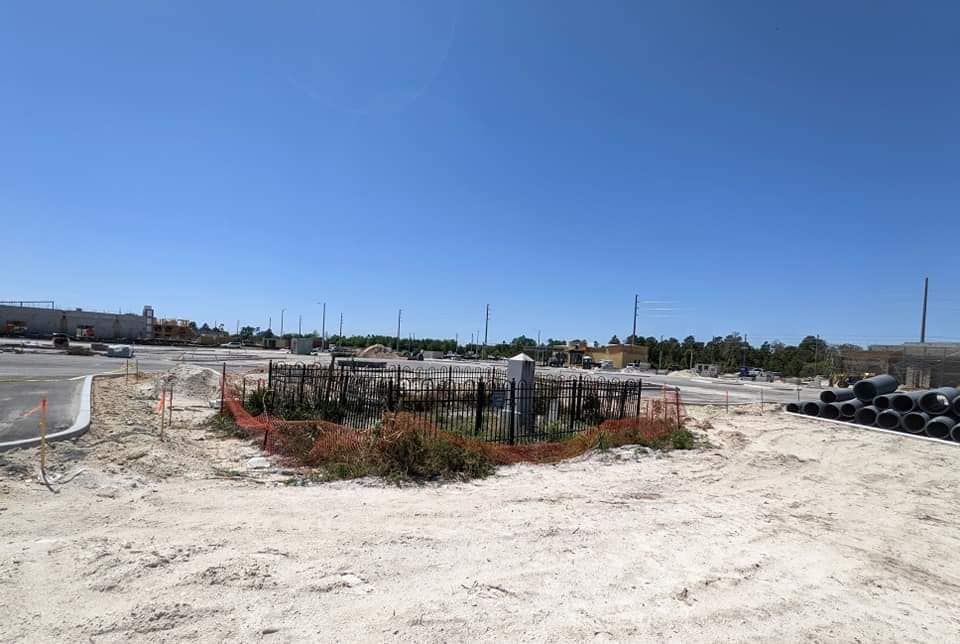
Rather than allowing the cemetery to disappear beneath new construction, preservation became part of the property’s future.
The cemetery was enclosed by a protective fence, and provisions were made for its continued maintenance.
A granite monument was also installed to identify the burial ground.
Preservation efforts involved members of the Sons of Union Veterans of the Civil War, who helped restore and honor the military graves.
Around 2010, the cemetery was rededicated.
The military headstones, which had previously been positioned flat, were reset upright.
The cemetery even has a rather unusual story involving a headstone reportedly stolen around Halloween in the late 1980s and returned several weeks later.
Apparently, this little piece of Florida history has experienced a few adventures of its own.
Today, the cemetery remains protected within its iron fence.
And when I visited, it was obvious that someone was still taking care of it.
Our First Exploration Friday Together
Vineland Cemetery was the final stop on Dusty’s very first Exploration Friday with me.
And what a day we’d already had.
We started at the Mulberry Phosphate Museum before heading to Brewster Ghost Town and Bradley Junction.
Then we accidentally discovered Pearce Ghost Town.
Later, while traveling toward Homeland Heritage Park, we stumbled across Crum-Durrance Cemetery.
Apparently, Florida had decided our carefully planned itinerary needed a few bonus destinations.
But Vineland Cemetery was different.
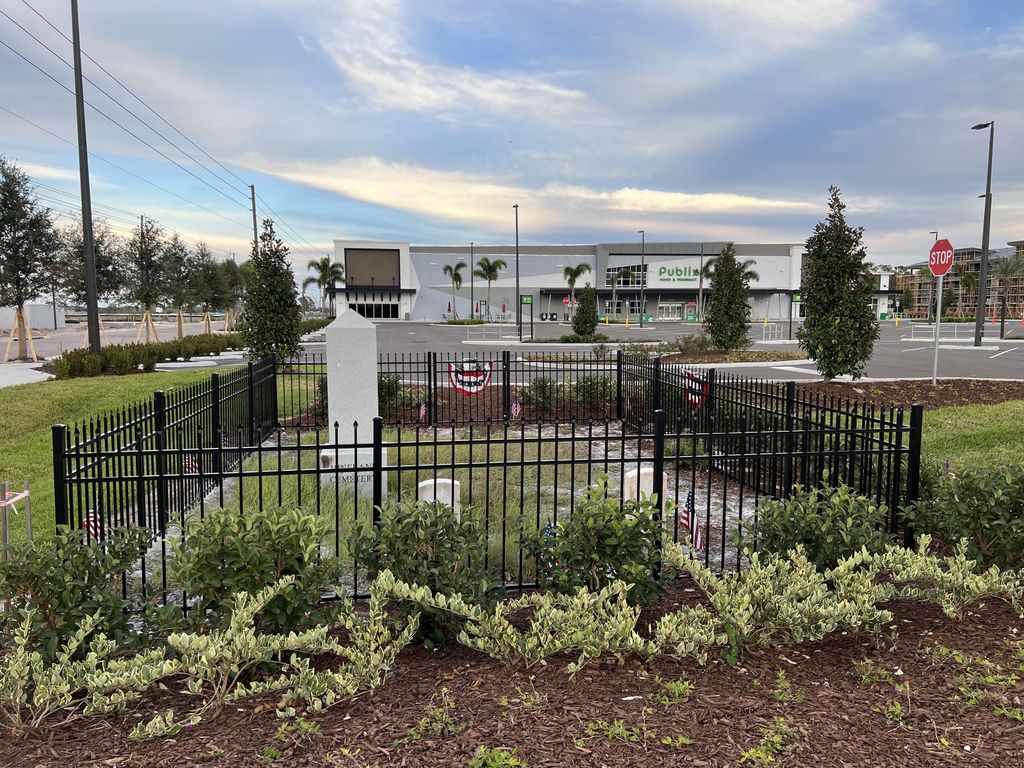
This was one of the stops I’d specifically planned for Dusty.
We’d both heard about the cemetery independently, and we’d both wanted to visit it.
I knew she’d be just as excited to see it as I was.
So I saved it for the end of our adventure.
Unfortunately, getting there meant fighting our way through Orlando rush-hour traffic.
And by the time we arrived, we’d both gotten a little quiet.
We weren’t upset with each other. We’d simply reached that point in a long day when traffic becomes increasingly irritating and conversation becomes less appealing.
And Dusty needed to use the bathroom.
Fortunately, there was a Publix.
So I dropped her off at the entrance, drove across the parking lot, and parked near the cemetery.
Since the burial ground was so small, I figured I could probably photograph and film the entire thing before she finished.
And that’s exactly what I did.
Exploring One of the Smallest Cemeteries I’ve Visited
I walked around the little fenced enclosure, taking photographs and recording video.
There wasn’t much ground to cover.
Only two visible headstones, the granite monument, and the surrounding fence.
But what struck me most wasn’t how small the cemetery was.
It was how well maintained everything looked.
The grass was neatly cut.
The landscaping was cared for.
Both military headstones were decorated with patriotic wreaths and American flags.
And despite being surrounded by a busy shopping center, the cemetery felt respectfully preserved.
I’ve visited historic cemeteries where the headstones were broken, the graves were difficult to locate, and vegetation had nearly swallowed the burial ground.
Vineland was nothing like that.
It was clear that people still cared about the men resting here.
And that made me happy.
Because while the town around them had largely disappeared, these two veterans hadn’t been forgotten.
After finishing my photographs and video, I climbed back into the truck and drove over to pick up Dusty.
And that’s when the day took a rather unexpected turn.
Dusty and the World’s Strangest Sink
I pulled up to the Publix entrance, and Dusty climbed into the truck with an enormous grin on her face.
Immediately, I knew something had happened.
She looked at me and said:
“Okay, so I pee, right?”
I responded, “Mmhmm… sure…”
Then she continued.
“So I got to wash my hands, and I’m like, huh… this is the weirdest sink I’ve ever seen!”
At this point, I had absolutely no idea where this story was going.
Then she announced:
“Ki… IT WAS A URINAL! I accidentally went into the men’s bathroom!”
I lost it.
Absolutely lost it.
Because this is Dusty.
She has a remarkable ability to wander into situations without noticing some fairly important details.
Apparently, she’d gone into the men’s restroom without realizing it and only started questioning her surroundings when she encountered what she thought was an unusually designed sink.
Meanwhile, I’d managed to document an entire historic cemetery.
We were both having very productive afternoons.
Once I’d recovered from laughing, I drove her back over to Vineland Cemetery so she could take her own photographs.
After all, this was somewhere she’d wanted to visit for a long time.
And I certainly wasn’t going to let her miss it.
The Best Date Ever
After Dusty finished taking her pictures, we climbed back into the truck and headed toward her house.
We’d spent the day exploring old Florida.
We’d visited ghost towns, historic sites, and forgotten cemeteries.
We’d stumbled across places we never expected to find.
We’d battled traffic, gotten tired, and laughed at things that probably wouldn’t have been nearly as funny to anyone else.
And just a few minutes after leaving Vineland Cemetery, Dusty suddenly exclaimed:
“Ki… best. date. EVER!”
And that made my entire day.
Because I’d wanted her first Exploration Friday to be special.
I’d deliberately included Vineland Cemetery because I knew how much she’d wanted to see it.
And hearing her say that made every mile, every unexpected detour, and every frustrating minute of Orlando traffic worth it.
Sometimes, the best part of an adventure isn’t the destination.
It’s the person sitting beside you when you get there.
Planning Your Visit to Vineland Cemetery
If you’re interested in visiting Vineland Cemetery, you’ll find it in the Orlando area near Daryl Carter Parkway, within the Town Center shopping development.
The cemetery is small and enclosed by a black iron fence, so it doesn’t take long to view the visible headstones and monument.
There are a few things worth keeping in mind:
- Location: Near Daryl Carter Parkway, Orlando, Florida, in the shopping center area.
- What you’ll see: Two visible Union Civil War military headstones, a granite cemetery monument, patriotic decorations, and the protective iron fence.
- Time needed: Approximately 10–15 minutes is generally sufficient for viewing and photographs.
- Access: The cemetery is enclosed by a fence. Visitors should respect the boundary and avoid entering unless access is specifically authorized.
- Photography: The cemetery can be photographed from outside the fence. Be mindful of surrounding traffic and businesses.
- Nearby history: Consider exploring other historic Orange County communities or researching the former Florida Midland Railway.
Because this is an active commercial area, parking arrangements and surrounding businesses may change. Check current maps before visiting.
And if you happen to stop at Publix while you’re there, perhaps take a moment to double-check the restroom sign.
Just a suggestion.
What Stayed With Me
When I think about Vineland Cemetery, I don’t immediately think about how small it was.
I think about the contrast.
Two nineteenth-century military headstones standing quietly in the middle of a modern shopping center.
American flags moving in the breeze while cars passed just beyond the fence.
A community that once had its own school, church, homes, and railroad connection, now represented by a little piece of preserved ground.
And I think about the people who cared enough to protect it.
Because preserving history isn’t always about saving grand buildings or restoring entire historic districts.
Sometimes, it’s about refusing to let a small burial ground disappear.
It’s about recognizing that the people who came before us deserve to be remembered, even when the world around their final resting places changes beyond recognition.
But Vineland Cemetery also reminds me of something else.
Why I love taking these trips in the first place.
The history is always the reason I start exploring.
But the experiences along the way become part of the story, too.
Sometimes that means discovering an unexpected ghost town.
Sometimes it means finding a forgotten cemetery.
And sometimes it means laughing so hard at your best friend’s bathroom adventure that you almost forget how irritated you were by the traffic.
Those are the moments that make travel personal.
Final Thoughts: A Little Cemetery That Refused to Disappear
Vineland Cemetery may be one of the smallest historic cemeteries I’ve ever visited, but its story reaches far beyond its iron fence.
It tells us about a Florida community that changed names, grew around a railroad, and gradually faded from the landscape.
It tells us about two Union Civil War veterans whose final resting places survived generations of development.
And it reminds us that preservation is a choice.
Someone has to decide that a place matters enough to protect it.
Today, shoppers and drivers pass this little cemetery as they go about their daily lives.
Some may notice it.
Others may never realize it’s there.
But behind that fence are stories that reach back more than a century, to a Florida that looked very different from the one we know today.
And for Dusty and me, it will always be the place where we ended our first Exploration Friday together.
Two headstones.
One nearly vanished Florida town.
One very confused encounter with a urinal.
And, according to Dusty, the best date ever.
Have you ever discovered a forgotten cemetery or historic landmark somewhere you least expected to find one? I’d love to hear about it in the comments.
Until next time, keep exploring, keep asking questions, and never stop looking for the stories hiding in plain sight.
Because sometimes, all that remains of an entire community is a little square of grass…
And two headstones that somebody refused to forget.
History has a way of hiding in the most unexpected places—even in front of a Publix! 🪦
Join me as we uncover the story of Vineland, a nearly forgotten Florida town, and the two Union Civil War veterans whose graves survived decades of development.
Want more forgotten history, hidden places, and behind-the-scenes adventures? Join the Travel Made Personal mailing list for stories, travel discoveries, and updates delivered straight to your inbox.
Because every place has a story—and some are just waiting to be rediscovered. 🧭
If you see this after your page is loaded completely, leafletJS files are missing.