

Sometimes the best historic places are the ones you never planned to find.
We weren’t looking for a church.
We weren’t even planning another stop.
Dusty and I were traveling through Bedford County, Pennsylvania, when we spotted a cemetery with a historical marker near the road.
And, well, if you’ve followed our adventures for any length of time, you already know what happened next.
We pulled over. 😂
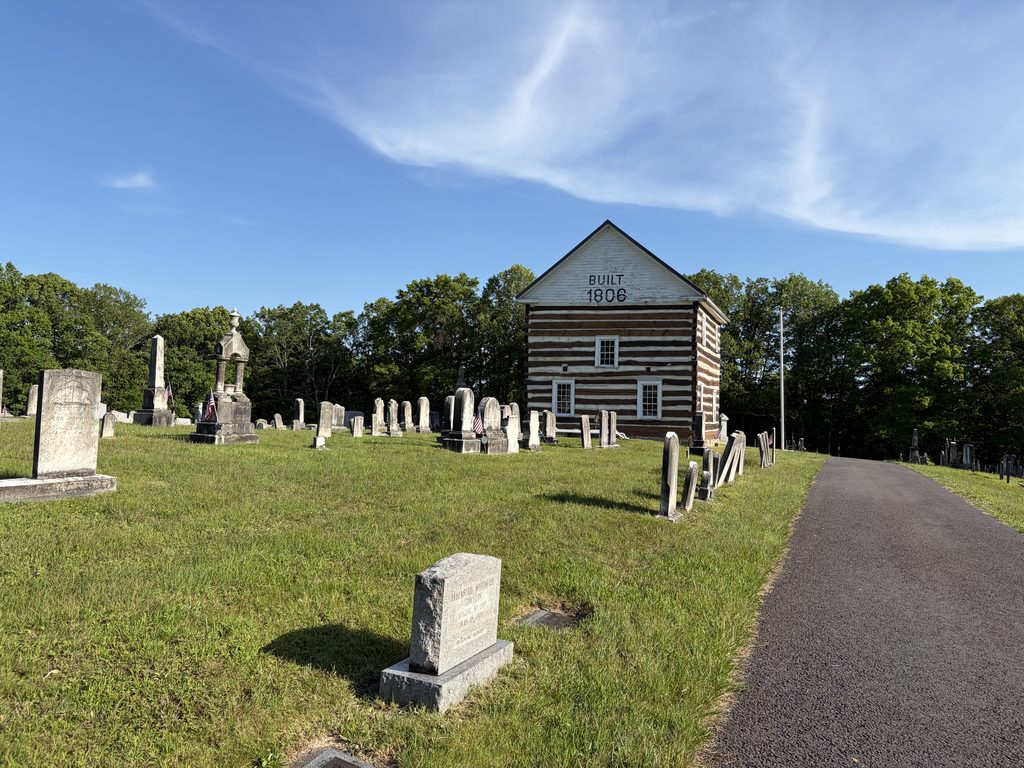
I have a terrible habit of treating historical markers like invitations, and cemeteries are practically irresistible. You never know whose stories are waiting among the headstones.
But this particular stop had something extra waiting for us.
At the back of the cemetery stood a small, beautifully preserved log church.
Not a replica. Not a modern building designed to resemble something from the past.
An actual log church built in 1806.
We had accidentally discovered one of the oldest surviving pieces of Bedford County’s religious history.
And what we thought would be a quick look around turned into one of those wonderful little reminders of why I love exploring forgotten places.
A Church Older Than the Town Around It
The 1806 Old Log Church stands on Chestnut Ridge near Schellsburg, Pennsylvania, overlooking the surrounding countryside.
It’s considered the oldest surviving church building in Bedford County.
What’s especially fascinating is that the church actually predates Schellsburg itself.
John Schell, the town’s founder, donated approximately six acres for the church and burial ground. The building was constructed in 1806, two years before Schell laid out the town in 1808.
That means this little church was already welcoming worshippers before Schellsburg officially existed.
And the story of how it was built is one of my favorite details.
Four local men—John Schell, John Mowry, Jacob Hillegass, and George Rock—provided the logs for its construction.
Each man was responsible for supplying enough logs to build one side of the church.
Four men. Four walls.
One community coming together to create a place of worship.
The finished building measured approximately 25 by 30 feet. It wasn’t particularly large or elaborate, but it didn’t need to be.
For the families settling this part of Pennsylvania, it represented something far more important than architectural grandeur.
It represented community.
One Little Church, Two Congregations
Originally, the building was known as the Union Church.
That name wasn’t accidental.
The church served both German Reformed and Lutheran congregations, two religious communities that shared the same building.

On the early Pennsylvania frontier, constructing separate churches wasn’t always practical. Resources were limited, communities were small, and cooperation made sense.
So the congregations shared.
They gathered in the same little building, worshipped according to their respective traditions, and helped maintain the place that brought their community together.
And in those earliest years, attending church wasn’t exactly a luxurious experience.
For approximately the first six years, worshippers reportedly sat on logs instead of pews.
A stove and pipe were purchased in 1809, but local tradition claims that before the church had heat, some members brought their dogs along to help keep their feet warm.
Now, I can’t verify whether the congregation actually relied on canine-powered heating.
But as someone who knows a thing or two about dogs, I can certainly appreciate the idea. 😂
By 1812, the interior received several improvements, including proper pews, stairs, and an elevated pulpit.
The pulpit was particularly distinctive because of its unusual wineglass shape.
In 1814, galleries were added along three sides of the building, providing additional seating for the growing congregation.
According to the historical accounts preserved at the site, the church’s construction and early improvements eventually totaled $225.91½.
Yes, half a cent.
Apparently, even in the early nineteenth century, construction budgets could get remarkably specific.
Why Was the Old Log Church Abandoned?
When you encounter a historic building that hasn’t hosted regular services in more than 170 years, it’s natural to wonder what happened.
Did the community disappear?
Was there a disaster?
Did the building simply fall out of use?

In this case, the answer is surprisingly encouraging.
The church wasn’t abandoned because the community failed. It stopped being used regularly because the community grew.
By 1843, the Lutheran congregation had constructed a larger brick church in Schellsburg.
The German Reformed congregation continued using the Old Log Church for several more years before moving into its own new building around 1852.
The little log church had served its purpose.
But instead of demolishing it, the community allowed it to remain.
And that decision is why travelers like us can still discover it more than two centuries later.
The Old Log Church Didn’t Always Look Like This
Here’s something I wouldn’t have guessed while standing in front of the building.
For decades, its famous log exterior wasn’t visible at all.
In 1881, the church was covered with white weatherboarding.

If you look at historical photographs from that period, the building resembles a traditional white country church rather than the rustic log structure we see today.
The weatherboarding remained until the mid-1930s, when it was removed to reveal the original logs.
That’s when the building became widely known as the Old Log Church.
Imagine uncovering those walls after decades of being hidden.
The same hand-hewn logs supplied by the community’s earliest settlers were still there.
And they remain there today.
For me, that’s one of the most remarkable things about historic preservation.
Sometimes preserving history isn’t about rebuilding what disappeared.
Sometimes it’s about protecting what never left.
The Cemetery That Caught Our Attention
Of course, the church wasn’t actually what brought us here.
It was the cemetery.
The Chestnut Ridge and Schellsburg Union Cemetery surrounds the Old Log Church, and its history stretches back to the earliest days of the building.
According to local tradition, the first burial took place in 1806 while the church was still under construction.
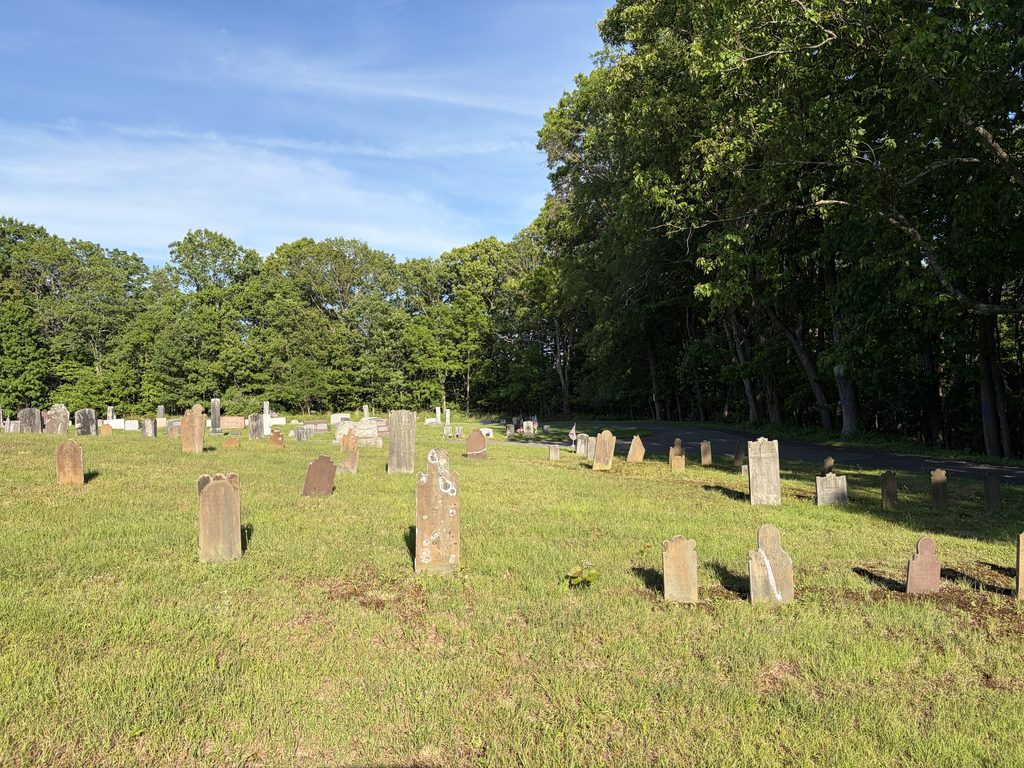
The story tells of workers coming down from the roof to help clear underbrush for the burial of a young child from the Whetstone family.
The child’s first name has been lost to history, and the original grave is unmarked.
However, other members of the Whetstone family are buried near the church.
I always find stories like this especially moving.
We know the names of the men who supplied the logs.
We know when the pews were installed.
We even know the construction expenses down to half a cent.
But the identity of a child whose burial may have marked the beginning of this cemetery has largely disappeared.
It’s a reminder that history doesn’t preserve everyone’s story equally.
And sometimes the smallest stories are the ones that stay with us the longest.
More Than 4,500 Stories in Stone
Although burials began much earlier, the cemetery wasn’t formally organized until the nineteenth century.
In 1860, the Chestnut Ridge and Schellsburg Union Cemetery Association received its charter.
Representatives from several religious communities, including Lutheran, German Reformed, Methodist, and Presbyterian congregations, participated in establishing the organization.
That cooperation continued the spirit of the original Union Church.
The cemetery belonged to the broader community, not simply one congregation.
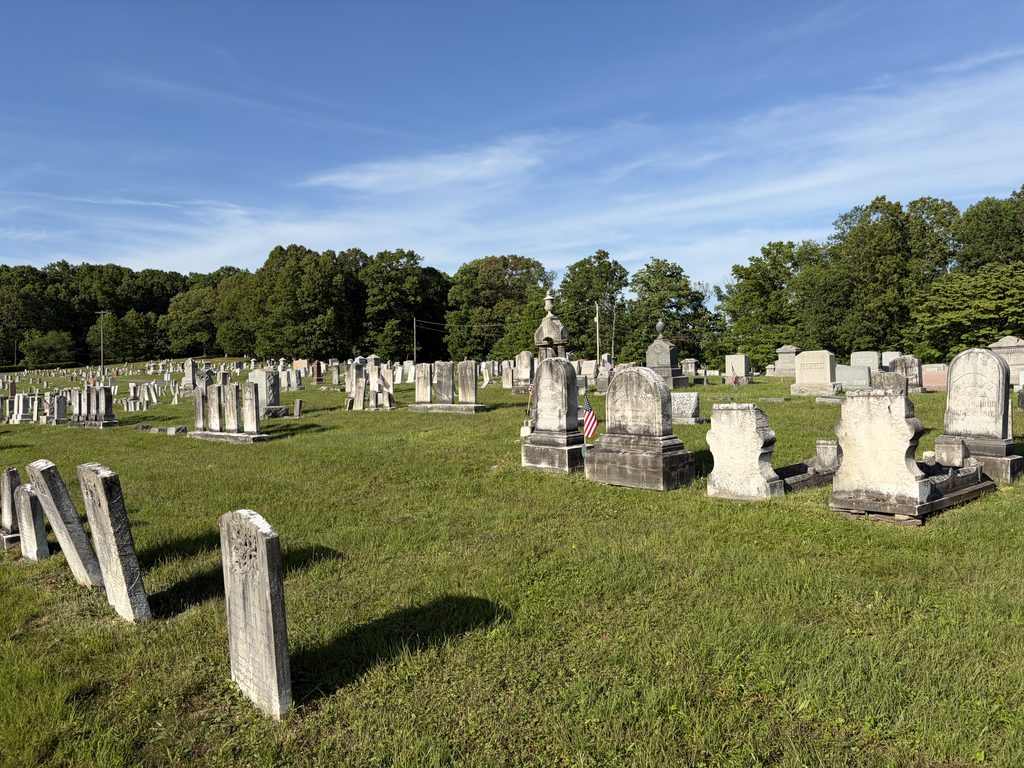
Today, the burial ground contains more than 4,500 graves.
Among them are generations of the same families who helped establish Schellsburg.
Names like Schell, Hillegass, and Rock appear in both the history of the church and the cemetery surrounding it.
John Schell himself, the man who donated the land and founded the nearby town, is buried here.
There’s something particularly meaningful about that connection.
The people who built this place became part of the very landscape they helped create.
Their descendants continued to gather here, and the cemetery remained an active part of community life long after the church stopped hosting regular services.
Revolutionary War Veterans on a Pennsylvania Hillside
The cemetery also contains the graves of military veterans representing different periods of American history.
According to the site’s historical marker, eight Revolutionary War soldiers are buried here.
These were men who lived through the struggle for American independence and later became part of the communities developing across Pennsylvania.
Standing in a cemetery like this, it’s easy to forget how much history can exist within a relatively small area.
One headstone might represent a family that arrived before the town existed.
Another might belong to someone who witnessed the birth of the United States.
And another might tell a story that began hundreds of miles away.
Which brings us to one of the cemetery’s most unusual residents.
The Confederate Soldier Who Made Pennsylvania His Home
One of the more remarkable stories associated with the cemetery belongs to a man known as William Hinson.
According to historical accounts, Hinson was originally Oliver Perry Niley, a Confederate soldier from Mississippi.
He reportedly enlisted in the Confederate Army in 1861 and was captured during the Civil War.
After being imprisoned, he was transported by train through Pennsylvania in 1864.
Somewhere along the journey, he escaped.
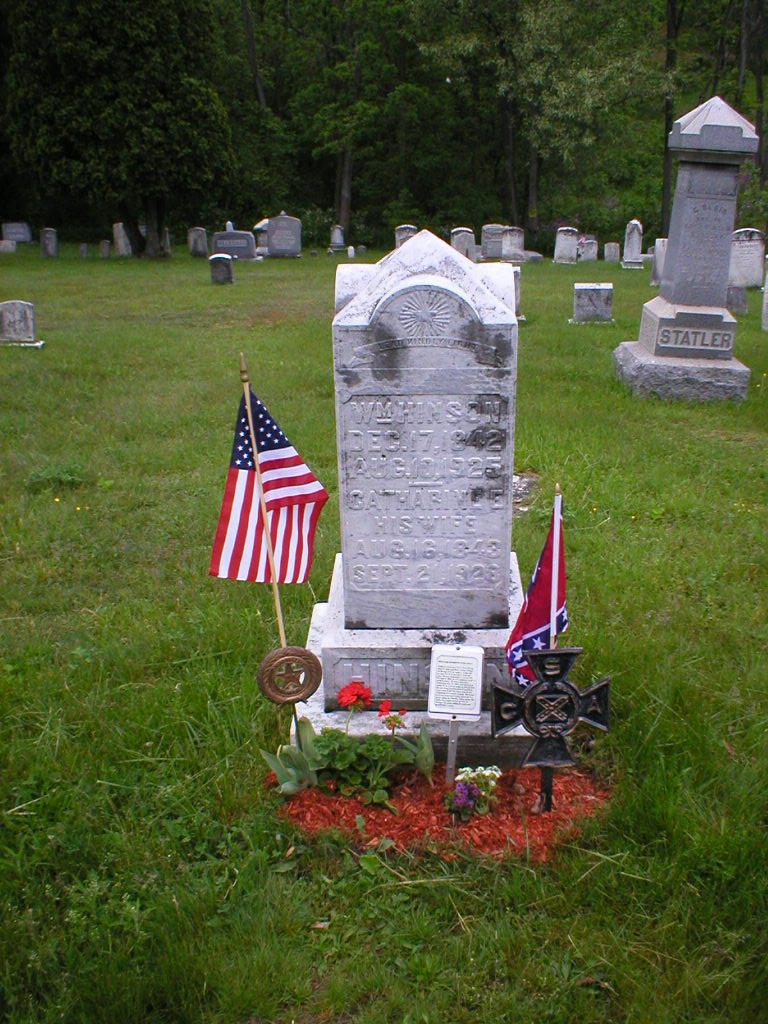
Rather than returning to Mississippi, he reportedly found shelter in Pennsylvania, eventually settled in the Schellsburg area, and adopted the name William Hinson.
He married, raised a family, and became part of the local community.
Accounts of his life describe him serving as a Justice of the Peace before his death in 1925.
Some details of his story are difficult to independently establish, particularly those surrounding his escape and change of identity. Nevertheless, his association with the cemetery offers an intriguing glimpse into the unexpected paths people followed after the Civil War.
A Confederate soldier from Mississippi eventually resting among generations of Pennsylvania families.
It’s the kind of story that reminds me why cemeteries are so much more than collections of headstones.
They’re places where individual lives intersect with much larger historical events.
An Old Well Behind the Church
After exploring the cemetery and admiring the church, we wandered around behind the building.
And that’s where we discovered another little surprise.
An old well.
Naturally, I had to investigate.
It wasn’t operational, so there was no opportunity to test whether two centuries of Pennsylvania history had improved the local drinking water.
Probably for the best. 😂
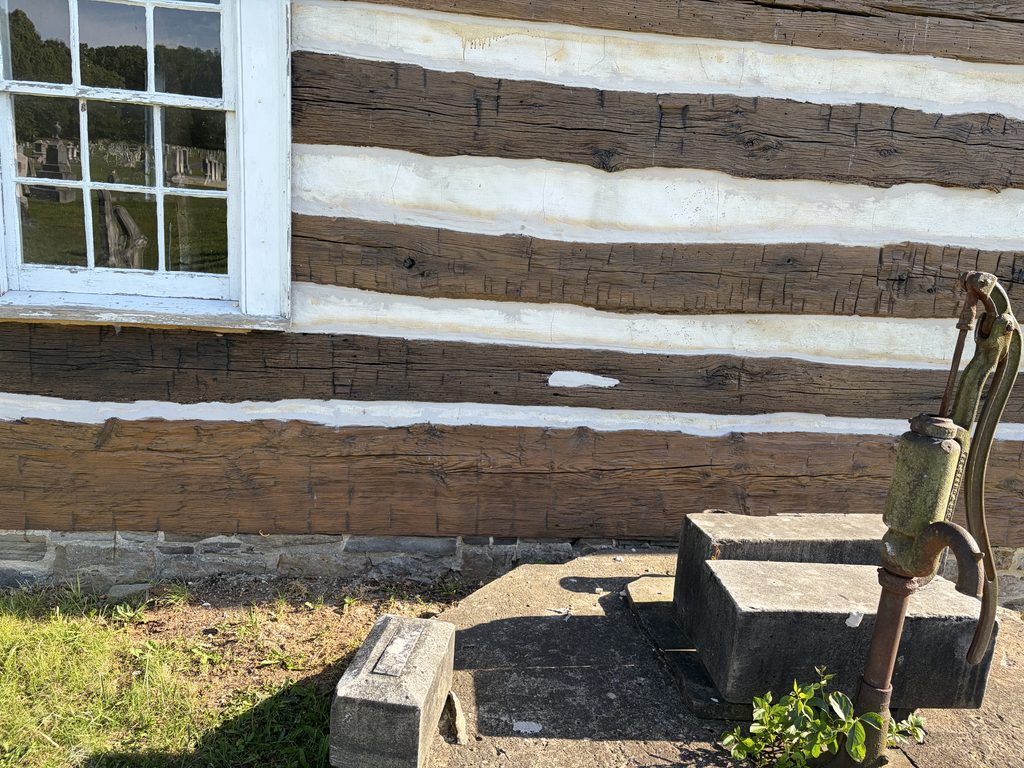
But I love discovering details like this.
The church tells us about the community’s faith.
The cemetery tells us about its families.
And an ordinary feature like a well reminds us that these were real people living everyday lives.
They needed water.
They needed shelter.
They worked, worshipped, raised children, celebrated milestones, and mourned their losses.
Sometimes it’s the smallest remnants of a historic place that make the people who lived there feel most real.
Preserving the Old Log Church
The fact that this building is still standing is remarkable.
Many early log structures disappeared long ago, victims of fire, deterioration, development, or simply the passage of time.
But the Old Log Church survived.
Not every historic church has been fortunate enough to survive intact. When we explored the Old Sheldon Church Ruins, we found the hauntingly beautiful remains of a building shaped by war, destruction, and centuries of change. Both places tell stories of faith and community, but their paths through history couldn’t be more different.
In 2002, the Old Log Church and Cemetery Preservation Society was formed to help protect and restore the historic site.
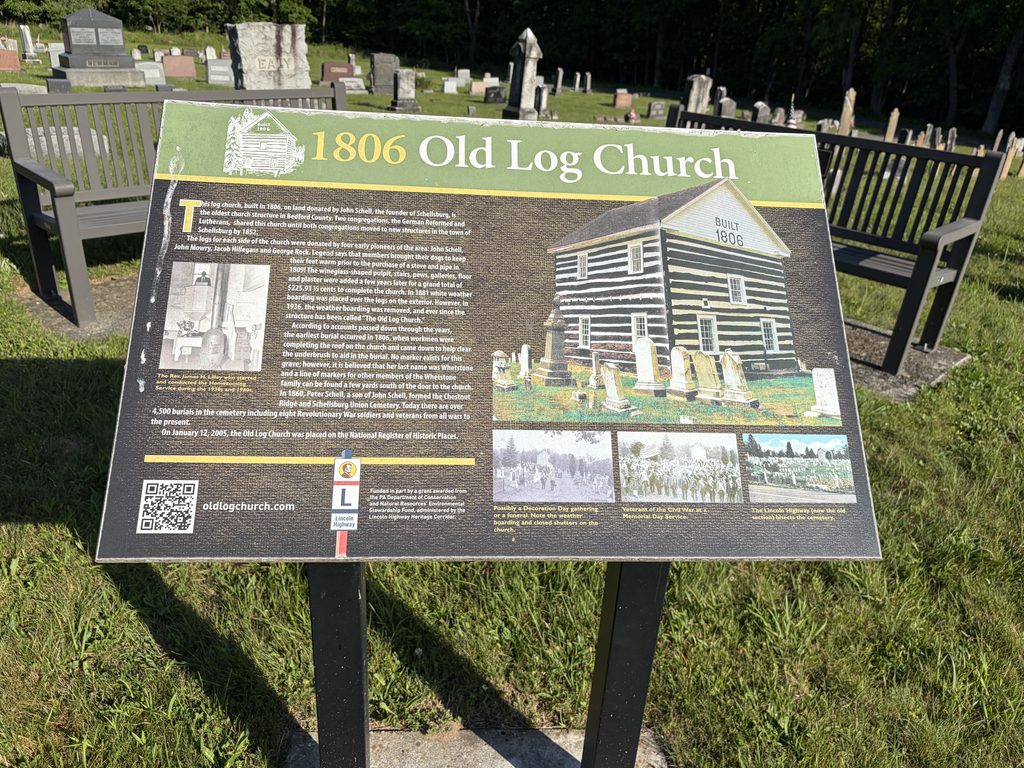
Their efforts continued a long tradition of community stewardship.
On January 12, 2005, the Old Log Church and Cemetery were added to the National Register of Historic Places.
That recognition helped acknowledge the importance of the church, the cemetery, and the community history they represent.
And while the building no longer serves its original purpose as a regularly used church, it remains an important connection to the people who established this part of Pennsylvania.
It isn’t simply a relic from another century.
It’s a place that generations have deliberately chosen to preserve.
Exploring the Old Log Church and Cemetery
Our visit was completely unplanned.
We hadn’t researched the church beforehand, and we certainly hadn’t scheduled time to explore it.
We simply saw the historical marker, pulled over, and started wandering.
This wasn’t our only memorable stop in Bedford County. Just down the road, we’d explored Mount Ararat Lookout Point, another place where the landscape holds stories of what once stood there. From a vanished roadside attraction to a 220-year-old church, this stretch of Pennsylvania gave us plenty of reasons to pull over.
We spent approximately twenty minutes taking photographs and recording video around the cemetery and church.
That’s all.
Twenty minutes.

But in those twenty minutes, we discovered a church older than the town around it, a cemetery dating back to the earliest days of settlement, and stories stretching from the American Revolution through the Civil War and beyond.
I think that’s what makes these spontaneous stops so rewarding.
You don’t always need an elaborate itinerary to discover something extraordinary.
Sometimes you just need to pay attention to what’s beside the road.
Planning Your Visit to the Old Log Church
If you’re exploring Bedford County or traveling near Schellsburg, the Old Log Church is worth adding to your itinerary.
Location: Old Log Church and Chestnut Ridge and Schellsburg Union Cemetery, Schellsburg, Bedford County, Pennsylvania.
Established: 1806
Historic significance: Oldest surviving church building in Bedford County; listed on the National Register of Historic Places in 2005.
What you’ll find: A preserved early nineteenth-century log church, a historic cemetery with thousands of burials, military veterans’ graves, and monuments associated with the area’s founding families.
The cemetery can be explored respectfully, but remember that it remains an active burial ground.
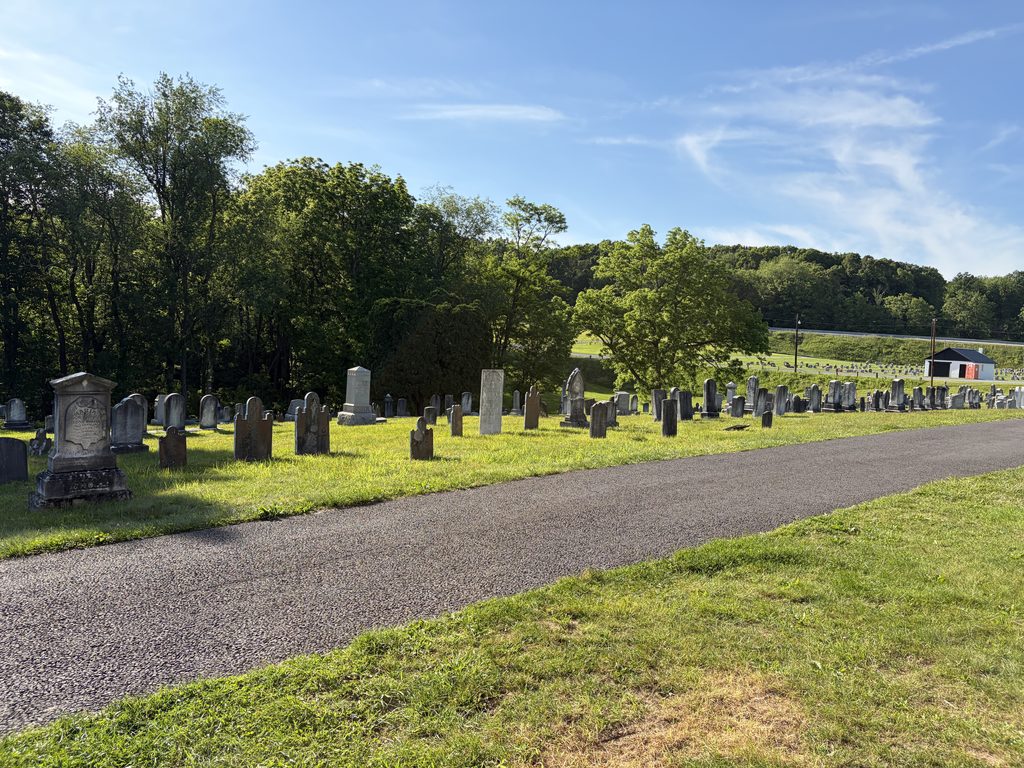
Avoid walking directly across graves, never disturb markers or memorial items, and be mindful of anyone visiting loved ones.
Access to the church interior may vary, so check locally for current visiting arrangements before making a special trip.
And if you enjoy roadside history, leave yourself a little extra time.
Bedford County has a way of rewarding curious travelers.
What Stayed With Me
I’ve visited plenty of historic churches and cemeteries over the years.
Some were famous.
Some were carefully researched destinations.
Others were places I’d never heard of until I happened to drive past them.
It reminded me of our visit to the Chapel of Ease Ruins in South Carolina. There, nature has slowly reclaimed the walls of a once-important place of worship. Here in Pennsylvania, the church still stands much as it did generations ago. Different outcomes, but the same reminder that even the smallest historic places deserve to have their stories remembered.
The Old Log Church belongs firmly in that last category.
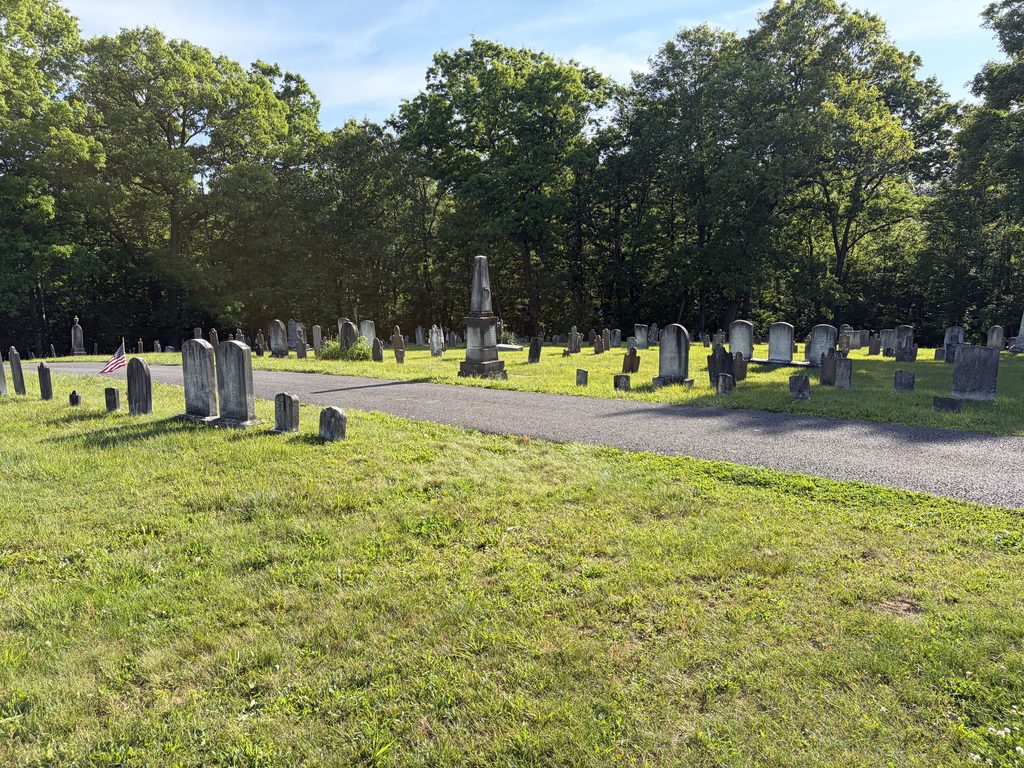
And that’s what makes it special to me.
We weren’t looking for a building from 1806.
We weren’t searching for Revolutionary War graves or the story of a Confederate soldier who found a new life in Pennsylvania.
We just saw a historical marker.
But because we stopped, we discovered a place that had been quietly preserving its community’s history for more than two centuries.
I also appreciate that this isn’t really a story about abandonment.
The congregations moved on.
The town grew.
Generations came and went.
But the community continued caring for the little church on the hill.
And because of that, it survived.
Some places aren’t forgotten because nobody remembers them. They’re still here because somebody made sure they wouldn’t be forgotten.
Final Thoughts
Eventually, Dusty and I got back on the road and headed toward our hotel for the night.
And this time, I’d booked something a little different from our usual budget hotel accommodations.
An old-fashioned brick motel.
Dusty loves brick, so naturally that was already a point in its favor.
It was a nice change from our usual stops, although the room presented a couple of unexpected challenges.
There were no towels waiting in the bathroom, and we discovered approximately two usable electrical outlets.
Apparently, after spending the afternoon exploring an 1806 church, we were destined to continue experiencing the limitations of historical infrastructure. 😂
But overall, it was a pleasant stay, and we rested well.
Looking back, though, the motel isn’t what I remember most about that stretch of our trip.

It’s that little church on the hill.
The one we didn’t know existed.
The one we discovered because we were curious enough to stop.
And the one that reminded me, once again, that some of the best travel memories aren’t made at the destinations we’ve planned.
They’re made in the unexpected places we find along the way.
Watch our Forgotten Friday adventure:
Have you ever discovered an incredible historic place simply because you decided to pull over? I’d love to hear about it in the comments!
Until our next adventure, keep exploring, keep asking questions, and never underestimate what might be waiting just beyond the next historical marker.
— Ki
Travel Made Personal
Sources and Further Reading
- Historical Marker Database — Old Log Church
- National Register of Historic Places — National Register Database
- PA Bucket List — Exploring the 1806 Old Log Church in Bedford County
Never Miss a Forgotten Discovery! 🧭
Some of the best stories are hiding in places we never planned to visit! Join the Travel Made Personal mailing list for forgotten history, unexpected roadside discoveries, behind-the-scenes adventures, and new stories delivered straight to your inbox. Because you never know what we’ll find when we pull over for just one more historical marker! ❤️

If you see this after your page is loaded completely, leafletJS files are missing.