

Some places make it onto my travel itineraries months in advance.
I research them, save them to maps, plan routes around them, and occasionally create schedules so detailed that Dusty probably wonders whether he’s traveling with me or participating in a military operation.
Enfield, North Carolina, was not one of those places.

We weren’t supposed to stop there at all.
We were on our way to the Tillery House Museum, about two hours away, when our route carried us through a tiny town built alongside the railroad tracks.
Then I saw the buildings.
Old brick storefronts lined one side of the road, some looking as though they had been closed for years. Across the tracks stood an old depot and a small building that reminded me of a guard shack.
It was beautiful.
And apparently, that was all the justification I needed.
We stopped.
What I didn’t know was that the little town that made me slam on the brakes had been the scene of people refusing to quietly go along with authority for more than two centuries.
An Unplanned Stop in Enfield
Dusty and I got out and started taking pictures around the old downtown.
Then I noticed another building farther down the street.
It was much larger than the others, so naturally we drove around the block to investigate.
The bottom floor had no doors or windows. Through the empty openings, I could see vegetation growing inside. Vines had begun creeping through a building that people once built, worked in, and presumably expected to stand long after they were gone.
At the time, I didn’t know what the building was.
Honestly, I didn’t know much of anything about Enfield.
This wasn’t one of those visits where I could look at something and immediately start telling Dusty its history. We had simply found a beautiful old North Carolina town and decided it deserved a few minutes of our time.
It wasn’t until later, when I started researching Enfield, that I discovered just how much history was hiding behind what we’d photographed.
And that history begins before there was even a United States.
Before America, There Was Enfield
Enfield is one of the oldest communities in Halifax County, with roots reaching into colonial North Carolina.
Even the origin of its name has accumulated a few stories over the centuries.
One tradition says the area was once known as Huckleberry Swamp, named for the low-lying landscape and vegetation growing there. Another suggests Enfield was named after Enfield, England.
Then there’s my personal favorite.
According to local folklore, two men were crossing a field when one announced they had reached the “end of the field.”
End field.
Enfield.
Is that really how the town got its name?
Who knows.
But I’m rooting for it.
Long before the railroad created the downtown we encountered, the Enfield area was already important in colonial North Carolina. It served as an administrative and judicial center before Halifax County was established.
Then, in 1759, things got considerably less administrative.
The Enfield Riot of 1759
At the time, Lord Granville controlled an enormous tract of land in North Carolina. Because Granville remained in England, agents handled the business of granting and managing that land.
One of those agents was Francis Corbin.
Colonists accused Corbin and those working with him of corruption involving land grants, including excessive fees and improper payments.
Complaints were made. Investigations followed.

Eventually, a group of men from around Enfield apparently decided they’d had enough.
In January 1759, roughly two dozen men traveled about 70 miles to Edenton, arrived at Corbin’s home and kidnapped him.
Well.
That escalated quickly.
They brought Corbin back to Enfield and held him for several days. Rather than physically harming him, the men forced him to produce his land records and agree to repay money they believed had been improperly collected.
The confrontation became known as the Enfield Riot.
And it wasn’t over.
When some of the participants were later arrested, supporters reportedly broke them out of jail.
All of this happened in 1759.
The Declaration of Independence wouldn’t be adopted until 1776.
There wasn’t a United States.
There wasn’t a president.
Yet colonists in this little corner of North Carolina were already challenging officials they believed were abusing their authority.
The Enfield Riot wasn’t the American Revolution, and we shouldn’t turn it into one retroactively. But it belonged to a growing tradition of resistance to colonial authority that would become increasingly important in North Carolina.
Seventeen years later, representatives gathered nearby in Halifax would adopt the Halifax Resolves, authorizing North Carolina’s delegates to support independence.
The quiet little town we’d stumbled across had roots reaching deep into colonial America’s growing resistance to British rule.
Enfield isn’t the only place I’ve visited where a seemingly quiet landscape hides a much larger story of conflict. At Fort Butler in Florida, another nearly forgotten site revealed a complicated chapter of the Seminole Wars.
The Railroad Created a New Enfield
The Enfield we saw during our visit wasn’t centered exactly where the original colonial community had been.
The railroad changed that.
When the Wilmington & Weldon Railroad arrived in 1840, the center of town shifted toward the tracks.
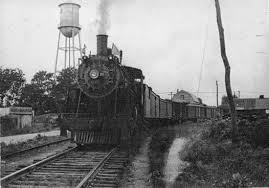
Homes and businesses followed the new transportation route, and Enfield developed into an important agricultural trading center.
Suddenly, the things that had made me stop began to make more sense.
Those tracks weren’t simply passing through Enfield.
They helped shape it.
Agricultural products, particularly cotton and tobacco, became important to the town’s economy. The Enfield Tobacco Market opened in 1896, bringing another period of prosperity.
Eventually, Enfield became associated with another crop:
peanuts.
With numerous buying and cleaning stations operating there, Enfield eventually became known as the world’s largest raw peanut market.
That was not on my list of things I expected to discover when I stopped because an old building looked pretty.
But Enfield had another chapter waiting for me.
And this one unfolded nearly two centuries after the Enfield Riot.
The Saturday Night Whistle
By the 1960s, segregation shaped everyday life across the American South.
In Enfield, one manifestation of that system came with a sound.
Every Saturday night, a whistle sounded downtown.
Black residents were expected to leave.
Think about what that meant.

Week after week, a sound traveled through the streets telling part of Enfield’s population that because of the color of their skin, they were no longer supposed to occupy part of their own town.
Then came 1963.
On August 28, hundreds of thousands of people participated in the March on Washington.
Three days later, Black residents of Enfield gathered downtown.
Among those leading the demonstration was local English teacher Willa Cofield, accompanied by her students.
The Saturday night whistle sounded.
This time, they didn’t leave.
When Enfield Refused to Leave
Hundreds of demonstrators remained downtown.
The local police force sought assistance, and firefighters were eventually brought in.
High-powered fire hoses were turned against the demonstrators.
But the protest didn’t end there.

The community organized a boycott of white-owned downtown businesses that continued for months.
Then, in February 1964, activists established the Halifax County Voters Movement, described as a grassroots countywide freedom movement.
The numbers help explain why that work mattered.
Although Black residents represented more than half of Halifax County’s population, only about 14 percent were registered to vote at the time.
Activists responded with voter-registration efforts, demonstrations, organizing, and a determination to claim rights that had long been denied to them.
Two Very Different Struggles
It’s tempting to draw a straight line from the Enfield Riot of 1759 to the Civil Rights demonstrations of 1963.
But history deserves more care than that.
The people involved were confronting profoundly different systems, under profoundly different circumstances, for different rights.
Still, something about seeing those two moments within the history of the same small town stayed with me.
In 1759, people from the Enfield area challenged colonial officials they believed had abused their power.
In 1963, Black residents of Enfield challenged a system that denied them equal treatment in their own community.
In both cases, history changed when ordinary people decided they would no longer quietly accept the authority being imposed upon them.
Sometimes history happens on battlefields.
Sometimes it happens in government chambers.
And sometimes it happens when people simply refuse to leave when a whistle tells them they’re supposed to.
Meanwhile, at the Place We Actually Planned to Visit…
After our unexpected detour, Dusty and I eventually continued toward the Tillery House Museum.
Remember?
The place we were actually trying to visit?
We followed the GPS along increasingly rural roads until it announced that we had arrived.
There was just one small problem.
There was basically nothing there.
We kept driving and eventually found a property that looked like it might have been the museum.
It also looked very much like someone’s private residence.
There appeared to be someone living there, and we couldn’t find anything that made it obvious that visitors were welcome.
And I’m pretty firm about this when we’re exploring: if I can’t determine that I’m allowed to be somewhere, I don’t go wandering around anyway.
No historical story is worth disrespecting someone’s property.
So we left.
The place I’d planned to visit became little more than a turnaround.
The place I’d never heard of became an entire story.
Murph apparently enjoys irony.
The Best History Isn’t Always on the Itinerary
Looking back at my photographs from Enfield now feels different.
That old depot isn’t simply a pretty railroad building.
Those tracks helped create the modern town.
The aging storefronts aren’t merely remnants of another era. They’re part of a community shaped by agriculture, tobacco, peanuts, commerce, segregation, protest and change.
And that vine-covered building?

I still love it for exactly the same reason I did when I first saw it.
There’s something about an old building slowly surrendering itself to nature that makes me wonder about everyone who passed through it before the vines arrived.
It’s the same reason places like South Carolina’s Old Sheldon Church Ruins stay with me—the ruins catch your attention first, but it’s the story behind them that changes what you’re seeing.
That’s the danger of traveling with me.
One minute we’re going somewhere perfectly reasonable.
The next minute I’ve spotted an old building and we’re circling the block.
Planning a Visit to Enfield, North Carolina
Enfield is located in Halifax County in northeastern North Carolina, and its historic downtown developed alongside the railroad that transformed the community during the 19th century.
This wasn’t a formal attraction stop for us, so our visit was primarily spent looking at and photographing the historic streetscape from public areas.
If you decide to explore Enfield for yourself, remember that an old or abandoned-looking building isn’t automatically public property. Enjoy the architecture, look for historical markers and public spaces, and respect posted signs, barriers and private property.
And perhaps leave a little room in your itinerary.
You never know what might make you hit the brakes.
What Stayed With Me
We didn’t discover Enfield because someone told us to go there.
It wasn’t sitting on one of my maps waiting to be checked off.
There wasn’t an itinerary entry.
We found it because we were paying attention.
And maybe that’s why this particular stop feels so perfectly Travel Made Personal to me.
Research helps me understand the places I visit.
Planning helps me find them.
But curiosity?
Curiosity is what makes me stop.
Enfield, North Carolina looked like a quiet little railroad town that had seen better days.

History told a much bigger story.
Before the United States existed, people here were already challenging colonial power.
Nearly two centuries later, another generation stood downtown and refused to obey a discriminatory whistle.
Between those moments came railroads, farms, tobacco markets, peanuts, storefronts, businesses, families and generations of ordinary lives.
It’s something I’ve encountered again and again while documenting forgotten communities, including Florida’s Oriole Ghost Town: a place can fade from the landscape without the lives lived there becoming meaningless.
All of it hiding inside a town we were never supposed to visit.
Sometimes history isn’t waiting behind museum doors.
Sometimes it’s growing vines through an empty window.
Sometimes it’s sitting beside an old railroad track.
And sometimes…
you just have to slam on the brakes.
📬 Want More Stories That Weren’t on the Itinerary?
Some of my favorite discoveries begin with “Wait… what was THAT?”
Join the Travel Made Personal mailing list for forgotten history, unexpected roadside finds, behind-the-scenes stories, and the places that make me slam on the brakes.
Because sometimes the best stories are the ones we never planned to find.

If you see this after your page is loaded completely, leafletJS files are missing.