

Giant bat houses, legendary music festivals, Florida folklore, and one family’s extraordinary vision in Live Oak, Florida.
Some places earn a spot on our travel itinerary because of their remarkable history. Others catch our attention because of their unusual attractions.
And sometimes, somebody mentions there’s a giant bat house hidden inside a campground, and suddenly we have somewhere else to be.

That was pretty much how we ended up at the Spirit of the Suwannee Music Park in Live Oak, Florida.
Dusty had mentioned a giant bat house somewhere in the area, and naturally, I had to find it.
What I didn’t expect was to discover that this sprawling campground, famous for hosting some of Florida’s biggest music festivals, began as a struggling county recreation project.
Or that one family’s determination would transform hundreds of acres along the Suwannee River into a destination attracting music lovers from across the country.
But first, we needed to find those bats.
A Quiet Beginning Along the Suwannee River
Long before music festivals filled these North Florida woods, the Suwannee River had already earned its place in American cultural history.
In 1851, composer Stephen Foster published Old Folks at Home, forever linking the river’s name to one of the most recognizable songs of its era.
That musical legacy still lives along the river today. At nearby Stephen Foster Folk Culture Center State Park, we explored how a songwriter who never visited Florida helped make the Suwannee one of America’s most recognizable rivers.
Ironically, Foster never actually visited the Suwannee River.
Yet his music helped make this winding, dark-water river famous far beyond Florida.
More than a century later, local officials envisioned creating a recreational destination along its banks.
During the late 1970s and early 1980s, Suwannee County developed a public recreation area featuring river access, wooded grounds, and space for outdoor activities.
The setting was beautiful.
Towering pines and sprawling oak trees provided natural shade. The river offered opportunities for boating and fishing, and the surrounding countryside seemed perfectly suited for camping.
There was just one problem.
The park struggled financially.
Without sufficient resources to fully develop and operate the property, its potential remained largely unrealized.
But what looked like a struggling public recreation project to some people looked like an extraordinary opportunity to Bob and Jean Cornett.
The Family Who Saw a Music Festival in the Woods
Bob and Jean Cornett already understood the magic of bringing people together through music.
In 1974, they established the Festival of the Bluegrass in Kentucky, building experience in organizing live music events and creating gathering places for festival audiences.
But there was a challenge.
Hosting festivals on property they didn’t own meant repeatedly setting up and dismantling temporary facilities.
They dreamed of something more permanent.

A place where the stages, camping areas, and festival infrastructure could remain in place.
Through family connections in Live Oak, they learned about the struggling recreation area along the Suwannee River.
When they visited, they saw possibilities everywhere.
The trees could provide shade for festivalgoers. The open spaces could accommodate stages and camping areas. The natural landscape could become part of the experience.
And the Suwannee River offered a setting unlike anything they could have manufactured.
In 1985, the Cornetts entered into a lease-to-own arrangement for the property.
Their early financial success was hardly spectacular.
According to an often-repeated account of the park’s beginnings, their first month’s revenue amounted to approximately $62 in boat-ramp fees.
Sixty-two dollars.
That probably wasn’t going to finance a major music festival.
But the Cornetts weren’t building something overnight.
They were building something meant to last.
Over the following years, they improved the property, developed its facilities, and gradually established it as a destination for live music.
In 1997, they purchased the approximately 800-acre property.
The struggling county park had found its second life.
How Spirit of the Suwannee Became a Music Destination
Today, the Spirit of the Suwannee Music Park is associated with some of the most recognizable festivals in the southeastern United States.
But its reputation grew over decades.
The Suwannee River Jam helped establish the property as a destination for country music fans.
Then came the Wanee Music Festival, held from 2005 through 2018, with the Allman Brothers Band playing a central role in its identity.
Wanee attracted Southern rock and jam-band audiences, introducing thousands of visitors to the park’s distinctive atmosphere.
In 2013, another event joined the lineup.
Suwannee Hulaween.

Associated with The String Cheese Incident, Hulaween grew into a major multiday festival featuring live music, art installations, elaborate lighting, and an atmosphere that transforms the campground into something resembling a temporary city.
The property that once struggled to support a modest recreation area had become a place where thousands of people gathered beneath the same trees.
And while the music brought national attention to the park, its natural setting remained an essential part of its appeal.
Which brings us to the reason we actually visited.
Our Visit: Searching for the Giant Bat House
We weren’t visiting during a major festival.
There weren’t enormous crowds, elaborate stage productions, or music echoing through the trees.
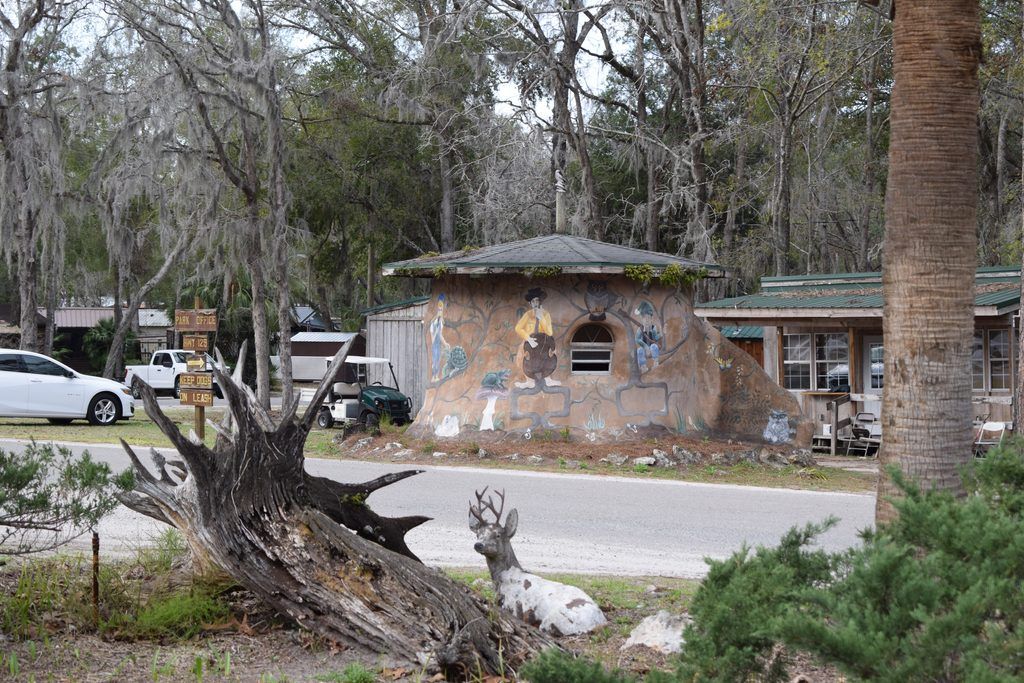
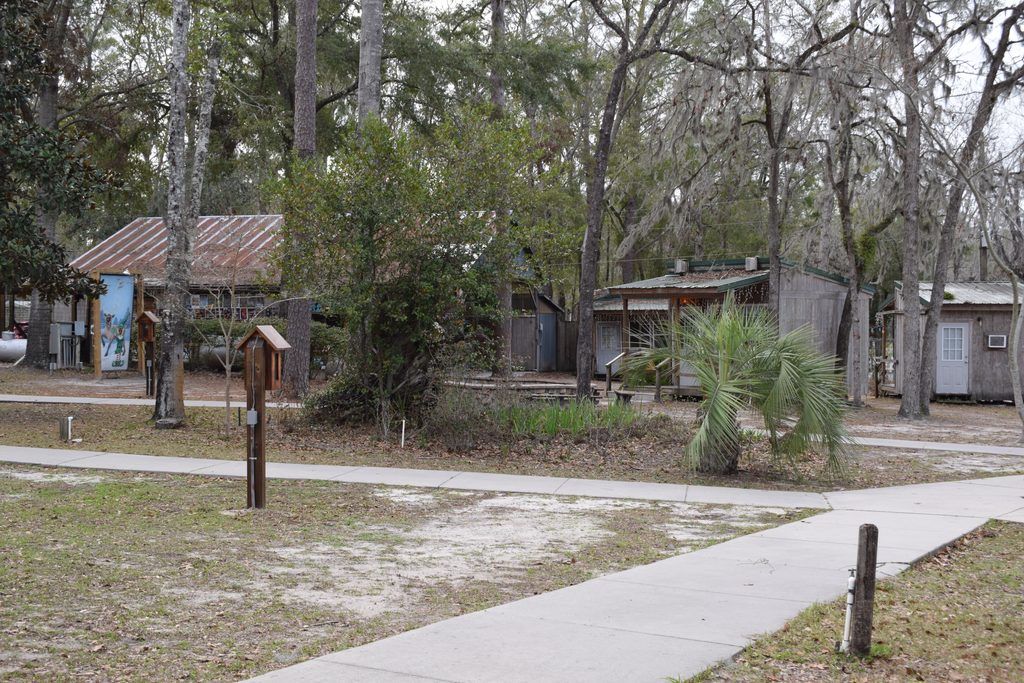
Instead, we found a surprisingly charming campground with rustic buildings and plenty of character.
I particularly liked the old-fashioned appearance of several buildings around the property.
There was a camp store, a bathhouse, and an absolutely adorable little chapel.

The chapel was so tiny that it immediately caught my attention.
There’s something about discovering unexpected buildings in a campground that makes me want to wander around and investigate everything.
Naturally, I also stopped at the camp store.
I was hoping to find a souvenir pin for my collection.
No luck.
The store mostly carried camping supplies.
Imagine that.
A campground store selling things people actually need for camping instead of catering to my souvenir-pin addiction.
The nerve.
Fortunately, our primary mission was still ahead of us.
We had a giant bat house to find.
The Giant Bat House at Spirit of the Suwannee
When someone says bat house, you might picture a small wooden box attached to a tree.
That’s not what we’re talking about here.
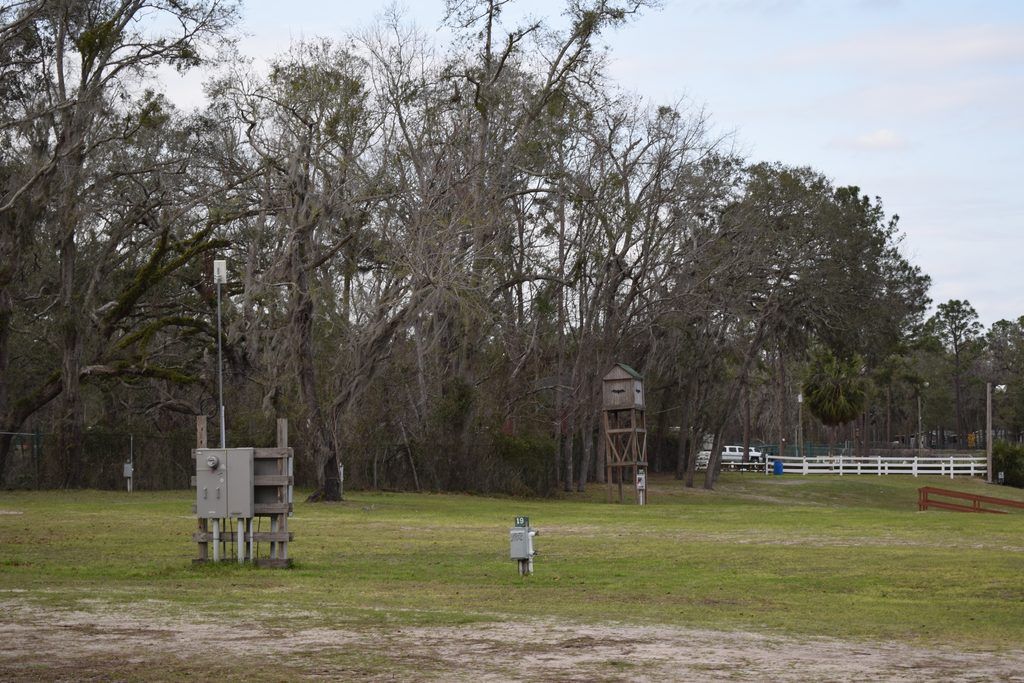
The Giant Bat House at Spirit of the Suwannee Music Park is an enormous elevated wooden structure that looks almost like a rustic cabin perched high above the ground.
Built in 2003, the tower was designed to provide roosting space for a large colony of bats.

Bats play an important ecological role by consuming insects, and providing suitable roosting habitats can help support local populations.
And this isn’t the only unusual wildlife-related structure we’ve discovered along the Suwannee. During our adventure at Big Shoals State Park, we encountered another fascinating piece of bat-related history tucked into the North Florida landscape.
The tower also became one of the campground’s more unusual attractions.
Visitors have described hearing bats moving and squeaking inside the structure during daylight hours.
But sunset is when the experience can become especially memorable.
When the tower is occupied, bats may emerge in large numbers to begin their nightly search for insects.
Imagine standing beneath the trees as hundreds or thousands of small silhouettes scatter across the evening sky.
Unfortunately, we visited during the daytime.
We didn’t get to witness the dramatic evening emergence.
But the tower itself was still worth finding.
It was enormous, unusual, and exactly the sort of roadside curiosity that makes exploring Florida so entertaining.
And then there’s the guano.
A Little Something Beneath the Bat Tower
If you’re wondering what happens when large numbers of bats live in one elevated structure, there’s a very practical answer.
Bat poop.
Lots of it.

Visitors have reported substantial accumulations of guano beneath the tower, sometimes accompanied by a rather memorable smell.
It’s a reminder that wildlife attractions aren’t always quite as glamorous as the photographs suggest.
If you visit, admire the tower from a safe distance, respect any barriers, and avoid disturbing the bats or their roosting area.
And perhaps don’t investigate the guano pile too enthusiastically.
Some mysteries are better left unexplored.
Skunk Apes, Swamp Apes, and North Florida Folklore
Of course, a giant tower filled with bats isn’t the only unusual wildlife-related story associated with Florida’s wilderness.
The state has a long tradition of tales involving mysterious creatures roaming its forests and swamps.
The most famous is the Skunk Ape.
Often described as Florida’s version of Bigfoot, the Skunk Ape supposedly resembles a large, hairy, humanlike creature.
Accounts frequently mention an unpleasant odor, unusual footprints, and fleeting encounters in remote wooded areas.
Although the Skunk Ape is most strongly associated with South Florida’s swamp country, stories of Bigfoot-like creatures also circulate throughout northern Florida.
Some storytellers use the term Swamp Ape for similar creatures.
These accounts are folklore, not verified wildlife observations. There is no accepted scientific evidence that such creatures exist.
And there’s no reason to assume any cryptid has ever occupied the Spirit of the Suwannee Music Park itself.
Still, it’s easy to understand how stories like these develop.
North Florida contains vast stretches of forests, wetlands, and waterways.
The woods can become surprisingly dark and quiet after sunset.
An unfamiliar animal call, movement among the trees, or a strange silhouette glimpsed in the distance can inspire a story that grows with every retelling.
Add a massive bat tower and thousands of flying mammals, and suddenly your peaceful camping trip has all the ingredients for a rather imaginative evening.
Personally, I’m perfectly happy appreciating the folklore without volunteering for a midnight cryptid investigation.
Murph causes enough trouble in broad daylight.
More Than a Campground
What surprised me most about our visit wasn’t actually the bat tower.
It was discovering how much history existed behind a place we had originally selected for one unusual attraction.
The Spirit of the Suwannee Music Park represents decades of work, determination, and imagination.
Bob and Jean Cornett looked at an underused recreation area and envisioned a permanent gathering place for music.
They invested years into developing that vision.
And the result became something much larger than a campground.
For festivalgoers, the park represents memories of performances, friendships, camping trips, and evenings beneath the oak trees.
For visitors like us, it offers a chance to explore a distinctive North Florida destination even when the stages are quiet.
And for anyone interested in the stories behind the places we visit, it demonstrates how a single family’s vision can transform an overlooked property.
Sometimes the most interesting history isn’t about a famous battle, an old fort, or a historic monument.
Sometimes it’s about people who saw possibilities where others saw problems.
For a very different experience along the same historic river, Suwannee River State Park offers wooded trails, river views, and remnants of Florida’s Civil War history. It’s another reminder that the Suwannee has been shaping the lives of people who traveled its banks for generations.
Planning Your Visit to Spirit of the Suwannee Music Park
Location: Live Oak, Suwannee County, Florida
Address: 3076 95th Drive, Live Oak, FL 32060
Official Website: https://www.musicliveshere.com/
What You’ll Find: Campgrounds, music venues, festival grounds, wooded recreational areas, rustic buildings, and the Giant Bat House.
Best Time to Visit: That depends on what you want to experience.
If you’re interested in music festivals, check the park’s event calendar and plan around a performance that interests you.
If you’re hoping for a quieter visit, consider a date outside major festival weekends.
And if the bat tower is your main attraction, sunset may offer an opportunity to observe bat activity when the structure is occupied.
Remember that bats are wild animals, and sightings aren’t guaranteed.
A Few Tips Before You Go
- Check access requirements. This is a privately operated campground and event venue, so confirm visitor policies, admission requirements, and access to the bat tower before arriving.
- Ask for directions. The property is large, and the bat tower may not be immediately obvious.
- Bring your camera. The tower and rustic campground buildings offer some unusual photo opportunities.
- Respect the wildlife. Avoid disturbing roosting bats or approaching guano accumulations.
- Check the festival schedule. Major events can dramatically change traffic, availability, and the overall atmosphere.
- Don’t count on finding souvenir pins. Trust me on this one.
If you’re exploring the Live Oak and Lake City area, consider adding Falling Creek Falls to your itinerary. This beautiful North Florida waterfall is another reminder that some of the region’s best discoveries are hiding just off the beaten path.
Final Thoughts: Sometimes a Place Just Needs the Right Dreamer
We came to the Spirit of the Suwannee Music Park because Dusty mentioned a giant bat house.
And we found it.
But we also discovered a place with a story far bigger than its unusual wooden tower.
A struggling recreation area became a beloved music destination because Bob and Jean Cornett believed in what it could become.
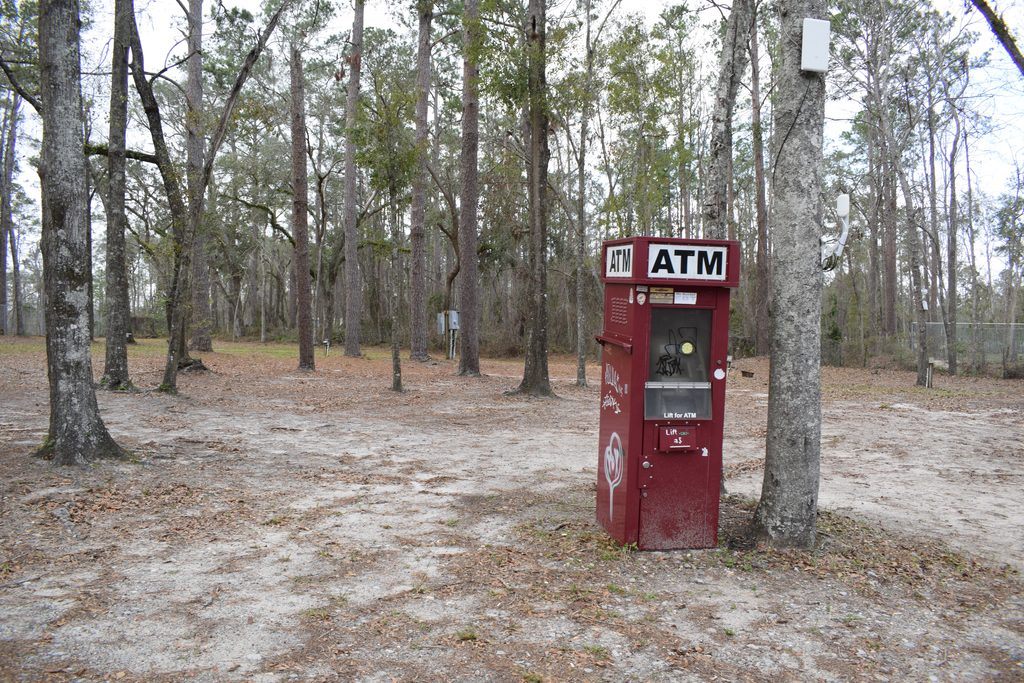
The trees were already there.
The river was already there.
The beauty of North Florida was already there.
What changed was the vision for bringing people together in that setting.
Today, the Spirit of the Suwannee continues to welcome visitors who come for music, camping, nature, and occasionally something a little unexpected.
Like a gigantic house full of bats.
And maybe, somewhere beyond the campground, a few creatures that exist only in Florida folklore.
Because sometimes a place doesn’t fail because it was a bad idea.
Sometimes it just hasn’t found the right dreamer yet.
And the Cornetts found theirs beside the Suwannee River.
Still would’ve liked a souvenir pin, though.
🎥 Come Along for the Adventure!
Want to see the Giant Bat House and explore the Spirit of the Suwannee Music Park with us?
Watch our Travel Made Personal adventure:
They Bought a Struggling Park and Built a Music Empire
And while you’re watching, keep an ear out around the 13-minute mark.
Apparently, my mouth decided to create its own little piece of TMP folklore.
Thanks, Chris, for catching that one. 😂
Real Places. True Stories. Travel Made Personal.
Love discovering hidden history, unusual destinations, and the stories that make every place worth exploring? Join the Travel Made Personal newsletter for fresh adventures, forgotten places, roadside curiosities, and a little mischief along the way. The next discovery is just around the bend! 🧭

If you see this after your page is loaded completely, leafletJS files are missing.