

There are certain things you can count on when traveling with us.
I will find history.
Murph will find an opportunity to complicate something.
And apparently, we will visit at least one cemetery.
At this point, I don’t think that’s even accidental anymore.
After spending some time exploring nearby Falling Creek Falls, we headed just a little farther down the road outside Lake City, Florida, to Falling Creek Methodist Church and Cemetery.
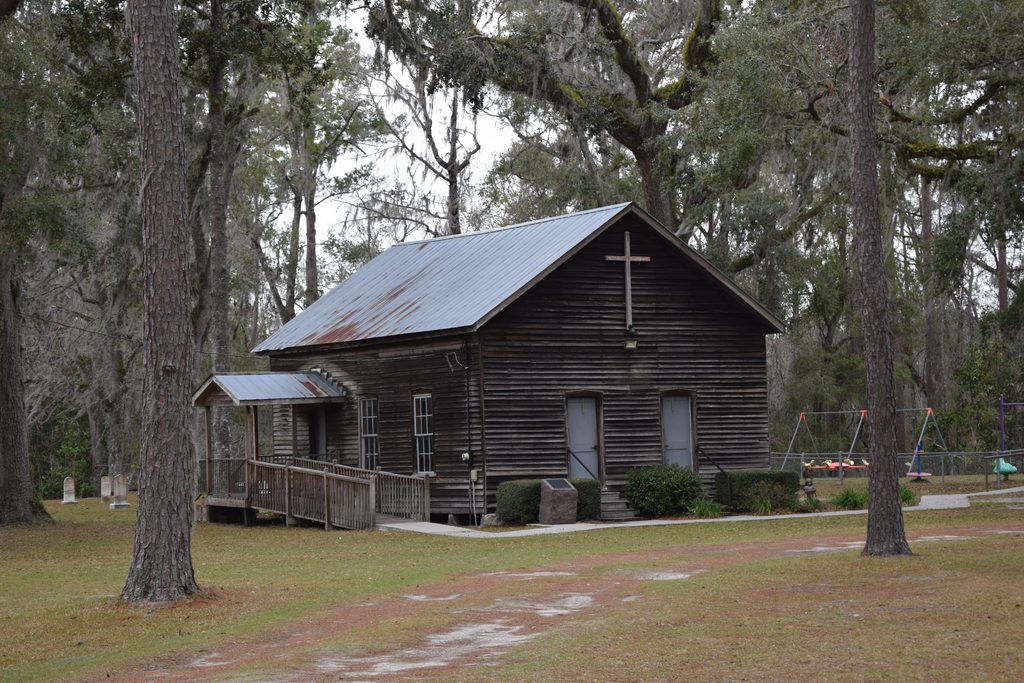
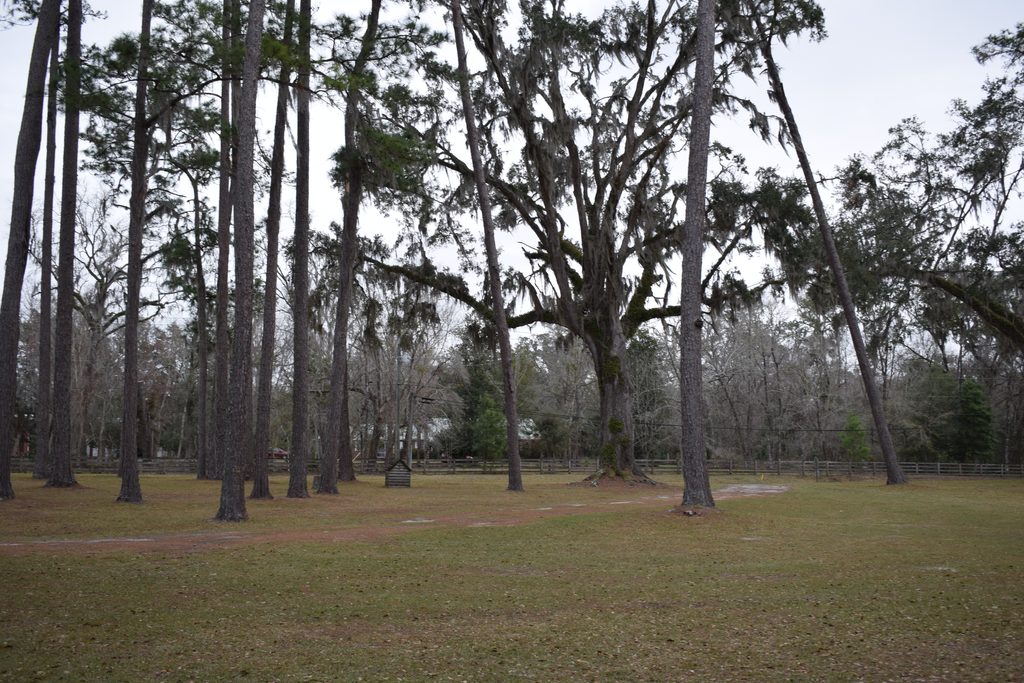
From the road, it looks like a simple old country church tucked beneath the trees.
But this quiet little place has been part of the Falling Creek community for more than 170 years.
And behind the church, generations of that community are still telling their stories in stone.
From Falling Creek Falls to Falling Creek Church
Our visit actually began just down the road at Falling Creek Falls.
We’d followed the boardwalk through the woods to the creek, where dark, tannic water tumbled over the small waterfall. It wasn’t some enormous thundering cascade—and Florida isn’t exactly known for those—but it was beautiful.
We stood there for a while, taking it in and, naturally, taking pictures.
Then it was time for our next stop.
Falling Creek Methodist Church and Cemetery.
Because, you know.
Cemetery.
When we arrived, we found an old wooden church surrounded by the quiet landscape of rural Columbia County.
The building itself immediately caught my attention. There are no towering spires or elaborate stone walls here. Falling Creek is a simple frame church—the sort of practical building that once served rural communities throughout Florida.
Behind it sits the cemetery.
At first, most of the graves we saw actually looked relatively recent.
Then we started noticing the older stones.
Falling Creek’s Story Began in the 1850s
The church standing here today dates to around 1885, but the history of Falling Creek stretches back several decades earlier.
In 1855, Thomas D. Dicks acquired land in this area after coming to Florida from South Carolina with his family.
This was a very different Florida from the one we travel through today. Communities throughout this part of North Florida were growing along rivers, roads and emerging transportation routes. Not far away, White Springs was beginning its own transformation from a frontier settlement into a destination along the Suwannee River. But outside these small communities, families were still carving farms and settlements out of a landscape that remained largely rural.
Sometime during this period, a simple log church was established here.
That original building reportedly served a Baptist congregation and became a gathering place for the families settling around Falling Creek.
And that’s important because rural churches were about much more than Sunday services.
They were places where neighbors gathered, marriages began, funerals were held, news traveled and communities formed.
In a landscape where families could be separated by miles of wilderness and farmland, the little log church helped bind them together.
Then came the Civil War.
A Church Survives a Changing Florida
In 1866, only a year after the Civil War ended, the congregation at Falling Creek became Methodist.
The old log church continued serving the community for years before being replaced around 1885 by the wooden frame building standing here today.
It’s wonderfully simple.
Wood siding. Metal roof. One room.
Nothing about it was designed to impress anyone.
It was built to serve a community.
And more than a century later, that’s exactly what it’s still doing.
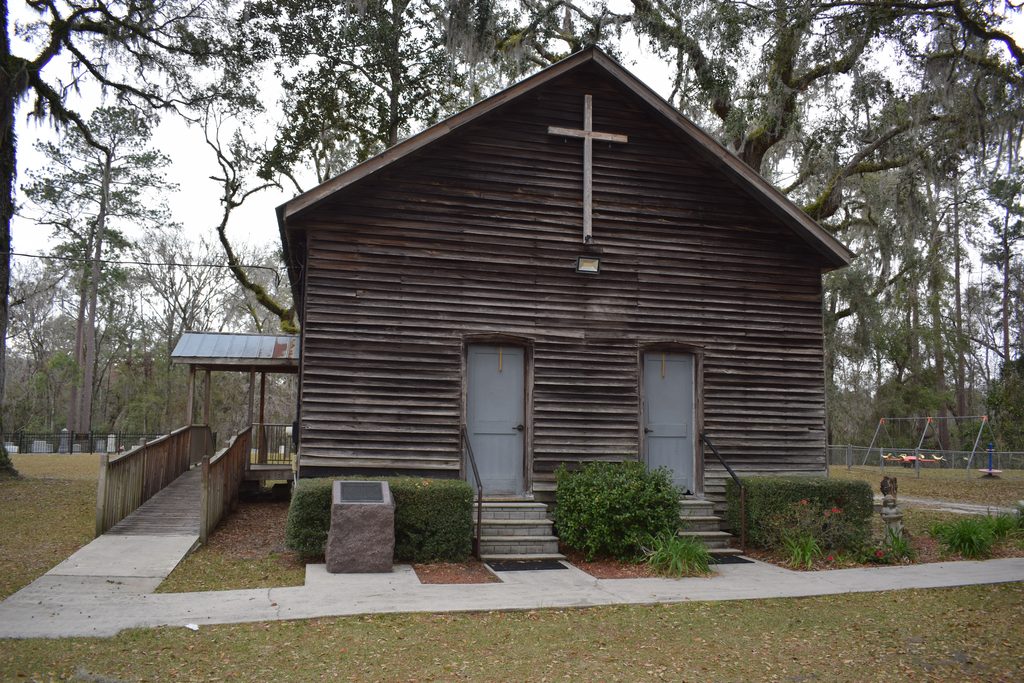
Falling Creek remains an active church today.
That makes this place especially interesting to me because so many historic sites we visit survive only as remnants of what they once were.
We find foundations where houses disappeared.
We walk abandoned roads leading to communities that no longer exist.
We wander cemeteries belonging to towns that vanished around them.
But Falling Creek never entirely disappeared.
Generations changed.
Buildings changed.
Florida changed tremendously.
And people kept gathering here.
That continuity helped earn Falling Creek Methodist Church and Cemetery a place on the National Register of Historic Places on April 4, 1996.
But the building is only half of the story.
The other half is behind it.
The Cemetery at Falling Creek
Walking through the cemetery, I started searching for the older stones.
Most of what we initially encountered appeared much newer, but every so often another weathered marker pulled us farther backward through time.
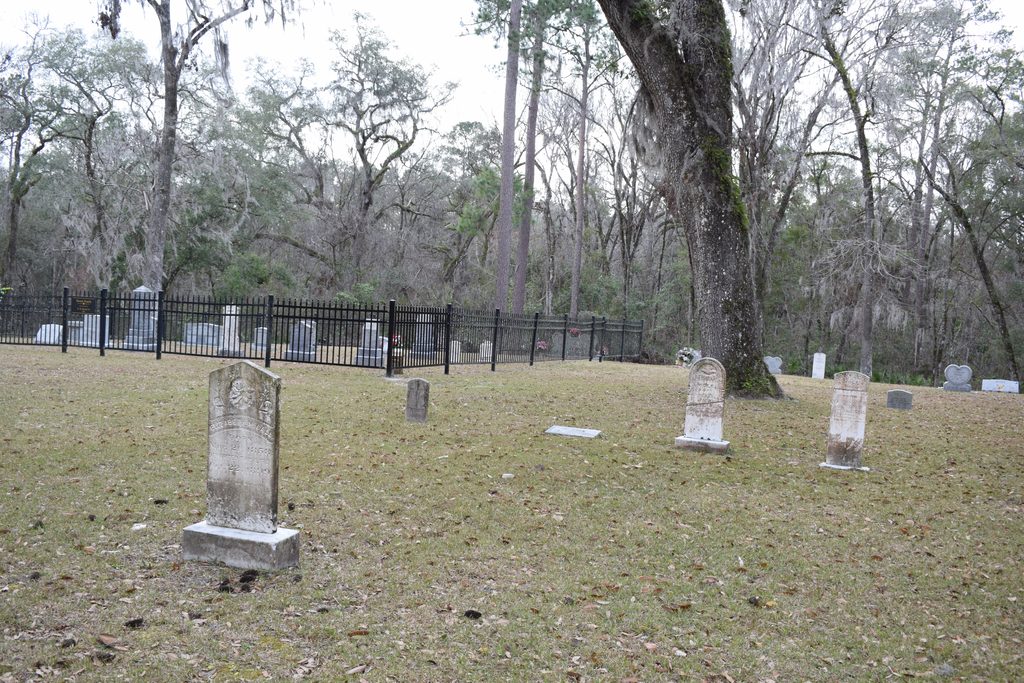
The oldest grave I personally spotted during our visit was from 1873.
But documented burials here reach even earlier.
One of the earliest is associated with Elizabeth Mole, who died in 1871.
Historical accounts connect her with the group of settlers who came into this part of Florida from South Carolina during the same era as the Dicks family.
Think about that for a moment.
Someone buried behind this church may have known this community when the original log church was still standing.
She lived here before the current church existed.
Suddenly those dates carved into old stones aren’t simply numbers anymore.
They’re pieces of a much larger story.
Civil War Veterans at Falling Creek
Several graves also connect this small rural cemetery to one of the most turbulent periods in American history.
Cemetery records identify Confederate veterans buried at Falling Creek, including John Anderson Mole, W. Caldwell and Phillip Goodbread Moore.
These were local men whose lives became entangled in a conflict far larger than their small Florida community.
They left their homes.
They survived the war.
And eventually, they returned to the place they knew.
Today they rest among the families and neighbors who formed this community.
But Falling Creek’s story didn’t end with the nineteenth century.
The cemetery continued serving local families through the generations that followed. Among those buried here is Woodrow Wilson Moore, a World War II veteran who died in 1982.

Within one relatively small cemetery, the stones trace more than a century of American history.
Florida’s frontier years.
The Civil War.
The twentieth century and two World Wars.
And countless ordinary days of family and community life in between.
History doesn’t divide itself neatly into chapters when you’re standing somewhere like this.
It’s all right there together.
Where Florida History Still Lives
That’s what I loved about Falling Creek.
When we first arrived, I saw a pretty old wooden church and a small cemetery.
It was supposed to be another stop along the road.
But the longer you look, the deeper the story becomes.
The building dates to around 1885.
The congregation traces its history back to a log church established during the 1850s.
Some of the people buried behind it lived during the earliest years of the community.
And more than 170 years after those first families gathered here, people still come to Falling Creek to worship.

This isn’t simply a historic site preserved to show us what rural Florida used to be.
It’s part of a story that never completely stopped.
Visiting Falling Creek Methodist Church & Cemetery
Falling Creek Methodist Church and Cemetery is located northwest of Lake City in Columbia County, Florida, not far from Falling Creek Falls.
If you’re exploring the area, the church makes a natural companion stop to Falling Creek Falls. And if you’re following the Suwannee through this corner of North Florida, Big Shoals State Park is another worthwhile stop, where the river creates Florida’s largest whitewater rapids when water levels cooperate.
Just remember that this isn’t merely a historic attraction. The church remains active, and the cemetery is the resting place of real people whose families may still live in the surrounding community.
Explore respectfully, don’t disturb graves or markers, and leave everything exactly as you found it.
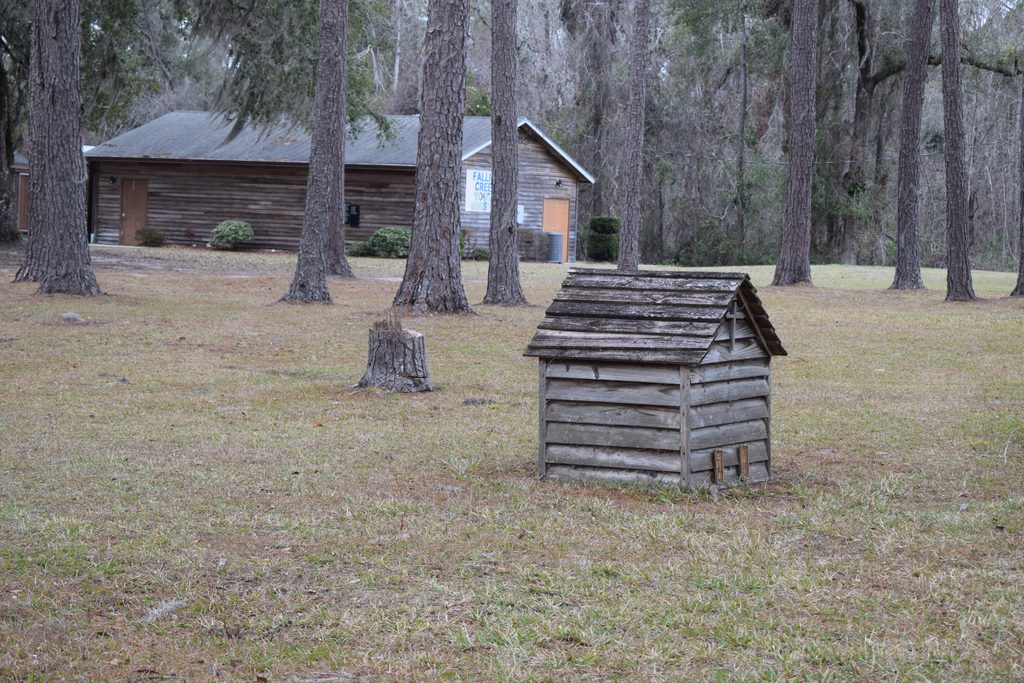
You don’t need long to appreciate Falling Creek.
We certainly didn’t spend hours here.
We walked around the church, wandered through the cemetery and searched the stones for glimpses of the people who came before us.
There wasn’t a dramatic mystery waiting to be solved.
No grand monument.
No enormous mausoleum.
Just a little wooden church beside a Florida road.
And sometimes, that’s exactly where the best stories are hiding.
The Road Continues
As we pulled away from Falling Creek, the church remained beneath the trees just as it has for generations.
The people who settled this community in the 1850s couldn’t possibly have imagined the Florida surrounding it today.
But I suspect they would recognize this little patch of ground.
A church.
A cemetery.
Families gathering where generations before them once gathered.
Falling Creek isn’t simply a relic of Florida’s past.
It’s a place where the past never entirely left.
And behind that little wooden church, stone by stone, the people who built this community are still telling its story.
Have you ever found a tiny country church or cemetery that turned out to have far more history than you expected? Tell me about it in the comments—because apparently I need more cemeteries to add to the itinerary.
Until the next road leads somewhere unexpected… travel made personal.
Want more stories from the road?
Join the Travel Made Personal newsletter for forgotten places, hidden history, roadside discoveries, and the stories we uncover along the way—delivered straight to your inbox.
Come explore with us. The next story might be hiding just down the road.

If you see this after your page is loaded completely, leafletJS files are missing.