
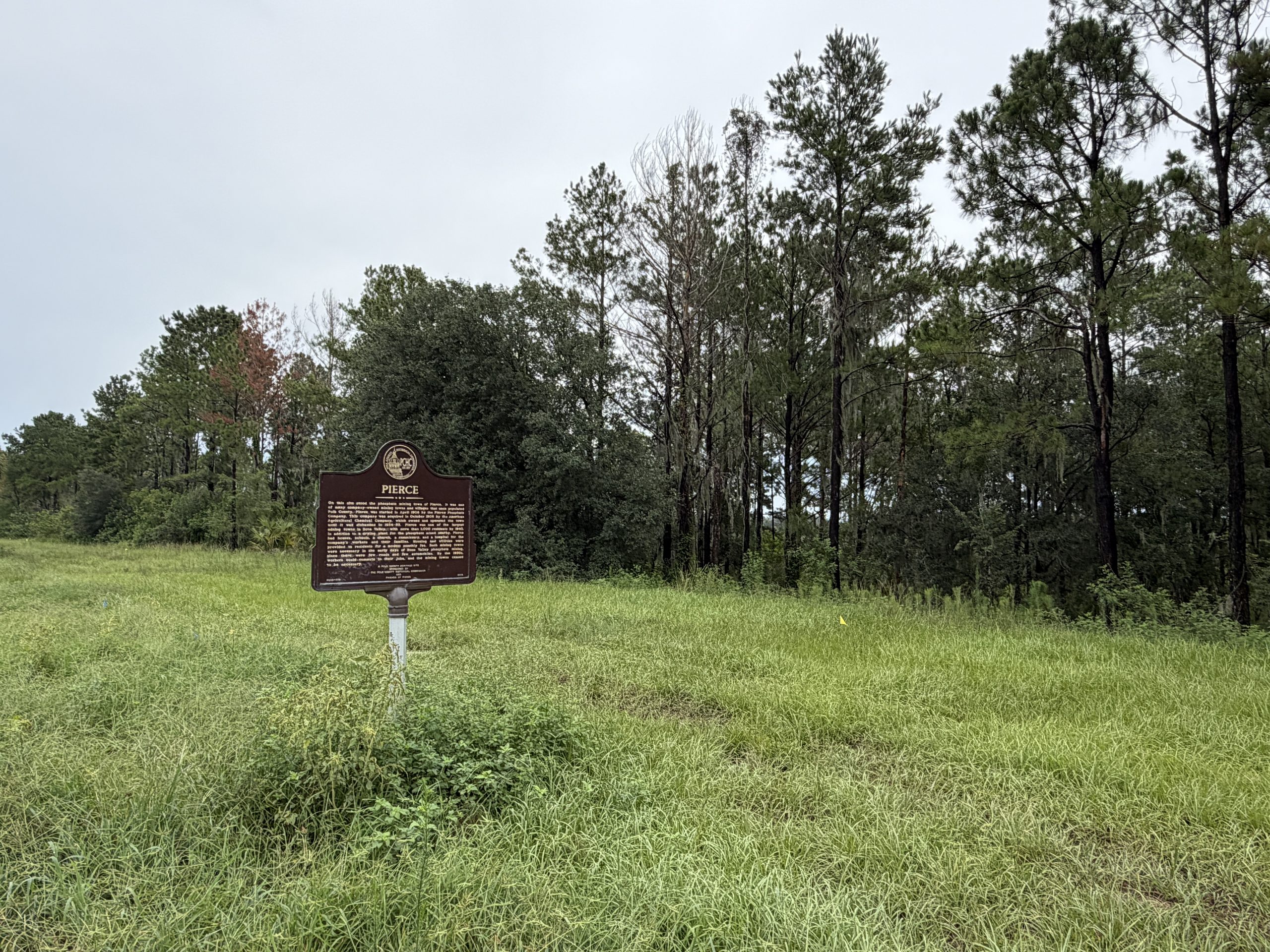
Once home to more than 1,000 people, Pierce, Florida, was a thriving phosphate mining community. Today, little remains to remind travelers that an entire town once stood here.
Some places are destinations.
Others are discoveries.
Pierce, Florida, was one of those discoveries.
On our very first Exploration Friday together, Dusty and I were traveling through Polk County, following the history of Florida’s phosphate mining industry. We’d already visited the Phosphate Museum in Mulberry, explored Brewster Ghost Town, and stopped in Bradley Junction.
Our next planned destination was Homeland Heritage Park.
But somewhere along the way, I spotted what appeared to be an abandoned train in the distance.
Naturally, that caught my attention.
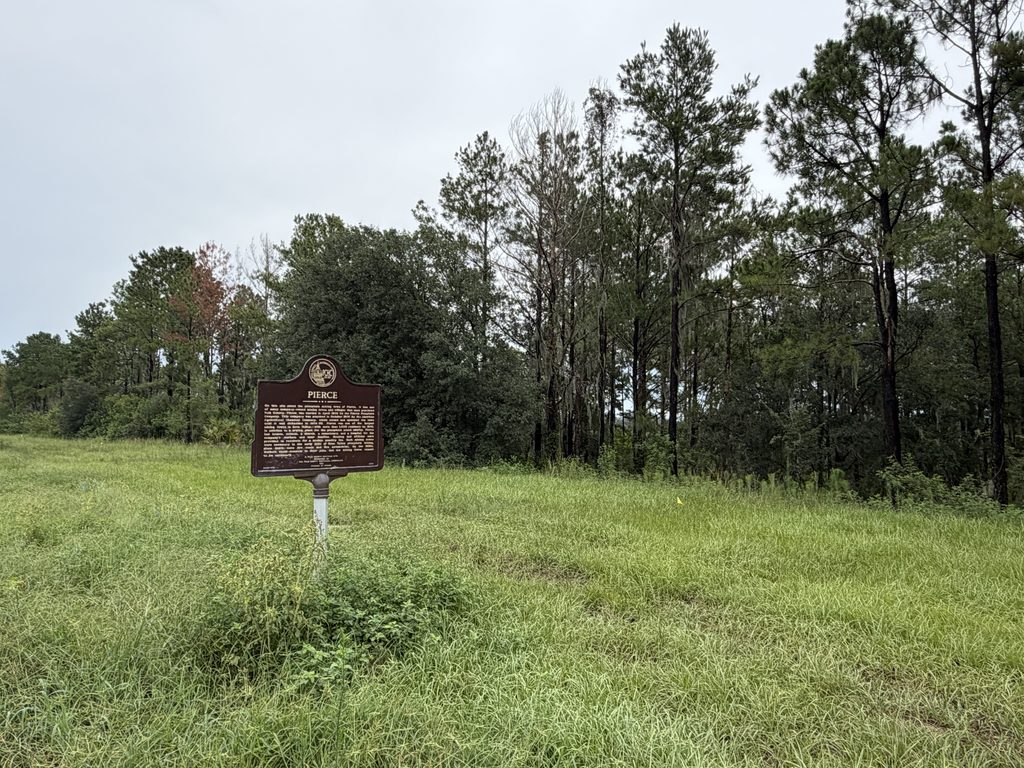
And then we noticed a historical marker standing beside a grassy field.
PIERCE.
I’d never heard of it.
But according to the marker, this quiet stretch of Polk County had once been home to more than a thousand people.
There had been houses, schools, a church, a commissary, and even a hospital.
An entire town had existed here.
And by the mid-1950s, it was gone.
What fascinated me most wasn’t simply that Pierce had disappeared.
It was how it disappeared.
Because unlike many ghost towns, Pierce wasn’t entirely abandoned and left to decay.
Much of the town was physically moved.
And that made me wonder whether pieces of Pierce might still be standing somewhere nearby.
Before Pierce: Florida’s Phosphate Boom
To understand why Pierce existed, we first have to understand the industry that created it.
Long before Central Florida became known for theme parks, sprawling subdivisions, and retirement communities, the region was an important center of phosphate mining.
Phosphate is an essential ingredient in agricultural fertilizers, and Central Florida contains some of the most significant phosphate deposits in the United States.
The region surrounding Mulberry became known as Bone Valley, a name inspired by the prehistoric fossils discovered among its mineral deposits.
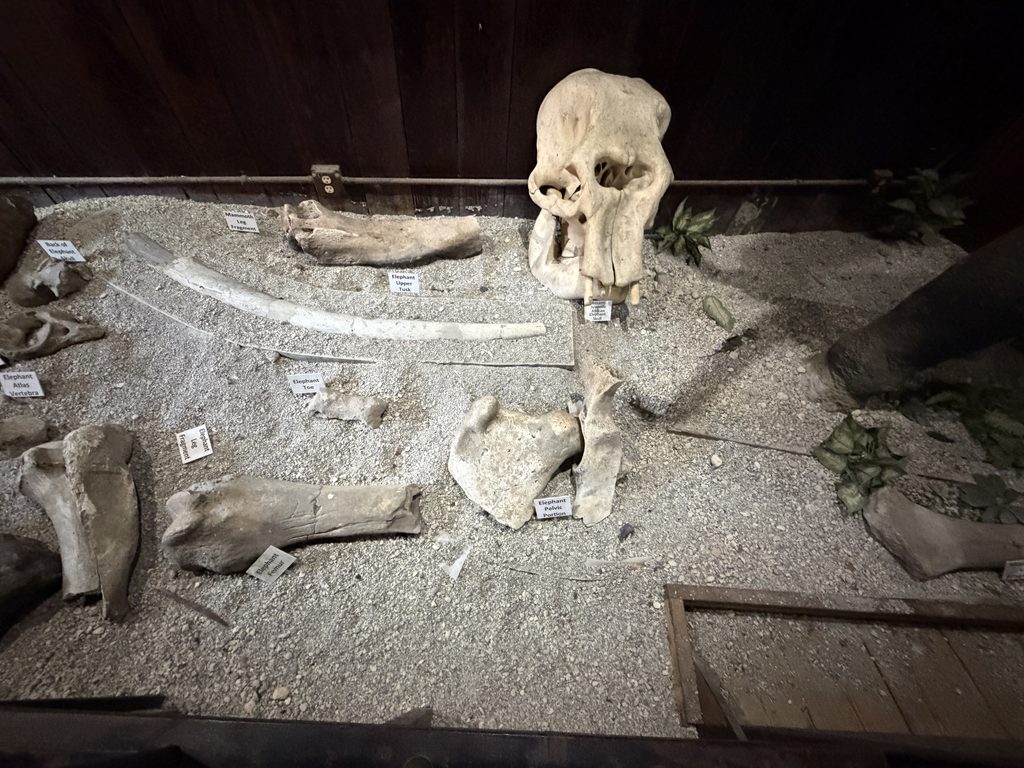
By the late nineteenth century, phosphate mining was transforming the landscape.
Companies established mining operations across Polk County, bringing workers, railroads, equipment, and new settlements into previously rural areas.
But those early operations faced a practical problem.
Workers needed somewhere to live.
Roads were limited, automobiles were uncommon, and commuting long distances wasn’t a realistic option for many families.
So mining companies began building their own communities.
These company towns provided housing and services near the mines, allowing workers and their families to live close to their jobs.
Some remained small settlements.
Others grew into substantial communities.
Pierce would become one of the largest.
The Birth of Pierce, Florida
Pierce was established in April 1906 by the Pierce Phosphate Company.
But the original company wouldn’t remain independent for long.
In October of that same year, the American Agricultural Chemical Company acquired the operation.
For nearly five decades, the company would own and operate the town.
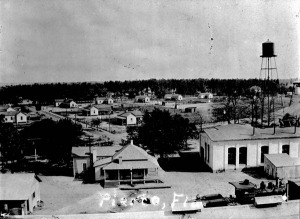
Pierce wasn’t simply a collection of houses near a mine.
It became a functioning community with many of the services residents needed for everyday life.
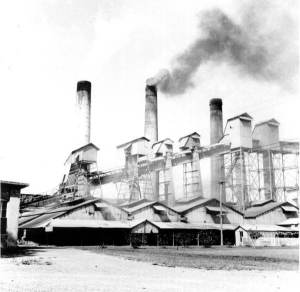
The town included houses, schools, a church, a commissary, and a hospital. A phosphate drying plant operated nearby.
By 1940, Pierce had more than 1,000 residents, making it one of the largest phosphate mining towns in Bone Valley.
Imagine what that community must have looked like.
Children walking to school.
Workers heading toward the mining operations.
Families gathering around dinner tables.
Neighbors visiting one another.
For generations of residents, Pierce wasn’t a company town or a historical curiosity.
It was home.
And yet, nearly everything about life there was connected to a single corporation.
When the Company Owned Your Town
Living in Pierce meant more than working for the American Agricultural Chemical Company.
For many residents, the company was also their landlord and provider of essential services.
Housing and utilities were available for a modest monthly fee.
For workers living in a relatively isolated mining region, those arrangements offered practical advantages.
Families had homes near their jobs, access to community facilities, and services that might otherwise have been difficult to obtain.
But there was another side to company-town life.
When your employer also owns your house and much of the community around you, the relationship between worker and company becomes considerably more complicated.
Your livelihood and your home are connected.
Decisions made by the company can affect not only your employment but also where and how your family lives.
And Pierce’s history wasn’t without the inequalities that characterized the broader society of its time.
Historical records document separate public schools for white and Black children, reflecting the racial segregation that shaped life in Florida during the early twentieth century.
It’s important to remember that company towns weren’t necessarily the idyllic communities sometimes portrayed in nostalgic photographs.
They were real places, with real people whose experiences could differ significantly.
Some residents undoubtedly developed lasting friendships and cherished memories.
Others faced the limitations and injustices of the era.
All of those experiences are part of Pierce’s history.
Why Did Pierce Disappear?
By the 1950s, the circumstances that had made company towns necessary were changing.
Roads had improved.
Automobiles had become more accessible.
And workers could increasingly commute to mining operations from established communities.
They no longer needed to live in company-owned housing beside the mines.
For corporations, maintaining entire towns became less practical.
Houses required repairs. Utilities needed maintenance. Community facilities cost money to operate.
As workers gained more options for where they lived, the company-town model gradually became unnecessary.
Pierce was disbanded during 1954 and 1955.
But unlike many communities that declined slowly and were eventually abandoned, Pierce experienced something rather unusual.
The houses were moved.
The Town That Was Taken Apart
When Pierce was dismantled, some residents were able to purchase their company-owned houses and relocate them to nearby properties.
Instead of leaving every home behind, families could take their houses with them.
Nearby communities, including Rolling Hills, Pinedale, and Oak Terrace, became associated with the relocation of Pierce homes.
Think about what that must have been like.
Imagine spending years raising your family in a house, only to watch that same building lifted from its foundations and transported down the road.
The house might survive.
The furniture could return to its familiar rooms.
Your family could continue living beneath the same roof.
But the neighborhood was gone.
The streets where children played.
The familiar walk to the commissary.
The neighbors who had lived beside you for years.
The places where everyday memories had accumulated.
A building can be moved.
A community isn’t quite so easy to relocate.
And as the houses were scattered across the surrounding area, Pierce ceased to exist as the town its residents had known.
Our Accidental Discovery of Pierce Ghost Town
When Dusty and I first encountered Pierce, we weren’t looking for it.
We were simply making our way through Polk County on our first Exploration Friday together.
Our route had already taken us through several places connected to the region’s history.
We’d visited the Mulberry Phosphate Museum and explored Brewster Ghost Town, another community whose story was shaped by Florida’s phosphate industry.
We’d also stopped in Bradley Junction.
And somewhere along the way, we’d discovered Crum-Durrance Cemetery, a small historic cemetery that became another unexpected stop on our adventure.
Our intended destination was Homeland Heritage Park, where historic buildings preserve pieces of Polk County’s past.
But apparently, our itinerary had other ideas.
I’d spotted those abandoned train cars in the distance, and shortly afterward, we came across the Pierce historical marker.
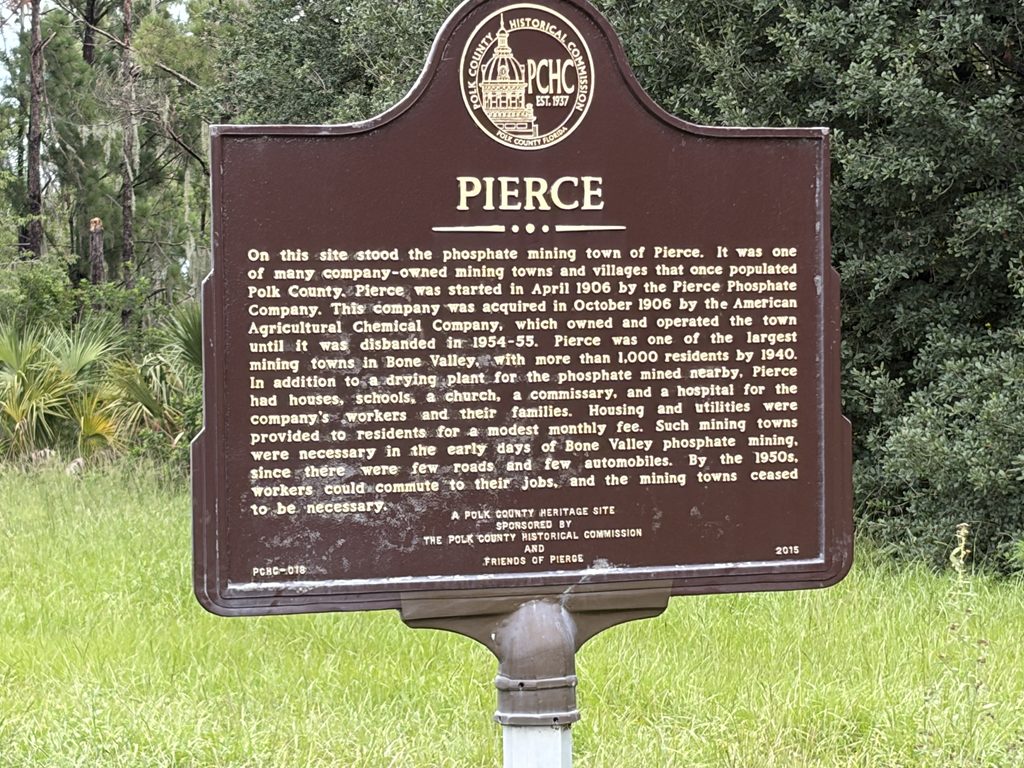
We pulled over to investigate.
Unfortunately, our photographs from that first visit weren’t exactly masterpieces.
In fact, they were blurry.
Very blurry.
But even through those less-than-stellar photographs, the story on the marker caught my attention.
Here was a town I’d never heard of, in an area we’d spent much of the day exploring.
A place where more than a thousand people had once lived.
And now, standing beside the road, there was little visible evidence that the community had ever existed.
We photographed the marker and continued on our way.
But Pierce wasn’t finished with me.
Returning to Search for the Lost Houses
After learning that some of Pierce’s houses had been relocated, I wanted to see whether any might still be standing.
So Dusty and I returned to the area.
This time, we drove through a nearby neighborhood, looking for older buildings that might have some connection to the former company town.
We found several houses that caught my attention.
Small wooden buildings with weathered siding, simple construction, and old metal roofs.
The kinds of houses that make you wonder how many stories their walls could tell.
One in particular made me curious.
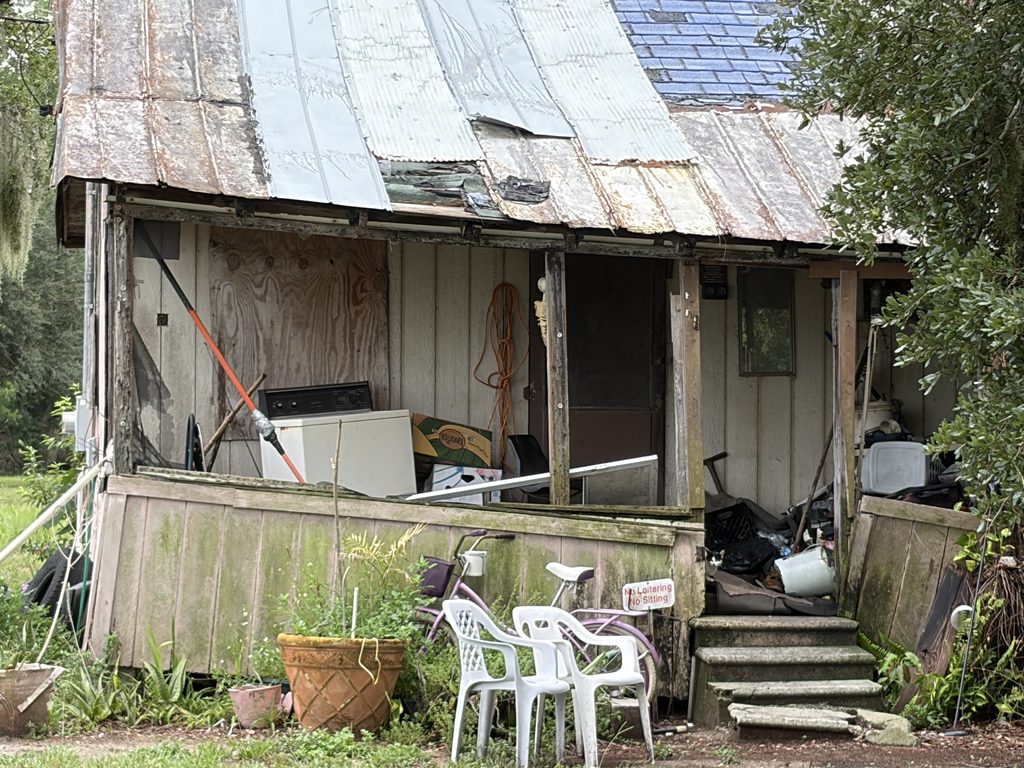
Could it have been one of the homes moved from Pierce?
Could a family have lived there when the phosphate plant was operating?
Could this building have once stood along a street in a town that no longer exists?
I don’t know.
And I want to be clear about that.
I haven’t verified that any of the houses we photographed were originally located in Pierce.
They may be surviving company houses.
Or they may simply be older homes in the surrounding area.
Without documentation connecting a particular building to the original town, I wouldn’t want to claim otherwise.
But knowing that some Pierce homes were relocated makes these neighborhoods an interesting part of the story.
Because somewhere in the surrounding communities, pieces of the former town may still survive.
And that changes the way you think about a ghost town.
Sometimes history isn’t hiding beneath the weeds.
Sometimes it’s still standing.
It just isn’t standing where it started.
The Abandoned Train Cars That Got Away
Remember those abandoned train cars that originally caught my attention?
Well, I haven’t forgotten about them.
Railroads were essential to Florida’s phosphate industry, transporting materials between mines, processing facilities, and shipping connections.
So finding abandoned rail equipment in this part of Polk County immediately raises questions.
How long has it been there?
What was it used for?
And does it have any connection to the area’s mining history?
I don’t know whether those particular train cars were associated with Pierce.
But I certainly wanted to take a closer look.
Unfortunately, Florida had other plans.
When we intended to investigate the area, the weather was terrible.
Heavy storms made it a particularly bad time to go wandering around looking for abandoned railroad equipment.
So we skipped it.
Which means those train cars remain on my exploration list.
I’d still love to return someday and see whether there’s a safe, legal way to get a better look.
Preferably without lightning.
Because even my curiosity has limits.
Occasionally.
What Remains of Pierce Today?
Today, the Pierce historical marker stands in a grassy clearing surrounded by trees.
It’s a quiet scene.
There are no bustling streets filled with workers and their families.
No schoolchildren making their way to class.
No commissary serving the community.
No visible neighborhood of company houses surrounding the marker.
The original town was dismantled, and the surrounding landscape has continued to change over the decades.
The phosphate industry that created Pierce also reshaped much of the region.
For someone passing through today, there’s little to suggest that more than a thousand people once called this place home.
And that’s what makes the marker so important.
Without it, how many travelers would ever know Pierce existed?
How many would drive past without realizing that an entire community once stood nearby?
A historical marker might not seem like much.
But sometimes those few paragraphs are the only introduction we have to a place that has nearly disappeared from public memory.
And occasionally, they’re enough to send someone down a historical rabbit hole.
Or, in my case, back to Polk County looking for old houses.
Planning Your Own Visit to Pierce
If you’re interested in exploring Florida’s phosphate mining history, Pierce is worth including as part of a larger Polk County history trip.
Location: Pierce, south of Mulberry in Polk County, Florida.
What to expect: A roadside historical marker commemorating the former phosphate mining town. Don’t expect a preserved ghost town with streets of abandoned buildings.
Historical significance: Pierce was established in 1906, grew to more than 1,000 residents, and was disbanded in 1954–1955.
Nearby historic destinations: The Mulberry Phosphate Museum, Brewster Ghost Town, Bradley Junction, Crum-Durrance Cemetery, and Homeland Heritage Park all offer opportunities to explore different chapters of the region’s history.
A few things to remember:
- The historical marker is the primary landmark associated with the former townsite.
- The surrounding area includes private property. Respect posted signs, property boundaries, and residents’ privacy.
- Houses in nearby neighborhoods should not be assumed to be original Pierce buildings without historical verification.
- Abandoned railroad equipment and industrial areas may be unsafe or restricted. Observe from lawful public access points rather than entering structures or restricted property.
- Florida weather can change quickly, especially during storm season.
Pierce isn’t the kind of ghost town where you spend hours wandering through abandoned buildings.
It’s a place where understanding the history transforms an otherwise ordinary-looking landscape.
And sometimes that’s an even more meaningful experience.
What Stayed With Me
I’ve explored quite a few forgotten places over the years.
Abandoned cemeteries.
Historic ruins.
Ghost towns.
Communities that slowly disappeared as industries changed and people moved away.
But Pierce stands out because its story is a little different.
The town wasn’t simply left behind.
Pieces of it were carried away.
Families took their houses and began new chapters elsewhere.
The buildings might have survived, but the community they once formed was gone.
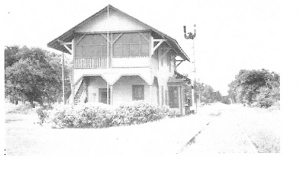
And I think there’s something both fascinating and heartbreaking about that.
Because a town is more than its buildings.
It’s the people who live there.
The neighbors who know one another.
The children who grow up together.
The routines and traditions that become part of everyday life.
And the memories that linger long after the physical landscape has changed.
More than a thousand people once lived in Pierce.
They worked, raised families, celebrated milestones, and experienced the ordinary moments that make up a lifetime.
And today, most people have never heard of their town.
But that doesn’t mean their stories no longer matter.
Final Thoughts: The Florida Town That Didn’t Entirely Disappear
When Dusty and I set out on our first Exploration Friday, Pierce wasn’t on our itinerary.
We weren’t searching for a lost company town.
We were simply following the history of Polk County, stopping wherever something interesting caught our attention.
And somewhere along the way, an abandoned train led us to a historical marker.
That marker introduced us to a town that once housed more than a thousand people.
A community created by Florida’s phosphate boom.
A place where families lived for nearly fifty years.
And a town that disappeared when the company-owned community was no longer needed.
We returned looking for what remained.
And although we found some intriguing old houses, there are still questions I haven’t answered.
Were any of those buildings actually moved from Pierce?
What became of the families who once called the town home?
And what other pieces of Pierce’s history are still waiting to be uncovered?
I hope someday to learn more.
Because sometimes forgotten history isn’t found inside an abandoned building or behind an overgrown cemetery gate.
Sometimes it’s standing beside the road.
A simple marker in an empty field.
Waiting for someone curious enough to stop.
And that’s what Forgotten Friday is all about.
Love discovering the history hiding in forgotten places? 💚
Join the Travel Made Personal mailing list for monthly stories of lost towns, historic cemeteries, overlooked landmarks, and unexpected discoveries along America’s backroads. From places like Pierce, Florida, to the stories waiting around the next bend, there’s always more history to uncover.
Subscribe and let’s keep forgotten history alive—one adventure at a time!

If you see this after your page is loaded completely, leafletJS files are missing.