
Some places are forgotten because they disappear. Others survive because someone refuses to let them.
Florida has a way of burying its history beneath new roads, expanding neighborhoods, and modern development. Old railroad towns disappear. Historic buildings are demolished. Entire communities fade until little remains beyond a name on an old map.
But tucked away in northern Marion County is a little town that tells a different story.
Welcome to McIntosh, Florida, where beautiful historic houses stand beneath sprawling oak trees, old commercial buildings still line the streets, and a railroad depot reminds visitors of the days when trains helped shape the community.
McIntosh isn’t a ghost town. It isn’t abandoned. And it certainly hasn’t been forgotten by the people who call it home.
Instead, it’s a remarkable example of what can happen when a community decides its history is worth preserving.
And my introduction to this little town began with a house.
The House That Made Me Look Twice
McIntosh Historic District was the first stop on one of my solo Exploration Fridays.
I didn’t have a particular building I was searching for. My plan was simply to drive through the historic district, explore what I could, and photograph some of the old buildings.
But almost immediately after arriving, something caught my attention.
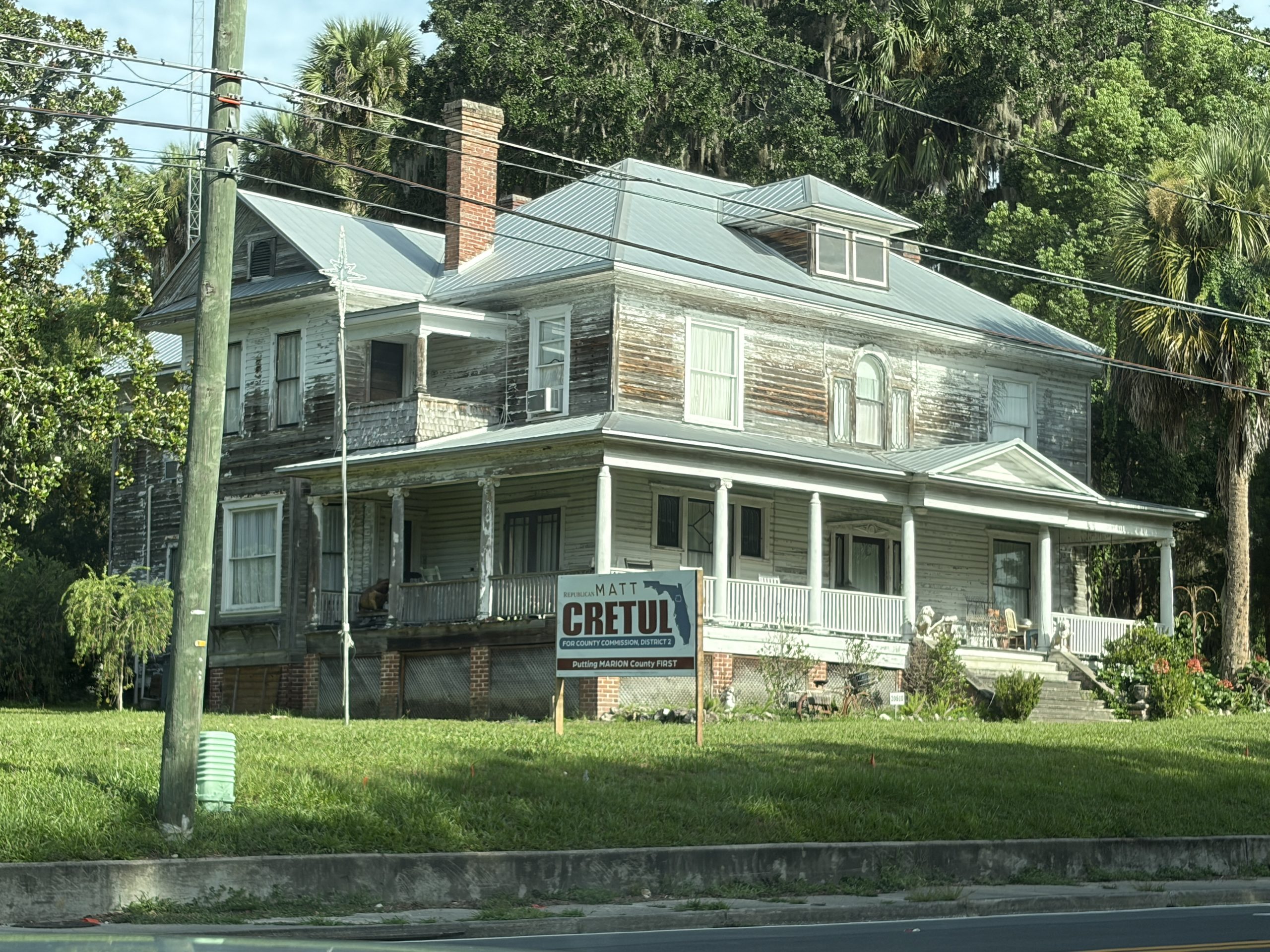
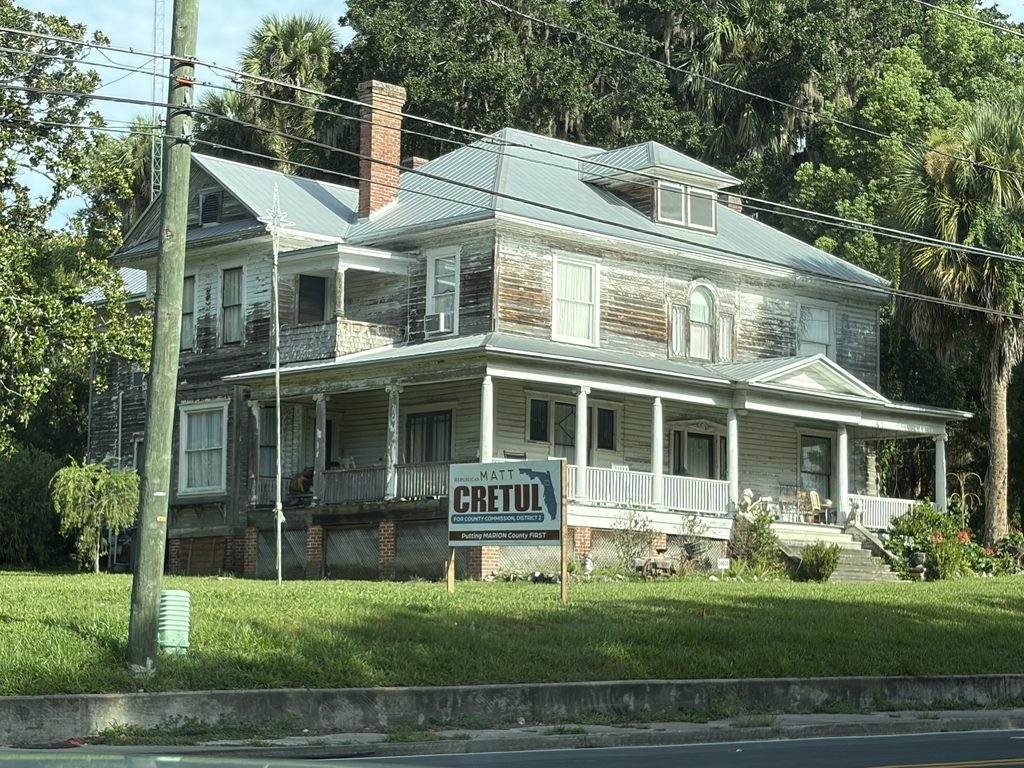
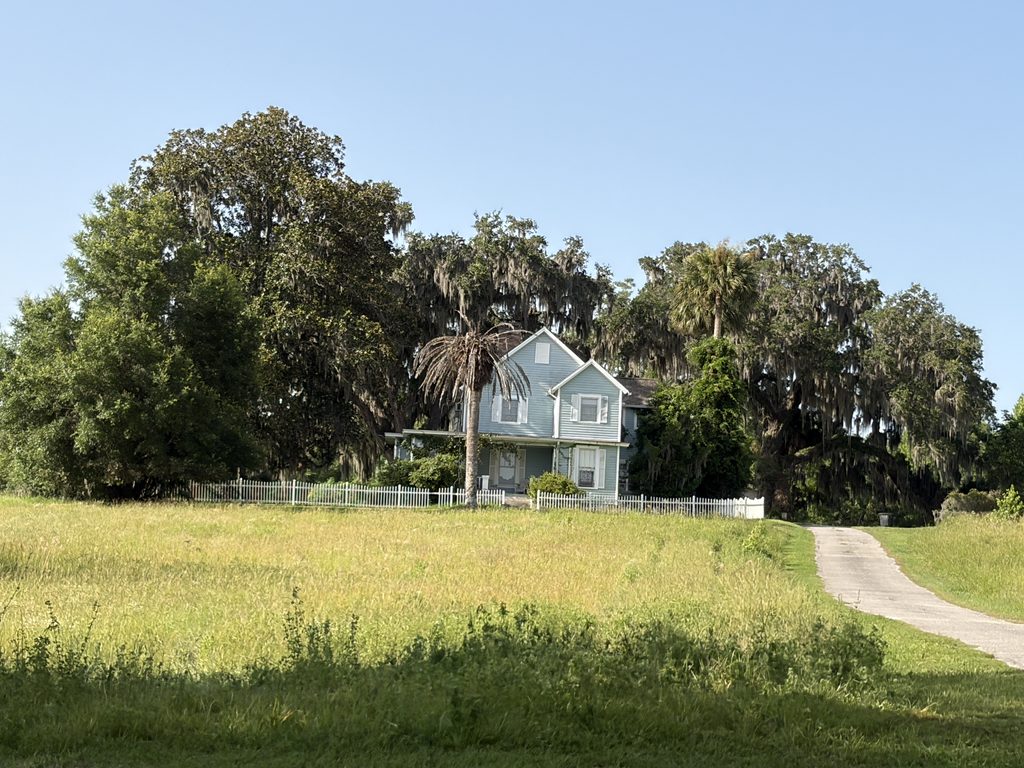
A beautiful, two-story wooden house stood along the road. Its weathered siding, sprawling porch, tall windows, and distinctive roofline gave it the kind of character that makes me want to stop everything and start taking pictures.
And it appeared to be for sale!
I made a mental note to come back before leaving.
At the time, I didn’t know anything about the house. I just knew it was gorgeous.
Later, I discovered that the property, located at 20510 9th Street, was reportedly built around 1895.
More than 130 years of history, standing right there beside the road.
And that was only the beginning of what McIntosh had to show me.
Before McIntosh: A Landscape Shaped by Agriculture
Long before McIntosh became known for its historic architecture, the land surrounding Orange Lake was shaped by agriculture, transportation, and the people who settled throughout north-central Florida.
The town was named for Colonel John H. McIntosh, an early landowner associated with the Orange Lake area.
During the nineteenth century, communities throughout this region relied on agricultural production and the transportation routes that connected them to larger markets.
Citrus became an important part of the local economy.
But transporting crops wasn’t always easy.
Before railroads reached Florida’s smaller communities, farmers often depended on difficult overland routes and waterways to move their products.
That began changing during the railroad expansion of the late nineteenth century.
And for McIntosh, the railroad would become a defining part of its history.
The Railroad That Helped Build McIntosh
In 1882, the Florida Southern Railroad established a route through the region, connecting communities between Gainesville and Ocala.
The arrival of the railroad brought new opportunities.
Farmers could ship their crops to distant markets. Merchants could receive supplies more efficiently. Travelers could move between communities with greater ease.
For a small agricultural settlement, that kind of connection could transform its future.
McIntosh was formally laid out in 1885, with broad streets, residential lots, and land intended for agricultural development.
As the town grew, houses, businesses, and community buildings began appearing along its streets.
Citrus production helped support the local economy, although the devastating freezes of the 1890s would eventually reshape Florida’s citrus industry.
Through those changes, McIntosh continued developing as a small agricultural and railroad community.
And one of the most important surviving reminders of that era is its historic railroad depot.
The Railroad Depot That McIntosh Refused to Lose
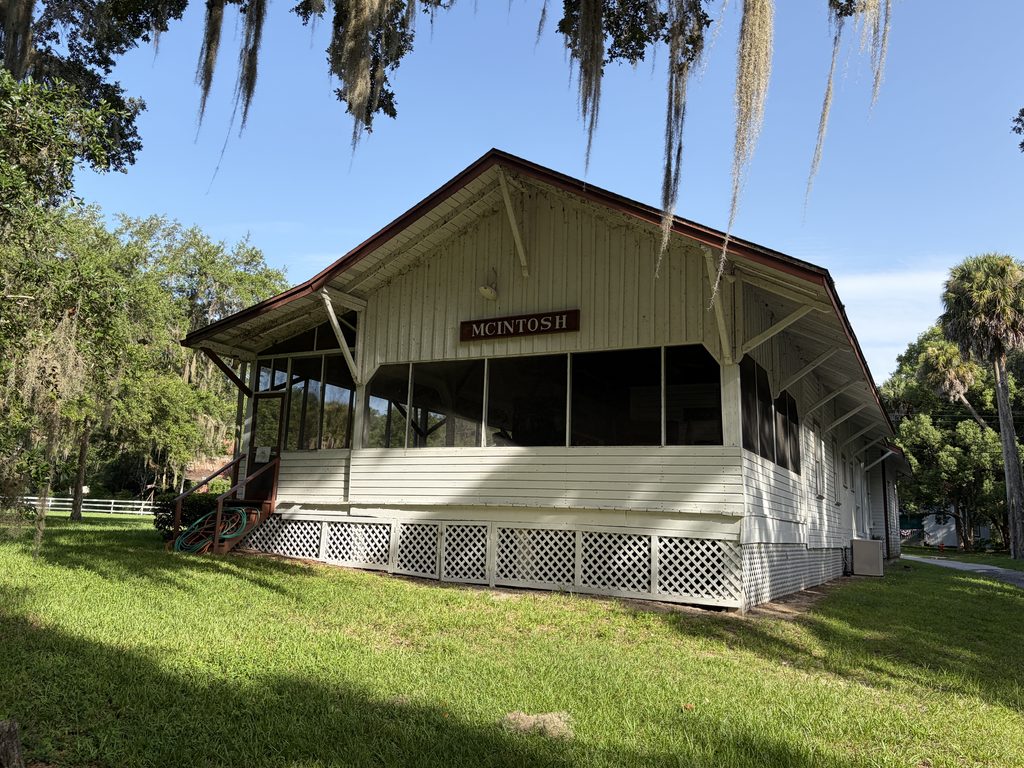
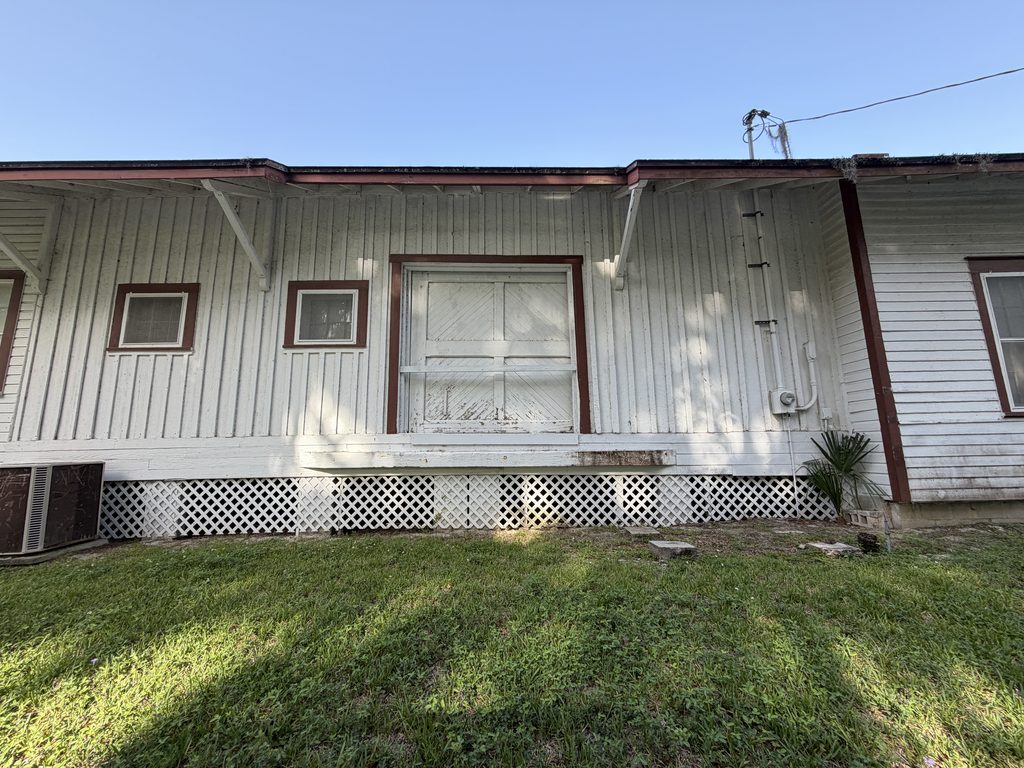
During my exploration, I photographed the old McIntosh railroad depot.
It’s a wonderful wooden building, with a broad roofline, a covered porch, and the town’s name prominently displayed on the front.
The depot once represented McIntosh’s connection to the wider world.
Imagine the activity surrounding a small railroad station more than a century ago.
Farmers preparing shipments. Families greeting arriving passengers. Merchants waiting for supplies. Neighbors gathering to hear the latest news.
The railroad wasn’t simply a way to travel.
It was part of the community’s economic and social life.
But as automobiles and highways became more important, railroad passenger service declined across Florida.
Many small-town depots eventually disappeared.
McIntosh’s depot might have suffered the same fate.
By the 1970s, the building had deteriorated, and its future was uncertain.
Fortunately, a group of residents believed it deserved to survive.
The Friends of McIntosh organized efforts to preserve the depot, raising money through community activities and fundraisers.
Those efforts eventually helped inspire one of the town’s most enduring traditions.
McIntosh isn’t the only Florida community where an old railroad depot has found a new purpose. During another adventure, I visited the Suwannee County Historical Museum, housed in a historic railroad depot in Live Oak. Both places demonstrate how preserving these buildings helps keep Florida’s railroad history alive.
How a Railroad Depot Inspired a Festival
In October 1974, McIntosh held its first Gay Nineties Festival.
The event celebrated the town’s nineteenth-century heritage while raising money for historic preservation.
Approximately 4,000 people attended that first festival.
What began as a community fundraiser grew into an annual tradition now known as the McIntosh 1890s Festival.
Over the years, the event has brought visitors to the town while supporting preservation efforts and community projects.
I love this part of McIntosh’s history.
Because the depot didn’t survive simply because someone recognized that it was old.
It survived because people cared enough to do something about it.
They organized. They raised money. They worked together.
And in the process, they helped preserve more than one building.
They strengthened a community’s connection to its own history.
Exploring the Old Commercial District
After driving through the main part of town, I turned around and headed back toward what appeared to be an old grocery store.
I pulled into the parking lot, got out of the truck, and spent a little time walking around.
There were several older commercial buildings nearby, along with a beautiful white church across the street.
I photographed the storefronts and church, taking in the architectural details and the quiet atmosphere.
What struck me was how naturally these buildings fit into the town.
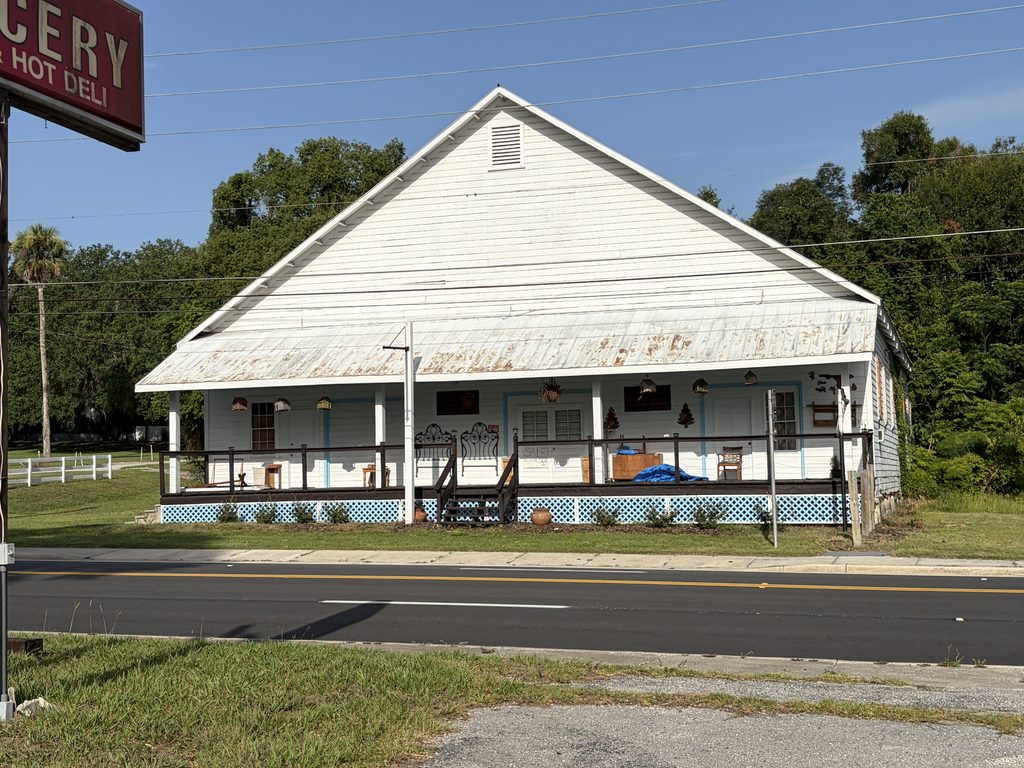
They weren’t surrounded by elaborate tourist attractions or modern recreations of historic streets.
They were simply part of McIntosh.
And that’s what made them interesting.
For generations, buildings like these served the everyday needs of small communities.
Stores were places to purchase necessities, but they were also gathering places.
Neighbors exchanged news. Families stopped to shop. Business owners became familiar faces.
Churches served as places of worship and community connection.
These buildings helped shape daily life.
And while I couldn’t identify the original purpose of every structure I photographed, their survival offered a glimpse into the community that developed around them.
Sometimes the most meaningful pieces of history aren’t grand monuments.
Sometimes they’re the old buildings we pass without a second thought.
The Beautiful Historic Homes of McIntosh
After exploring the commercial area, I got back into the truck and continued driving along some of the historic residential streets.
And this was where McIntosh really captured my attention.
One beautiful old house after another appeared beneath enormous live oak trees draped with Spanish moss.
Some homes had sprawling porches.
Others featured decorative trim, steep rooflines, distinctive windows, and architectural details that reflected the styles popular during the late nineteenth and early twentieth centuries.
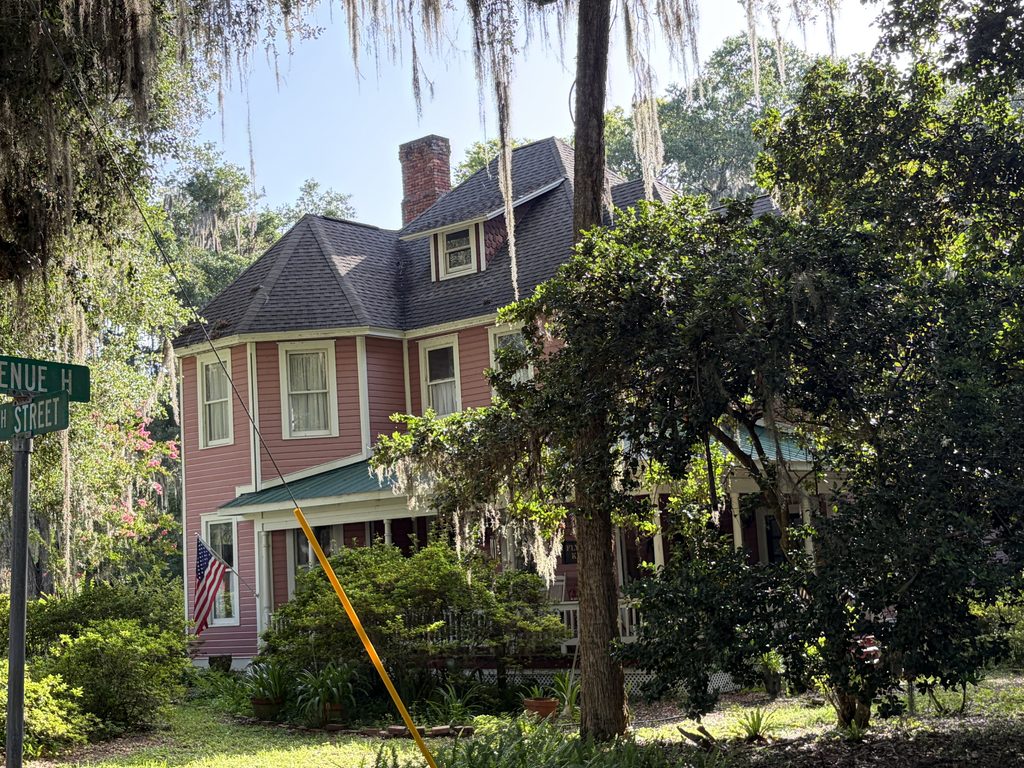
McIntosh reminded me of another beautiful historic Florida community I’d explored: White Springs Historic District. Both towns offer glimpses into an earlier Florida through their surviving architecture, historic streets, and the stories of the people who once called them home.
The McIntosh Historic District includes examples of frame vernacular architecture, along with influences from Queen Anne, Gothic Revival, and other historic styles.
And the setting made these buildings even more beautiful.
The trees seemed almost as much a part of the town’s identity as the houses themselves.
In some places, their branches stretched across the streets, creating shaded tunnels that made the drive feel like a journey into another century.
I wasn’t rushing from one landmark to another.
I was simply exploring, taking photographs, and enjoying the atmosphere.
Sometimes that’s the best way to experience a historic town.
No itinerary. No checklist.
Just curiosity and a willingness to see where the road leads.
A Place on the National Register of Historic Places
On November 18, 1983, the McIntosh Historic District was officially added to the National Register of Historic Places.
The designation recognized the town’s significance in areas including architecture, agriculture, commerce, transportation, and community history.
McIntosh is particularly remarkable because so much of its historic character has survived together.
In many communities, a single historic house might remain surrounded by modern development.
But in McIntosh, entire streets still reflect the town’s earlier appearance.
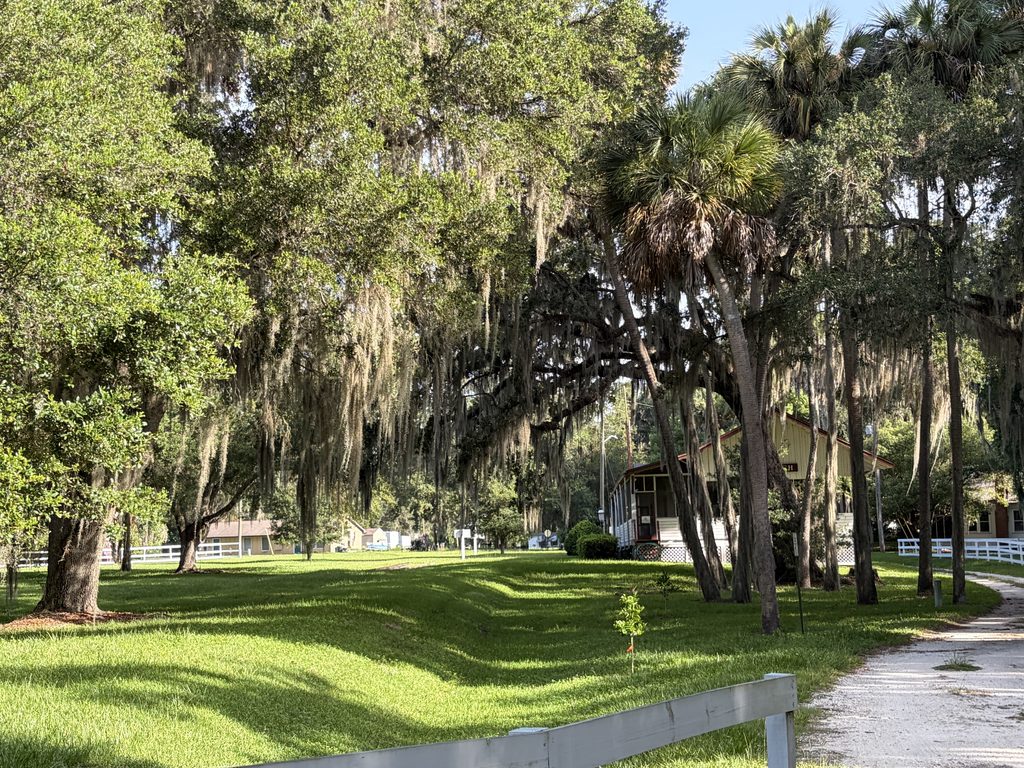
Historic residences, commercial buildings, churches, and community landmarks remain connected within the landscape.
That continuity makes the town feel different.
It’s not simply a collection of old buildings.
It’s a community where the past remains visible.
And that kind of preservation doesn’t happen without effort.
The Water Tower Above the Trees
As I continued exploring, I came across another landmark that seemed to perfectly capture McIntosh’s identity.
The town’s water tower.
Rising above the surrounding trees, it proudly displays the words:
Historic Town of McIntosh.
I couldn’t resist taking a photograph.
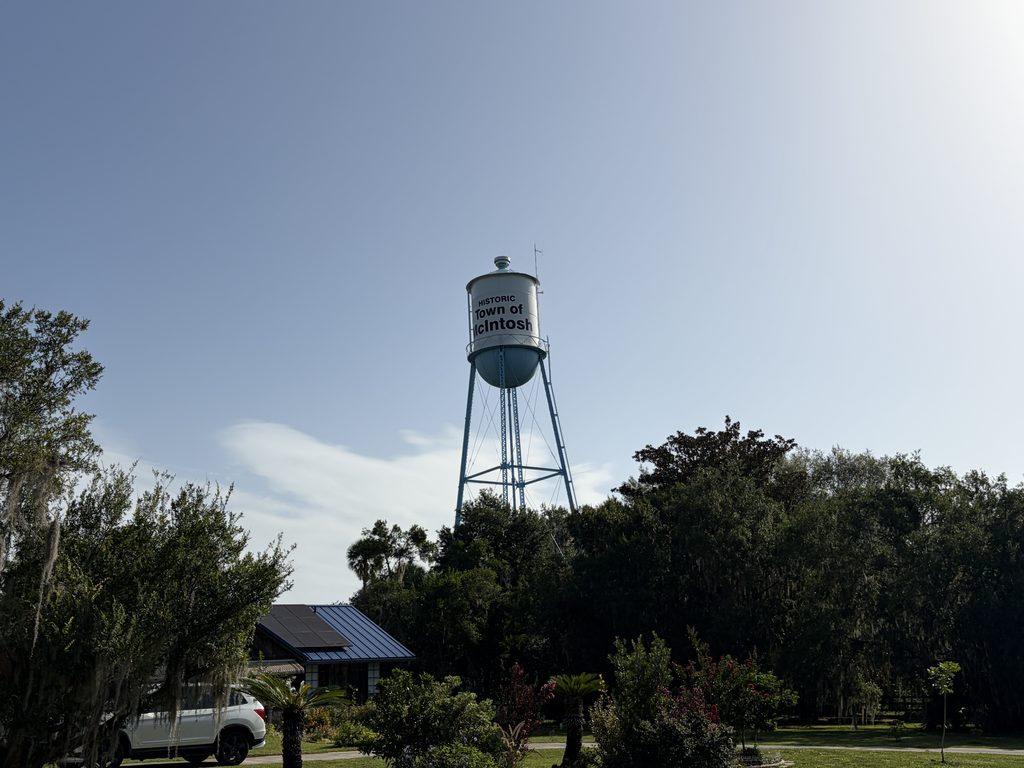
After spending the morning driving past historic houses and old buildings, seeing those words high above the town felt particularly appropriate.
McIntosh wasn’t hiding its history.
It was celebrating it.
And I appreciated that.
Because I’ve explored plenty of places where the past has nearly disappeared.
Old cemeteries hidden beneath vegetation. Abandoned buildings slowly collapsing. Former communities that survive only through historical records.
McIntosh offered a different perspective.
Here was a place where history remained part of everyday life.
Returning to the House That Started It All
Before leaving McIntosh, I had one final stop to make.
Remember that beautiful old house I’d spotted when I first arrived?
I hadn’t forgotten about it.
So I circled back to take a photograph.
And I’m glad I did.
The house was every bit as beautiful as I’d remembered.
Its wooden siding showed the effects of time, but the broad porch, tall windows, and architectural details gave it an undeniable charm.
Later, when I learned that it dated to approximately 1895, I found myself appreciating it even more.
Think about everything that has changed since that house was built.
Florida’s population has grown enormously. Roads have replaced many old transportation routes. Communities have expanded, industries have changed, and countless historic buildings have disappeared.
Yet this house remains.
I don’t know how many families have lived there or what stories its walls could tell.
And I won’t pretend to know.
But I do know that it caught my attention twice.
Once when I arrived.
And again when I returned for that final photograph.
Sometimes the places that stay with us aren’t the ones we planned to find.
They’re the ones that make us stop and look twice.
Planning Your Own Visit to McIntosh Historic District
If you enjoy historic architecture, small Florida towns, railroad history, or simply exploring places that have retained their old-fashioned character, McIntosh is worth adding to your travel list.
Location: McIntosh, Marion County, Florida
Historic designation: National Register of Historic Places, listed November 18, 1983
What to see: Historic residential streets, old commercial buildings, churches, the McIntosh railroad depot, and the town’s water tower.
Best way to explore: A leisurely drive through the historic district, with time to stop where public access and parking are permitted.
Annual event: The McIntosh 1890s Festival, a celebration of the town’s heritage and historic preservation.
McIntosh is a living community, not an abandoned attraction. Many of its historic houses remain private residences.
Please respect private property, avoid entering buildings or yards without permission, and photograph historic homes from public areas.
And if you visit, don’t rush.
Part of McIntosh’s charm is simply taking the time to appreciate the streets, buildings, and landscape that have survived for generations.
What Stayed With Me
Not every historic Florida community has been as fortunate as McIntosh. During my exploration of Vineland Cemetery, I discovered one of the remaining reminders of a community that gradually disappeared. While McIntosh preserves much of its historic landscape, places like Vineland remind us how easily the physical evidence of the past can be lost.
I’ve explored plenty of forgotten places where the story is about what was lost.
A railroad town that disappeared.
A cemetery nearly reclaimed by the woods.
A historic building reduced to ruins.
But McIntosh reminded me that forgotten history doesn’t always have to end that way.
Sometimes, people recognize the value of their past before it’s too late.
They preserve the buildings.
They protect the character of their neighborhoods.
They share the stories with future generations.
And because of those efforts, the history remains visible.
What stayed with me about McIntosh wasn’t just the beautiful house from 1895, although I’ll certainly remember it.
It was the feeling of the entire town.
The old storefronts.
The railroad depot.
The historic homes beneath the oak trees.
And that water tower proudly announcing the town’s identity.
McIntosh showed me that preservation is about more than saving old buildings.
It’s about protecting the stories and connections that make a place what it is.
Final Thoughts: A Town That Refused to Forget
McIntosh may not be forgotten by the people who live there.
But in a state where so much of the past has been replaced, this little community preserves a chapter of Florida history that deserves to be shared.
And perhaps that’s what makes it such a fitting Forgotten Friday destination.
Because history doesn’t have to become a ruin before we decide it’s important.
Sometimes the greatest tribute we can give the past is to keep it alive.
And thanks to generations of people who cared enough to preserve it, McIntosh continues to tell its story.
Because every place has a story. And every story deserves to be remembered.
Explore more forgotten places, historic communities, and overlooked pieces of history with Travel Made Personal. Join me every Forgotten Friday as we uncover the stories that time nearly left behind.
Discover More Stories Hidden in Florida’s Past! 🧭
From historic railroad towns like McIntosh to forgotten cemeteries, abandoned communities, and beautiful places hiding in plain sight, there’s always another story waiting to be uncovered.
Join the Travel Made Personal mailing list for new Forgotten Friday adventures, fascinating history, travel discoveries, and stories from the road—delivered straight to your inbox.
Because every place has a story. And you never know where the next one might lead! ❤️

If you see this after your page is loaded completely, leafletJS files are missing.