
Sometimes the best adventures begin when you have absolutely no idea where you’re going next.
During our Lake City trip in February 2025, we found ourselves with a little extra time and nowhere in particular to go. Rather than calling it a day, I started looking for somewhere else to explore.
That’s when I discovered Forest Capital Museum State Park in Perry, Florida.
Now, we’re on a mission to visit every Florida State Park, so finding another one within driving distance was all the encouragement I needed.
Never mind that it wasn’t exactly around the corner.
We had time to spare, another state park to cross off our list, and absolutely no idea what was waiting for us.
What we discovered was a fascinating museum dedicated to Florida’s forestry industry, a beautiful nineteenth-century pioneer homestead, and a little unexpected kindness that made the entire visit even more memorable.
The Forest Capital of the South
Long before Florida became famous for its beaches, theme parks, and tourist attractions, its vast forests played an essential role in shaping the state’s economy and communities.
North Florida was once home to extensive forests of longleaf pine, slash pine, cypress, and live oak. These trees supplied lumber for homes and businesses, materials for railroads, and timber for shipbuilding.
The forests also supported a thriving turpentine industry.
Workers collected resin from pine trees and processed it into turpentine and rosin, materials used in paints, varnishes, shipbuilding, and numerous other products.
Sawmills and turpentine operations provided employment, while railroads transported lumber and forest products to markets throughout the country.
In Taylor County, forestry became such an important part of the region’s identity that Congressman Don Fuqua proclaimed it the “Tree Capital of the South” in 1965.
At the time, the county contained more than 525,000 acres of forested land.
Three years later, in 1968, Forest Capital Museum State Park opened to preserve and celebrate the region’s forestry heritage.
Today, the park offers visitors an opportunity to discover how the forests helped build Florida and how generations of people depended upon them.
Exploring the Forest Capital Museum
Our visit began inside the museum, where we discovered an impressive collection of exhibits dedicated to Florida’s forests and the industries that grew around them.
The museum was filled with historical tools, photographs, educational displays, and equipment illustrating the work involved in harvesting and processing timber.
One of the most interesting sections explored the turpentine industry.
Before modern machinery transformed forestry operations, workers relied on specialized hand tools to cut into pine trees, collect resin, and prepare it for processing.
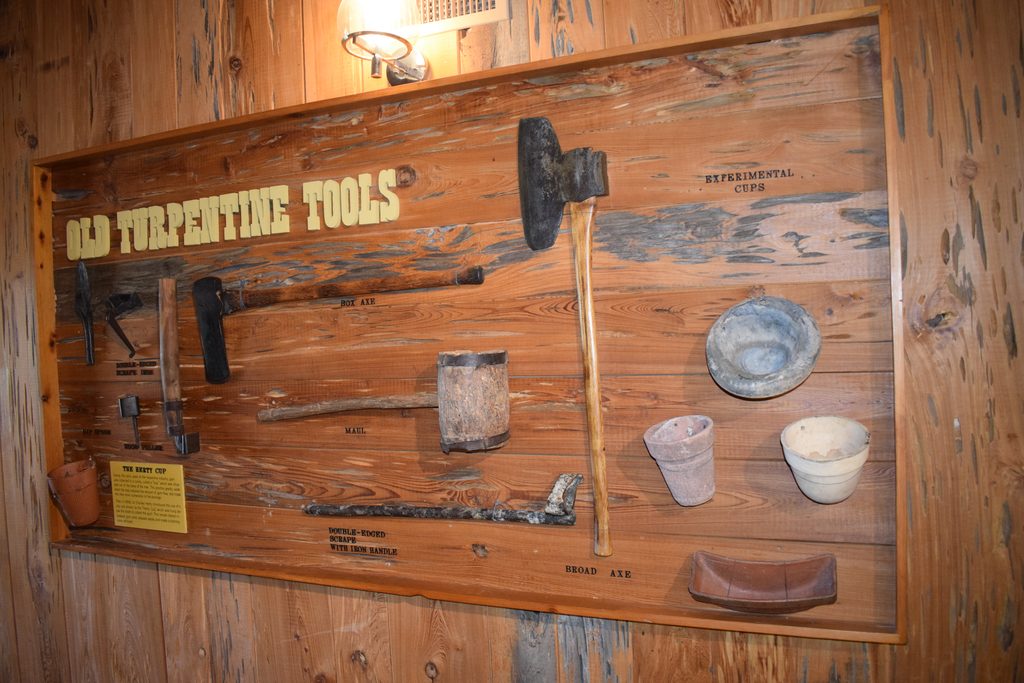
Displays of old turpentine cups and harvesting equipment offered a glimpse into the demanding labor behind an industry that once employed thousands of workers throughout the South.
The museum also featured exhibits about early logging operations, the development of sawmills, and the ways timber was transported from the forests to growing communities.
It was fascinating to see how something as familiar as a pine tree could support so many different industries.
Florida’s Live Oaks and American Shipbuilding
One particularly interesting exhibit explored the role of live oak trees in early American shipbuilding.
Unlike the tall, straight trunks often associated with timber production, live oaks develop strong, naturally curved branches.
Their dense wood and unusual shapes made them especially valuable for constructing wooden ships.
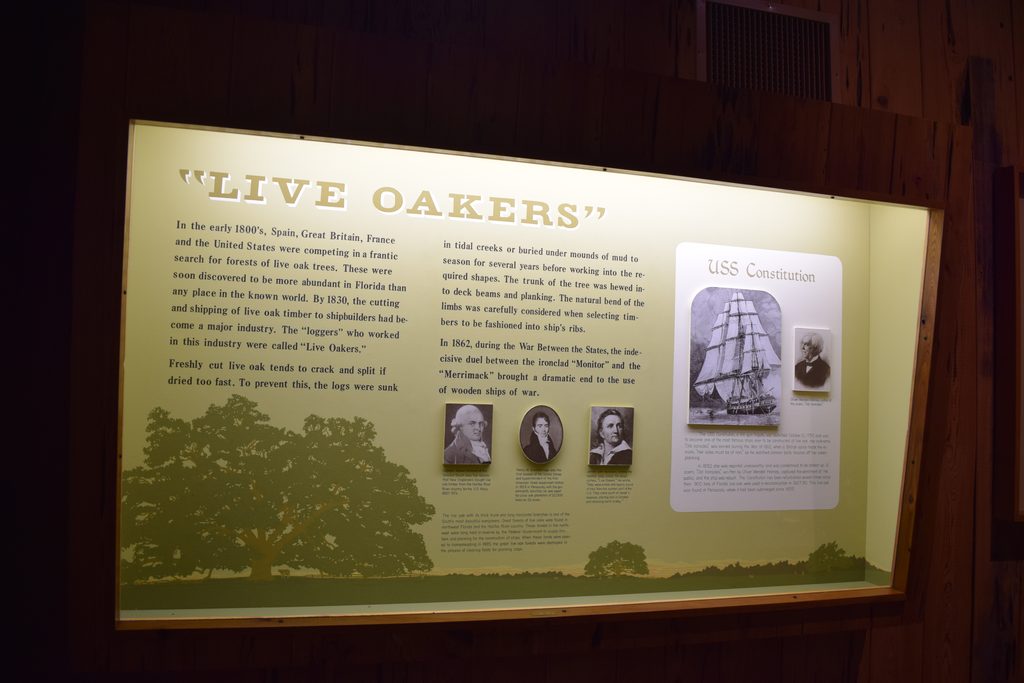
The museum included information about the USS Constitution, the famous American warship nicknamed Old Ironsides.
Live oak timber played an important role in constructing ships like the Constitution, whose wooden hulls needed to withstand tremendous forces at sea.
It’s remarkable to consider how trees growing in southern forests became part of vessels that traveled across the world’s oceans.
Understanding Florida’s Forest Ecosystems
Beyond the history of logging and turpentine, the museum also explored the natural environments that made these industries possible.
Exhibits introduced visitors to Florida’s pine forests, cypress swamps, native wildlife, and the ecological processes that help forests grow and regenerate.
Other displays explained the effects of insects, diseases, and environmental changes on forest health.
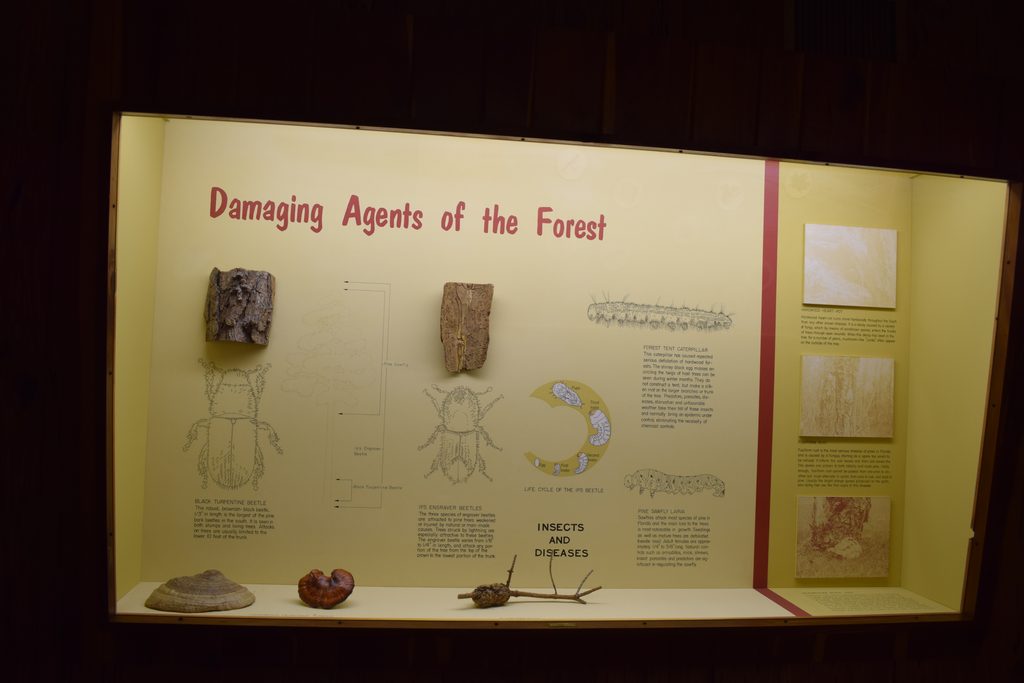
One section demonstrated the remarkable variety of products derived from trees.
From lumber and paper to industrial materials and everyday household products, forests have influenced countless aspects of modern life.
By the time we finished exploring the museum, we’d gained a much greater appreciation for the natural resources that helped shape North Florida.
If you enjoy discovering the history preserved in smaller local museums, our visit to the Suwannee County Historical Museum offers another fascinating look at the people, industries, and communities that shaped North Florida.
But the most delightful surprise was still waiting outside.
Discovering the Historic Whiddon Pioneer Homestead
I had absolutely no idea that Forest Capital Museum State Park was also home to a historic pioneer homestead.
So imagine our surprise when we stepped outside and discovered a collection of beautiful old wooden buildings nestled among the trees.
The setting immediately reminded us of Fort Christmas Historical Park, although this homestead was considerably smaller.
What it lacked in size, however, it more than made up for in charm.
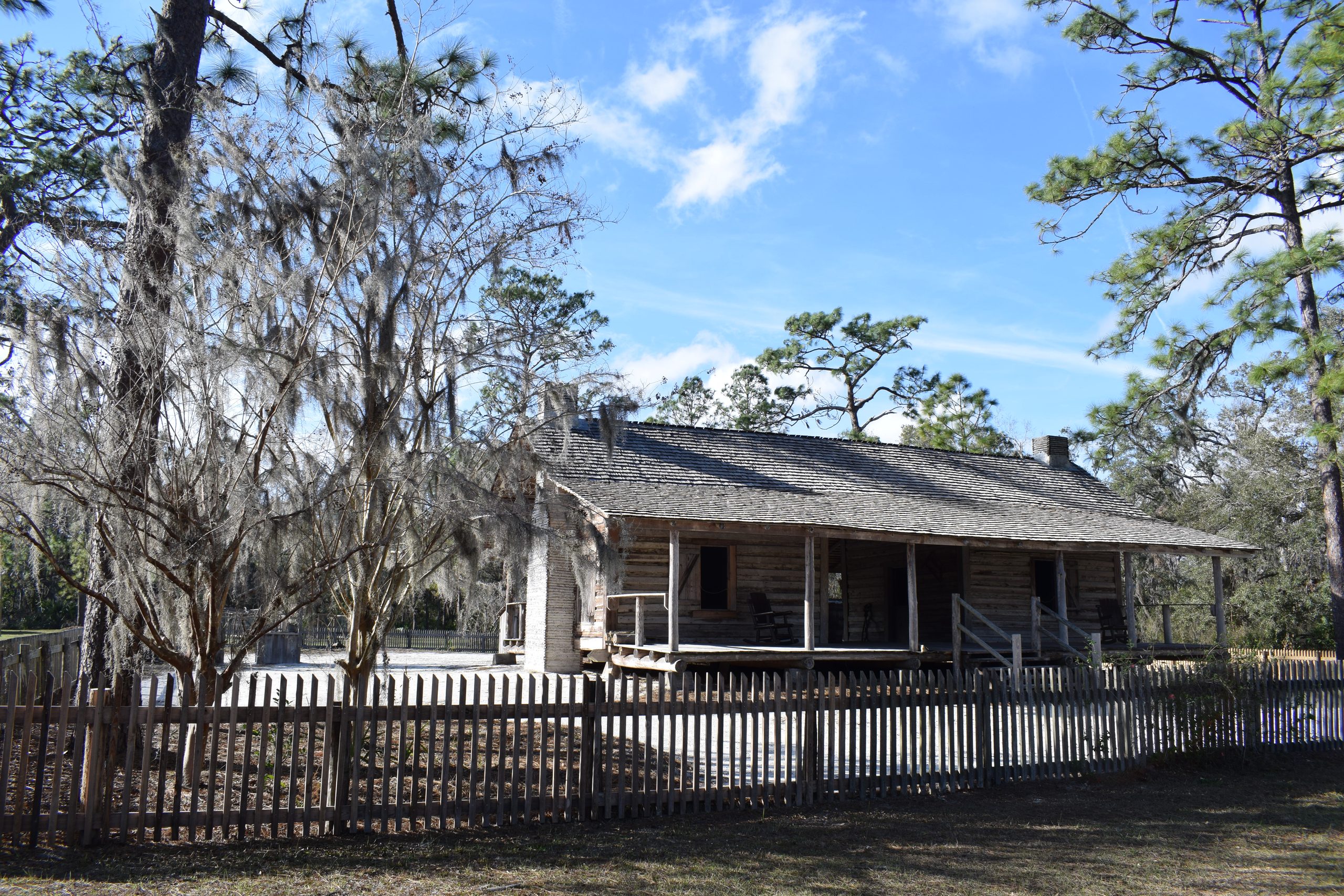
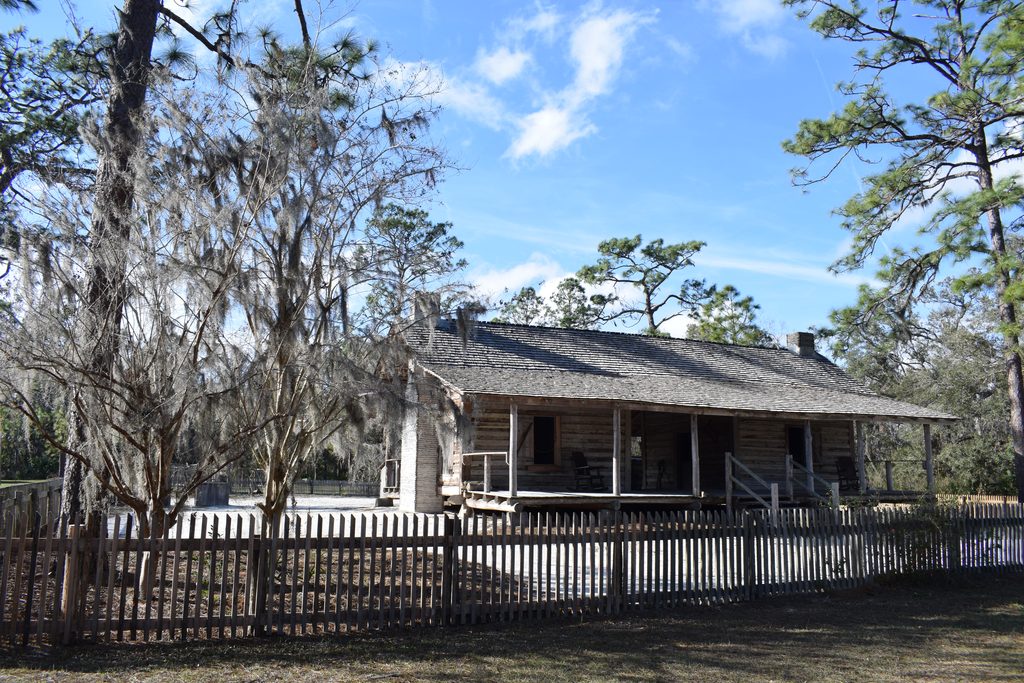
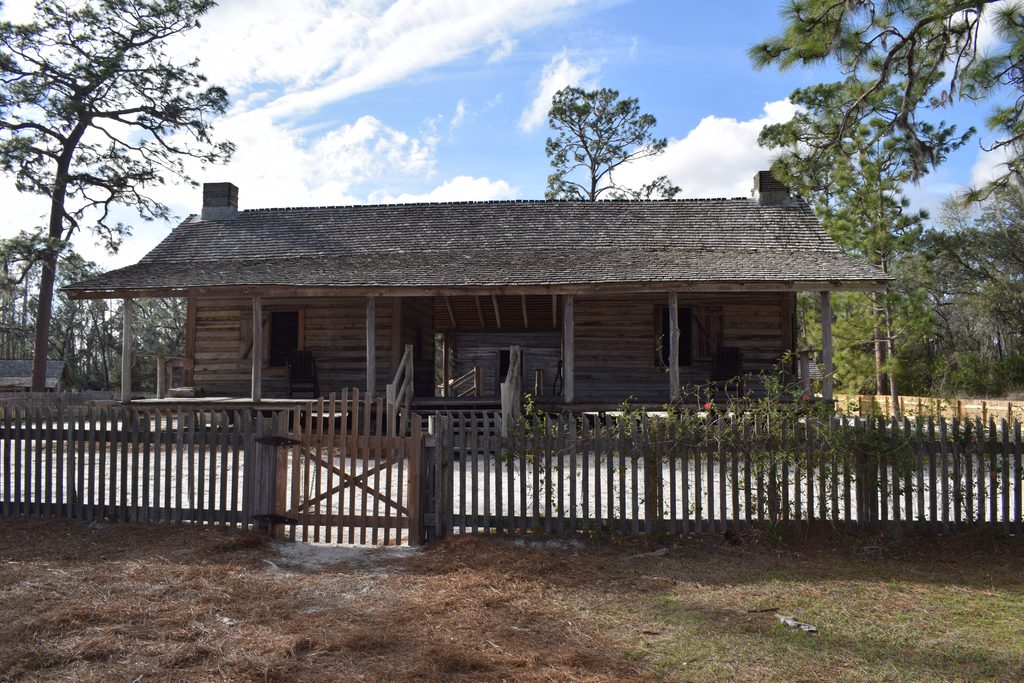
At the center of the grounds stood the historic Wiley W. Whiddon homestead, a log home built by the Whiddon family during the Civil War era, around 1863 or 1864.
The home represents a traditional style of Florida frontier architecture known as a dogtrot house.
What Is a Dogtrot House?
Dogtrot houses were designed to provide relief from the heat long before modern air conditioning existed.
The typical design featured two enclosed sections separated by an open central passageway.
This passage allowed breezes to move through the building, providing natural ventilation during Florida’s long, humid summers.
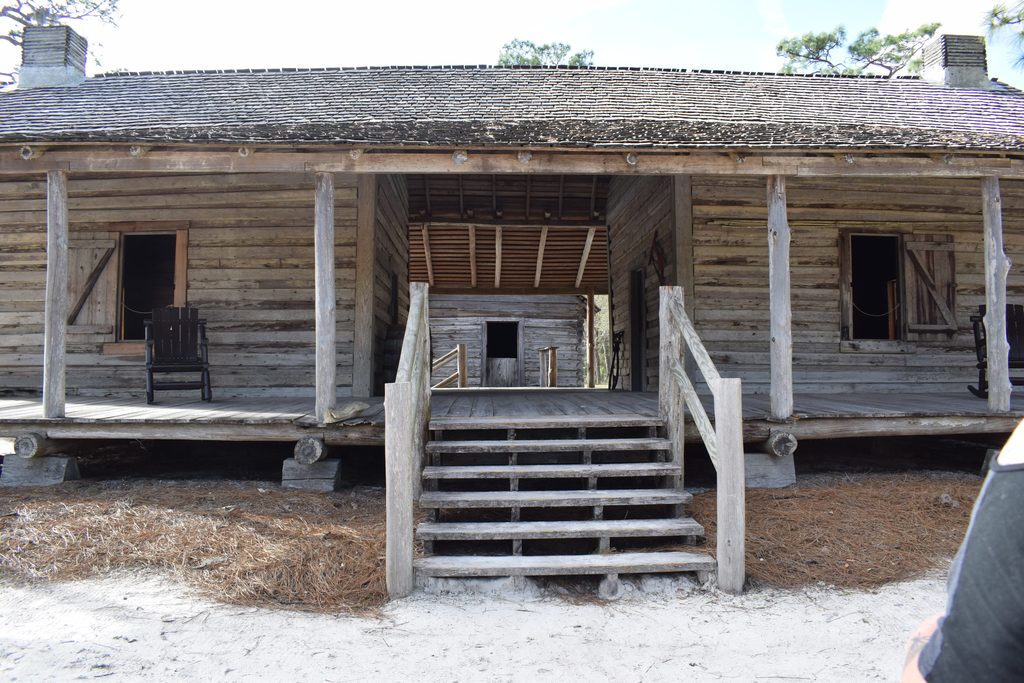
The Whiddon house was constructed using hand-hewn logs and featured fireplaces built using clay and wooden sticks.
These building techniques reflected the resourcefulness of early settlers, who relied on locally available materials to construct practical homes.
In 1972, the family of Florida Senator Pete Gibson donated the historic homestead to the park, helping preserve an important example of nineteenth-century Florida life.
Today, visitors can explore the grounds and appreciate a home that has stood for more than 150 years.
Stepping Inside a Pioneer Home
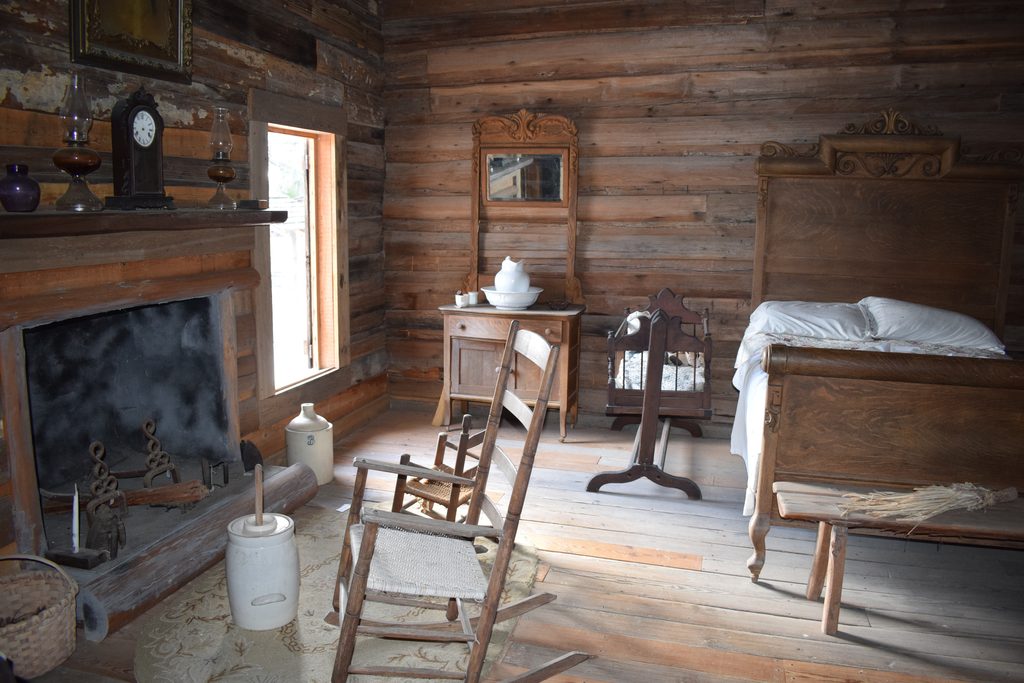
As we wandered around the homestead, we were able to look into the furnished rooms and examine the simple details of everyday pioneer life.
Wooden beds, tables, chairs, fireplaces, and other household furnishings helped illustrate how the home might have appeared when it was occupied.
The weathered logs and rustic interiors were absolutely beautiful.
There was something peaceful about the simplicity of the place.
Of course, it’s easy to romanticize historic homes like this.
But life on the Florida frontier was anything but easy.
Families lived without electricity, running water, modern appliances, or the conveniences we often take for granted.
Cooking, collecting water, tending animals, growing food, and maintaining the home required constant labor.
Yet these buildings were more than examples of historic architecture.
They were places where families lived, worked, raised children, and built their lives.
And that’s what makes preserving them so important.
History isn’t found only in famous monuments or major events.
Sometimes, it’s found in the ordinary places where generations of people lived their everyday lives.
Life on a Florida Pioneer Homestead
Beyond the main house, the grounds included several smaller buildings and displays representing the daily activities of a working pioneer homestead.
We explored the area surrounding an old-fashioned well, examined historic farming equipment, and photographed wooden outbuildings and wagons.
There were also displays associated with sugarcane processing.
Sugarcane was an important crop for many rural Florida families, who processed its juice into syrup for household use.
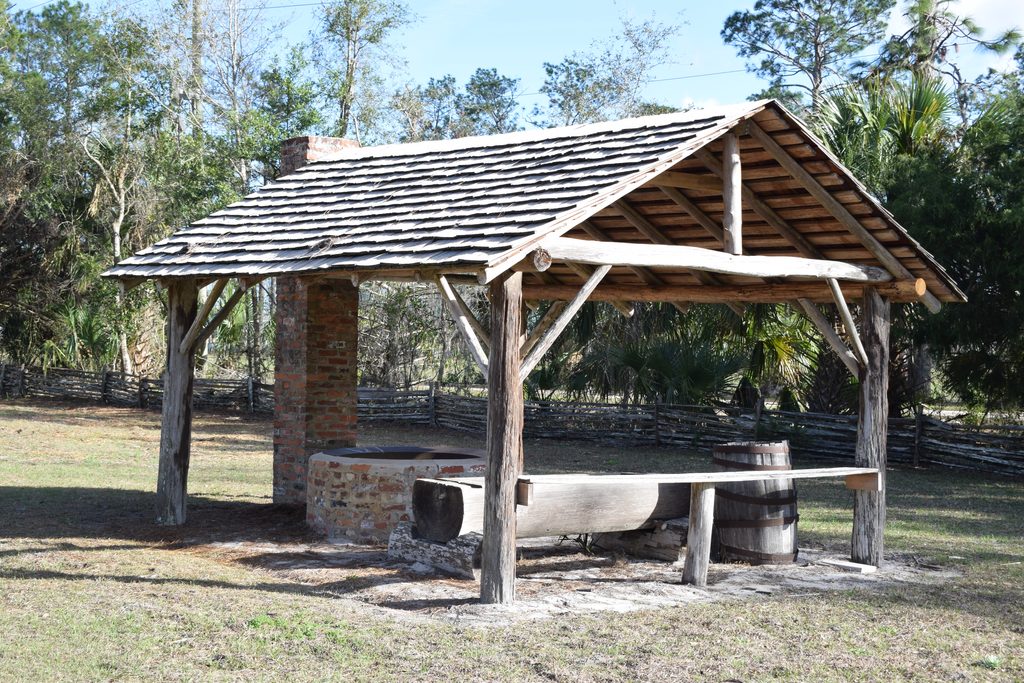
Producing cane syrup required considerable work, from harvesting and crushing the cane to boiling the juice until it thickened.
Other displays illustrated the tools and equipment needed to maintain a working farm.
And, of course, there was an old-fashioned outhouse.
Some parts of pioneer life are definitely easier to appreciate from a historical distance!
We spent quite a while wandering around the grounds, taking photographs and enjoying the beautiful setting.
The old buildings, grassy lawns, and towering trees created a peaceful atmosphere that made it easy to forget we’d only stopped because we were looking for something else to do.
Hurricane Idalia and the Challenges of Historic Preservation
Not everything on the homestead grounds had survived the passage of time intact.
As we explored, we noticed the remains of a collapsed wooden structure behind a fence.
Its weathered roof and fallen timbers were a striking reminder of how vulnerable old buildings can be.
Although we don’t know what caused that particular structure to collapse, the surrounding region had experienced a devastating hurricane less than two years before our visit.
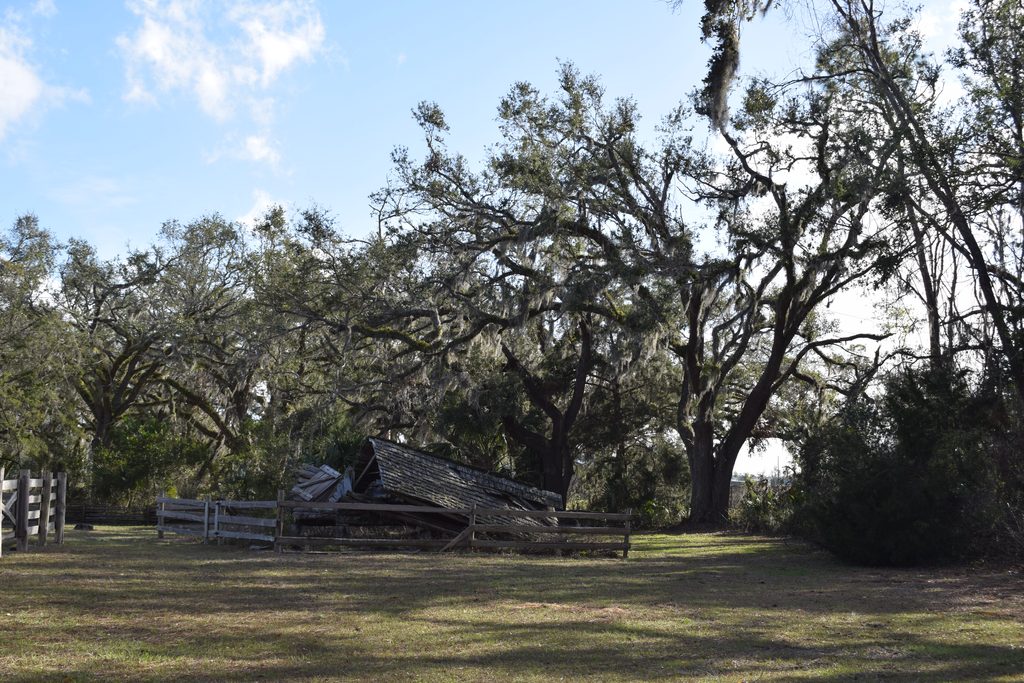
On August 30, 2023, Hurricane Idalia made landfall in Florida’s Big Bend region, bringing destructive winds and widespread damage to Taylor County.
The storm also claimed one of Forest Capital Museum State Park’s most unusual historical treasures.
The Park’s Lost Moon Tree
In 1971, astronaut Stuart Roosa carried hundreds of tree seeds aboard Apollo 14.
After returning to Earth, the seeds were germinated, and the resulting trees were planted at locations across the country.
These trees became known as Moon Trees, living reminders of humanity’s journey into space.
Forest Capital Museum State Park was home to one of these remarkable trees.
Unfortunately, the park’s Moon Tree was lost during Hurricane Idalia in 2023.
We didn’t photograph the tree during our visit, but learning about its history adds another fascinating layer to the park’s story.
The loss also serves as a reminder that historic preservation involves more than protecting buildings and artifacts.
Living landmarks, historic landscapes, and the natural environments surrounding them are equally vulnerable to time and the forces of nature.
An Unexpected Act of Kindness
Before leaving the park, there was one more thing I wanted to do.
If you’ve followed our Florida State Park adventures, you probably know that we collect pins from the parks we visit.
They’re little reminders of the places we’ve explored and part of the fun of our mission to visit every Florida State Park.
Naturally, I asked the ranger whether they had any pins available.
Unfortunately, he explained that the park didn’t sell them.
Well, that was disappointing.
But instead of leaving it there, he went looking.
And somehow, he managed to find two pins for us!
Not only that, but he also gave us Post-it notes with the park stamp so we could add them to our books.
We were ecstatic!
We’d arrived without knowing much about the park, and now we were leaving with two souvenirs that weren’t even available for purchase.
As far as we were concerned, we’d just acquired a couple of exclusive collector’s items!
It was such a simple gesture, but one that made our visit even more memorable.
Sometimes, the smallest acts of kindness leave the biggest impressions.
Planning Your Visit to Forest Capital Museum State Park
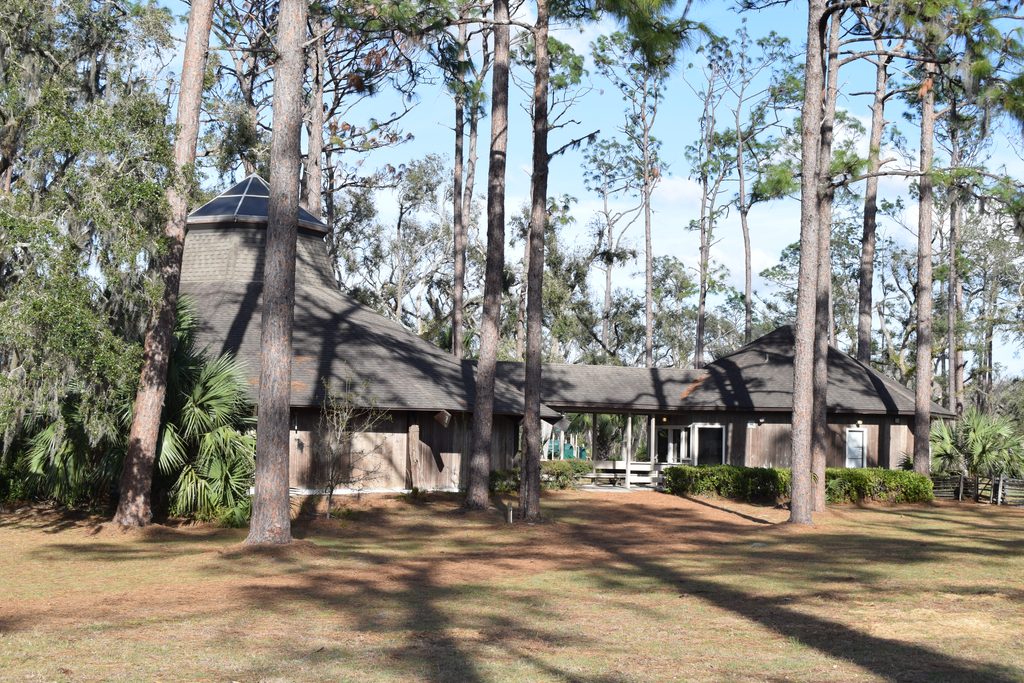
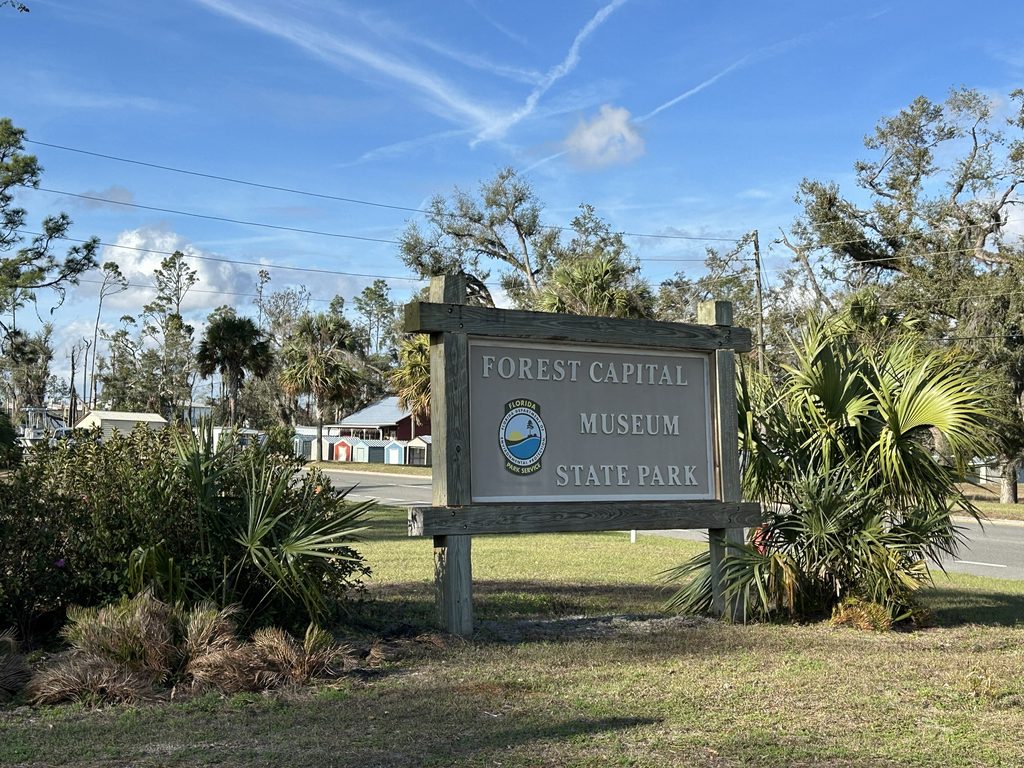
Forest Capital Museum State Park is located in Perry, Florida, in Taylor County.
The park offers visitors an opportunity to explore the region’s forestry heritage and discover what life was like for early Florida settlers.
Location: Perry, Taylor County, Florida
Highlights: Forestry museum, historic Whiddon pioneer homestead, dogtrot architecture, historical tools, farming equipment, and educational exhibits.
Best for: History enthusiasts, families, Florida State Park explorers, and anyone interested in discovering lesser-known historic places.
What to expect: A relatively small historic site with indoor museum exhibits and outdoor grounds featuring preserved pioneer buildings.
Photography: The homestead and its surrounding grounds provide beautiful opportunities to photograph traditional Florida architecture and historic displays.
Before you go: Check the official Florida State Parks website for current operating hours, admission information, museum access, and any temporary closures or restoration work.
If you enjoy exploring historic buildings and learning about the people who shaped Florida’s past, this is a worthwhile stop when traveling through the Perry area.
If you’re planning a longer North Florida adventure, consider adding Suwannee River State Park to your itinerary. During our exploration there, we discovered Civil War earthworks, historic trails, and the remains of the once-thriving town of Columbus.
Why This Unexpected Detour Was Worth Taking
Looking back, I’m still amazed by how much we discovered during a visit that wasn’t even part of our original plans.
We were simply looking for somewhere to spend a little extra time.
Instead, we discovered a museum preserving the history of Florida’s forests, a beautiful pioneer homestead dating back to the Civil War era, and a fascinating connection to America’s space exploration history.
And then there were those special pins.
Because sometimes, the things that make an adventure memorable aren’t the places themselves, but the unexpected moments and people we encounter along the way.
Forest Capital Museum State Park wasn’t the biggest or most famous destination on our Lake City trip.
But it was certainly one of the most pleasant surprises.
And that’s one of the things I love most about exploring lesser-known places.
You never really know what you’re going to find.
Final Thoughts
Forest Capital Museum State Park is a wonderful reminder that Florida’s history extends far beyond its beaches and famous attractions.
Its forests helped build communities, support industries, and provide livelihoods for generations of families.
Its pioneer homestead preserves a glimpse of the people who made their lives on the Florida frontier.
And its quiet grounds offer an opportunity to appreciate the stories that might otherwise fade from memory.
What began as an unplanned detour became another treasured chapter in our journey to explore every Florida State Park.
And sometimes, that’s all it takes.
A little curiosity.
An unexpected turn.
And a willingness to see what’s waiting down the road.
Every place has a story. Sometimes, you just have to take the detour to find it.
Have you visited Forest Capital Museum State Park or discovered a historic place completely by accident? Share your experience in the comments!
Real Places. True Stories. Travel Made Personal.
🌲 Love discovering the stories hiding along America’s backroads?
From forgotten historic places and pioneer homesteads to unexpected detours like Forest Capital Museum State Park, there’s always another adventure waiting to be discovered!
Join the Travel Made Personal newsletter for monthly travel inspiration, fascinating history, behind-the-scenes stories, and a peek at where we’re exploring next.
🧭 Come explore with us — the best stories are often found off the beaten path!

If you see this after your page is loaded completely, leafletJS files are missing.