
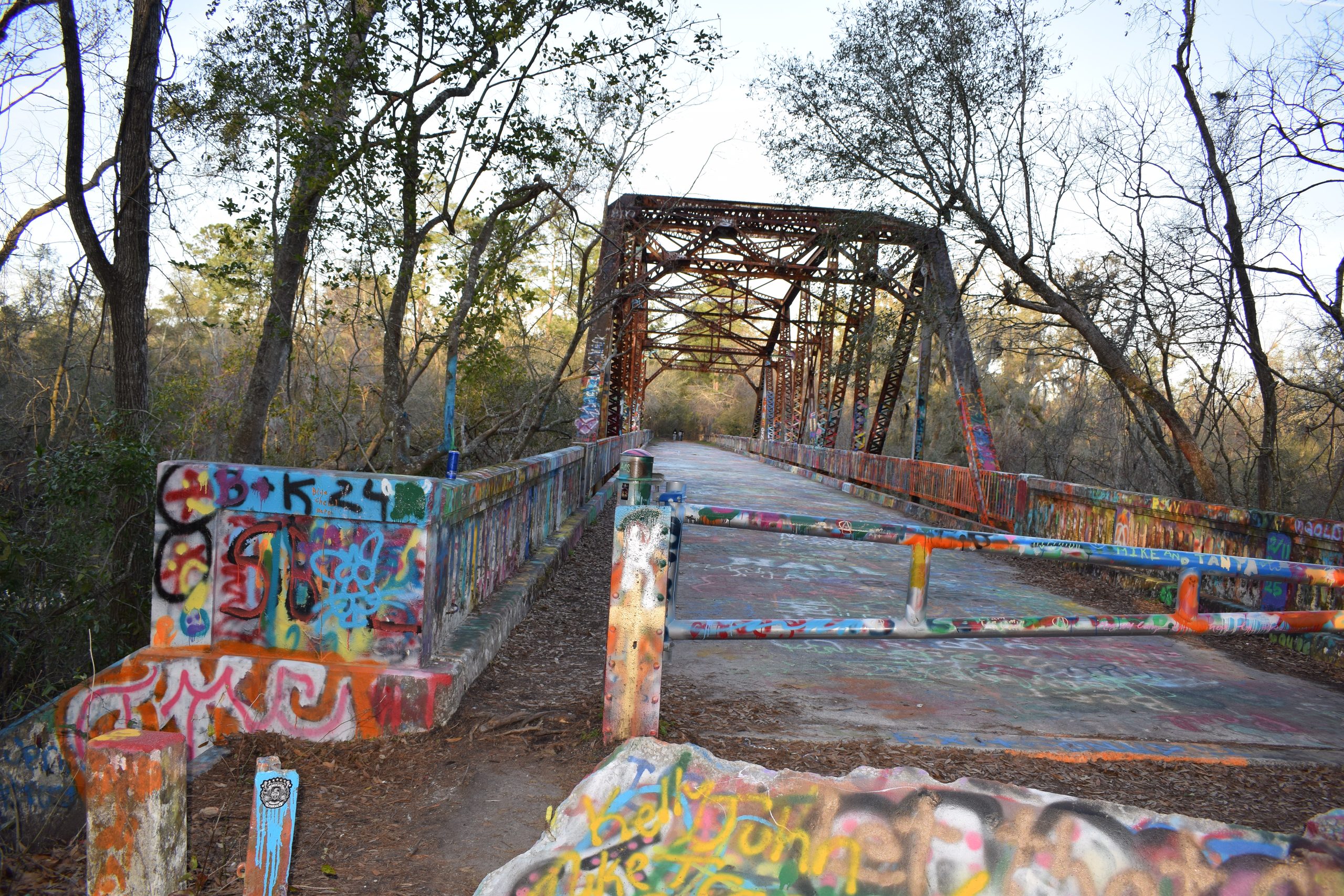
An old highway crossing, a forgotten Florida resort, and an unexpected discovery along the Suwannee River.
Sometimes, the best discoveries happen when someone points you down a road you hadn’t planned to travel.
During our Lake City adventure, Dusty and I were searching for the historic ruins of Suwannee Springs. We’d been exploring the area when a gentleman at a nearby house gave us directions to the ruins and mentioned something else worth seeing: an old bridge that had apparently attracted some famous visitors over the years.
An old bridge with a story?
Well, obviously, we had to investigate.
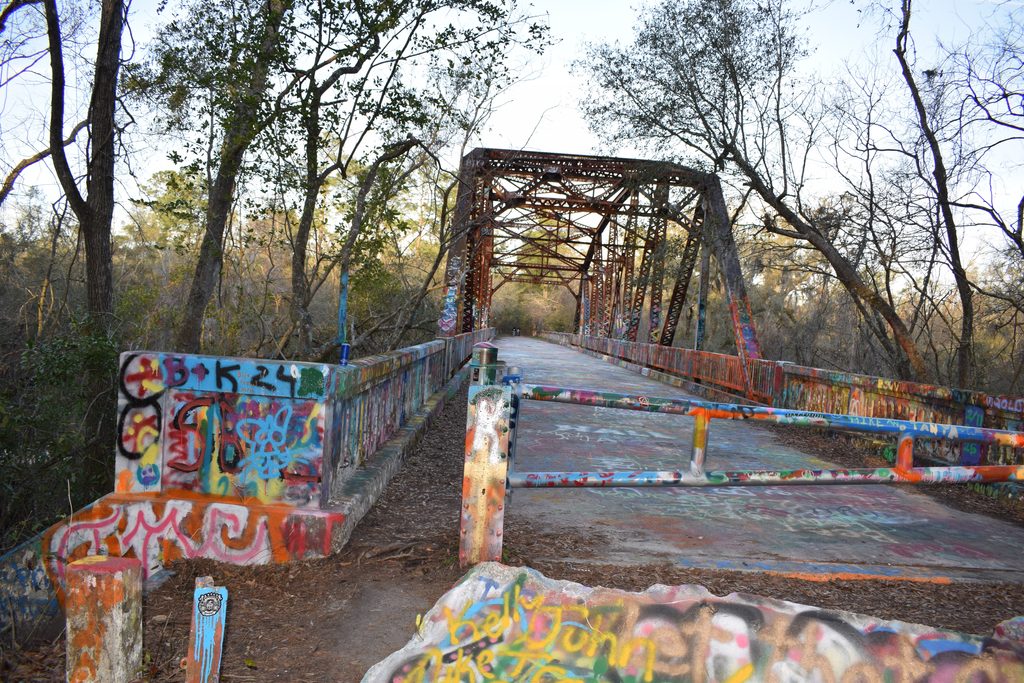
What we found was the historic Suwannee Springs Bridge, a nearly century-old crossing over one of Florida’s most famous rivers. It wasn’t quite the quiet, forgotten landmark we’d expected, but between the colorful graffiti, beautiful river views, and one particularly questionable piece of artwork, it certainly made for a memorable stop.
And as it turned out, the bridge would bring us one step closer to the ruins we’d been searching for all along.
A Historic Crossing Over the Suwannee River
Long before the Suwannee Springs Bridge became a destination for photographers and curious explorers, it served a much more practical purpose.
Built in 1931 by the Austin Brothers Bridge Company of Atlanta, Georgia, the bridge carried highway traffic across the Suwannee River along the old alignment of U.S. Highway 129.
This stretch of roadway was once known as the Stephen Foster Highway, named for the nineteenth-century songwriter whose famous song, Old Folks at Home, helped make the Suwannee River known far beyond Florida.
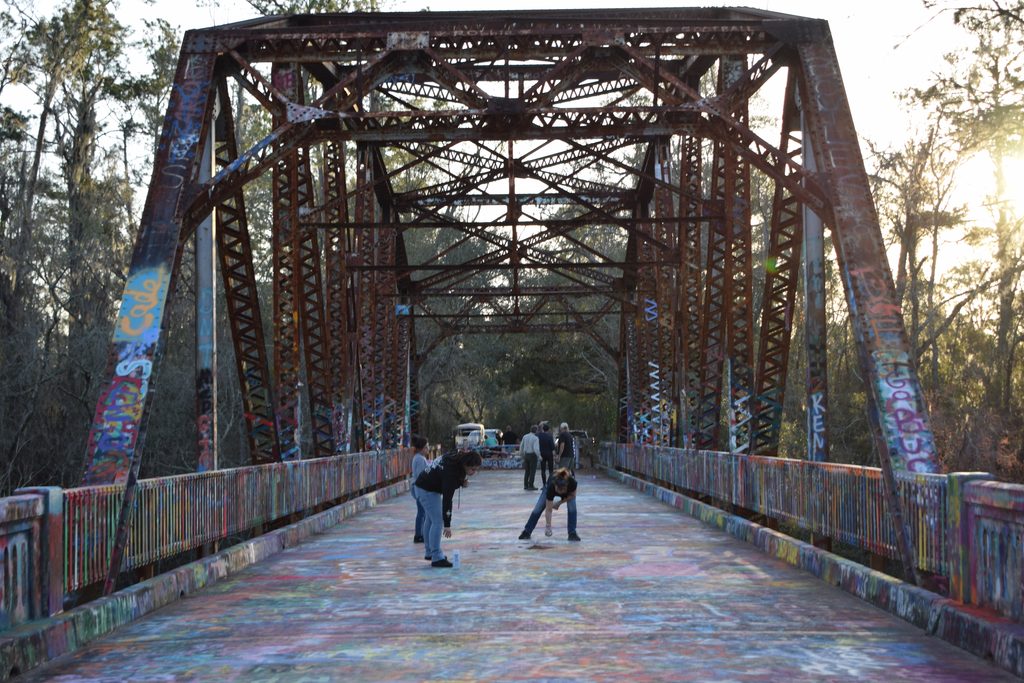
The bridge was constructed using a Parker through-truss design, a type of steel bridge recognizable by its overhead framework and polygonal upper chords.
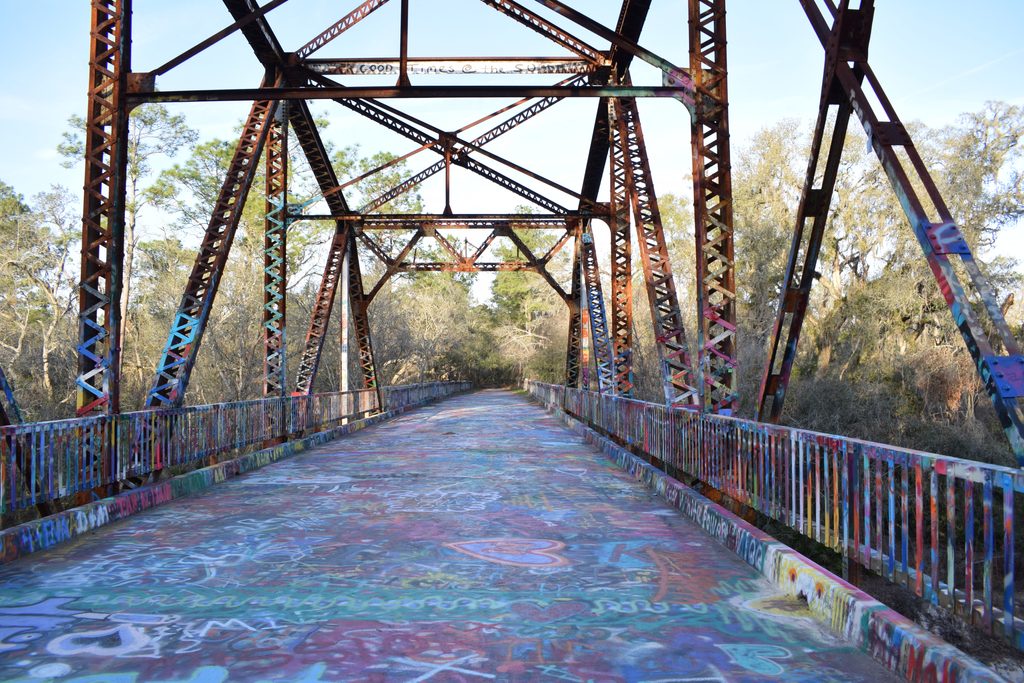
Its interconnected steel members distribute the weight of the roadway and passing traffic, allowing the structure to span the river without requiring supports throughout the main channel.
The bridge’s main steel span measures approximately 163 feet, with concrete approach spans completing the crossing.
For decades, automobiles and trucks traveled across this bridge, connecting communities and carrying generations of travelers through northern Florida.
But as transportation needs changed, so did the highways.
In 1971, a newer bridge was constructed to carry U.S. Highway 129 traffic across the Suwannee River.
The original bridge was bypassed.
Fortunately, it wasn’t demolished.
Instead, the old crossing remained standing, eventually finding a second life as a place for pedestrians, photographers, and history enthusiasts to explore.
Exploring the Graffiti-Covered Bridge
When Dusty and I arrived, the first thing that struck me was how much the Suwannee Springs Bridge reminded me of another historic crossing we’d explored: Hillman Bridge.
Both bridges featured beautiful old steel frameworks and that wonderful sense of stepping into another era.
But there was one rather significant difference.
People.
There were people everywhere.
Now, if you’ve followed Travel Made Personal for any length of time, you probably know that Dusty and I generally prefer our forgotten places a little more… forgotten.
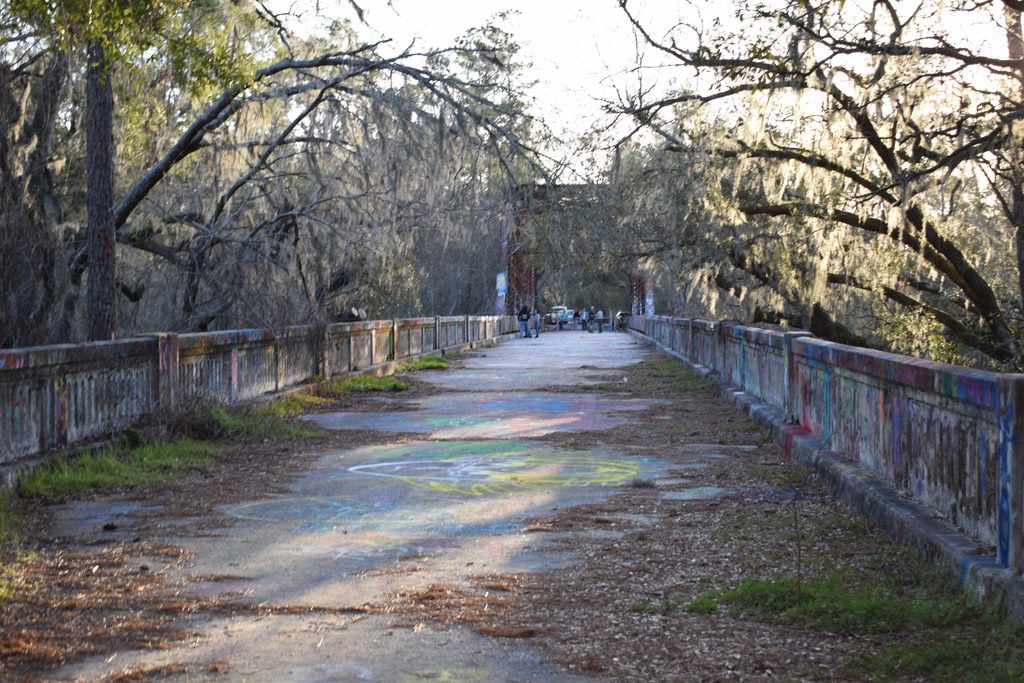
A quiet historic site with nobody around?
Perfect.
A historic bridge with a crowd?
Ew.
But we weren’t about to turn around after coming all that way.
So we grabbed our cameras and started exploring.
The old steel trusses towered above us, their weathered surfaces revealing decades of exposure to Florida’s sunshine, humidity, and rain.
Nearly every accessible surface seemed to be covered in graffiti.
Bright colors stretched across the roadway, railings, and concrete barriers. Names, messages, drawings, and elaborate designs overlapped one another, creating a constantly changing canvas across the historic structure.
It was a fascinating contrast.
Beneath all that modern artwork stood a bridge built during the early years of America’s automobile age.
And beyond the colorful steel framework, the Suwannee River continued flowing through the surrounding forest, just as it had long before the first automobile crossed here.
The Most Unusual Bathroom Stop in TMP History
Of course, no Travel Made Personal adventure would be complete without something ridiculous happening.
And this bridge certainly delivered.
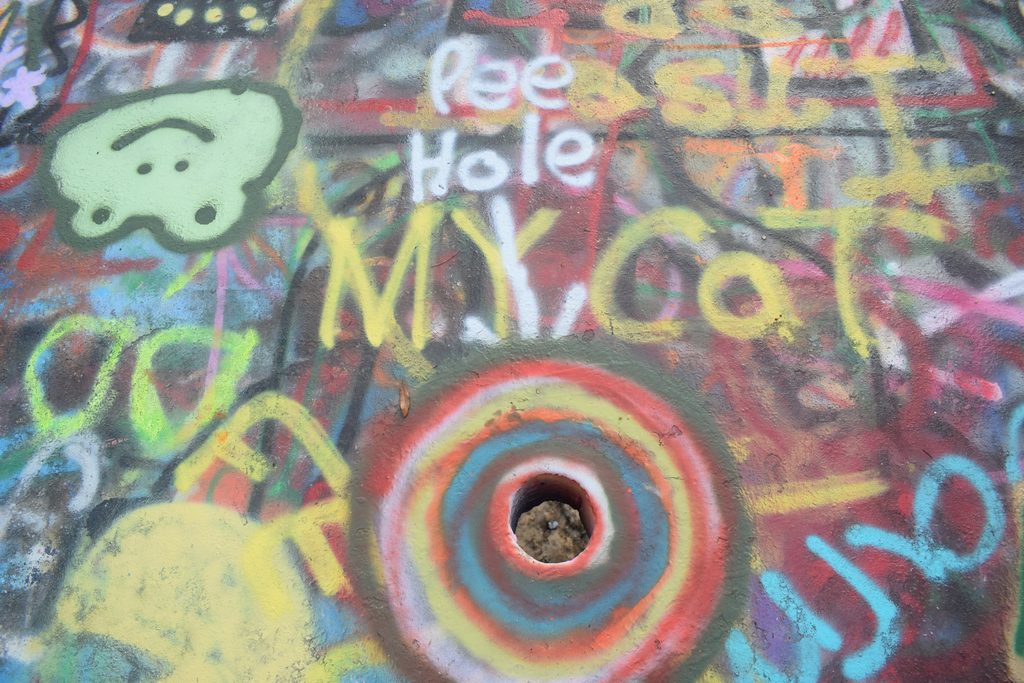
As we wandered across the graffiti-covered roadway, we discovered a particularly interesting piece of artwork.
Someone had painted a colorful target around a hole in the bridge.
Above it were the words:
“Pee Hole.“
Yes. Really.
Now, Dusty and I have traveled enough miles together that asking whether somebody needs a bathroom stop is practically a reflex.
So naturally, I nudged her and asked:
“Need to pee?”
For the first time in our traveling history, she said…
“No.”
We both burst out laughing.
Apparently, even Dusty has standards.
I couldn’t tell you who painted that particular masterpiece or what inspired them to do it.
But I can tell you that it gave us one of the funniest memories from our visit.
Some people leave their mark on history through great achievements.
Others apparently leave bathroom instructions on old bridges.
To each their own, I suppose.
The Forgotten Resort of Suwannee Springs
While the bridge itself was fascinating, there was another reason we’d come to this part of Florida.
We were searching for the ruins of Suwannee Springs, once a popular destination for visitors seeking relaxation and the supposed healing benefits of mineral spring water.
During the nineteenth century, mineral springs attracted travelers from across the country. Many believed that bathing in or drinking mineral-rich water could help treat various illnesses and improve their health.
Suwannee Springs became part of this popular resort culture.
Hotels and recreational facilities developed around the springs, welcoming visitors who came to enjoy the waters and escape the demands of everyday life.
The springs were surrounded by limestone walls, remnants of which can still be seen today.
But like many of Florida’s early mineral spring resorts, Suwannee Springs eventually declined.
Changing travel habits, shifting public interests, and the passage of time left much of the former resort behind.
The Suwannee River has witnessed the rise and disappearance of many communities throughout Florida’s history. During another adventure, we explored Suwannee River State Park, where the remains of the lost town of Columbus offer another fascinating glimpse into the region’s past.
Today, the surviving ruins offer a glimpse into an era when Florida’s natural springs were destinations for health, leisure, and social gatherings.
And standing on the old bridge, looking out across the river, I suddenly realized something.
We could see the ruins from where we were standing.
After all our searching, there they were.
Even better, I spotted what appeared to be a path leading toward them.
Well, that settled it.
We were going exploring.
An Unexpected Change of Plans
After finishing our photographs on the bridge, we headed back toward the entrance.
There was a steep embankment leading down toward the river, and from above, I could see what looked like a trail following the shoreline toward the ruins.
It seemed promising.
So down we went.
Unfortunately, what looks like a perfectly reasonable trail from a distance doesn’t always look quite so inviting once you’re standing on it.
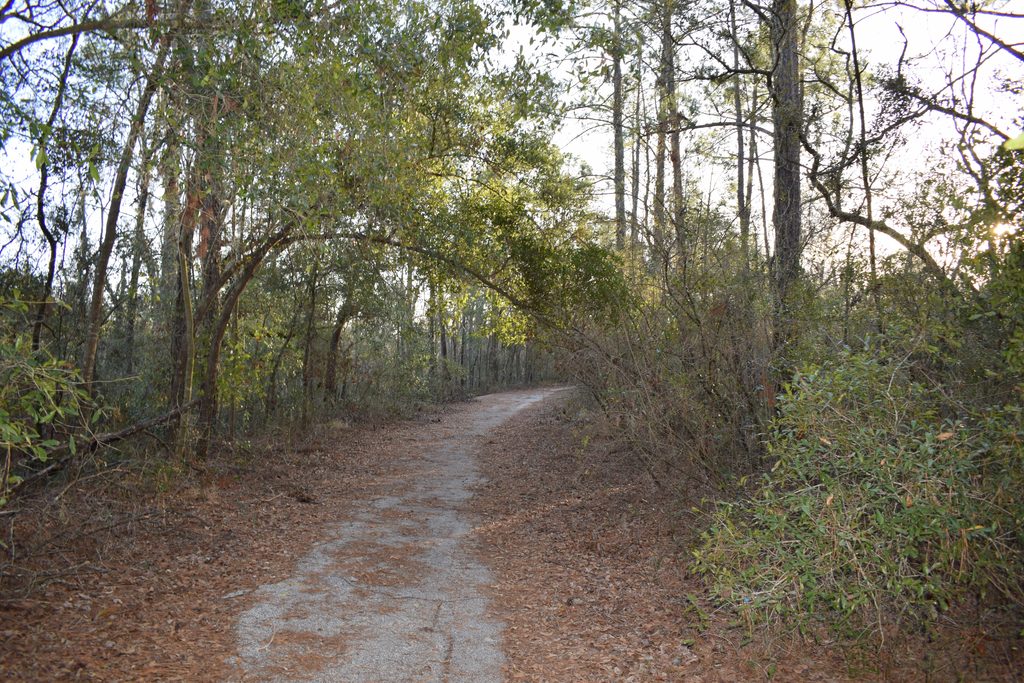
The path ran very close to the edge of the riverbank.
And while I was eager to reach the ruins, one of us wasn’t comfortable with how close we were to the drop toward the water.
Now, I’ve made plenty of questionable decisions in pursuit of an interesting historic site.
But there’s a difference between an adventure and an unnecessary risk.
We weren’t familiar with the trail, and there was no reason to push forward when one of us didn’t feel safe.
So we turned around, climbed back up the embankment, and headed toward the truck.
Were we disappointed?
A little.
But the ruins weren’t going anywhere.
We’d already learned where they were, and now we had a much better idea of what we were looking for.
Sometimes an unsuccessful exploration is simply the beginning of the next adventure.
Why the Suwannee Springs Bridge Matters
It’s easy to look at the Suwannee Springs Bridge today and see nothing more than an old structure covered in graffiti.
But beneath the layers of paint lies an important piece of Florida’s transportation history.
This bridge represents a period when automobile travel was transforming the state.
Roads and bridges connected communities, opened new routes for commerce, and made it easier for travelers to discover places that had once been difficult to reach.
For approximately forty years, the Suwannee Springs Bridge served that purpose.
Then the highway moved on.
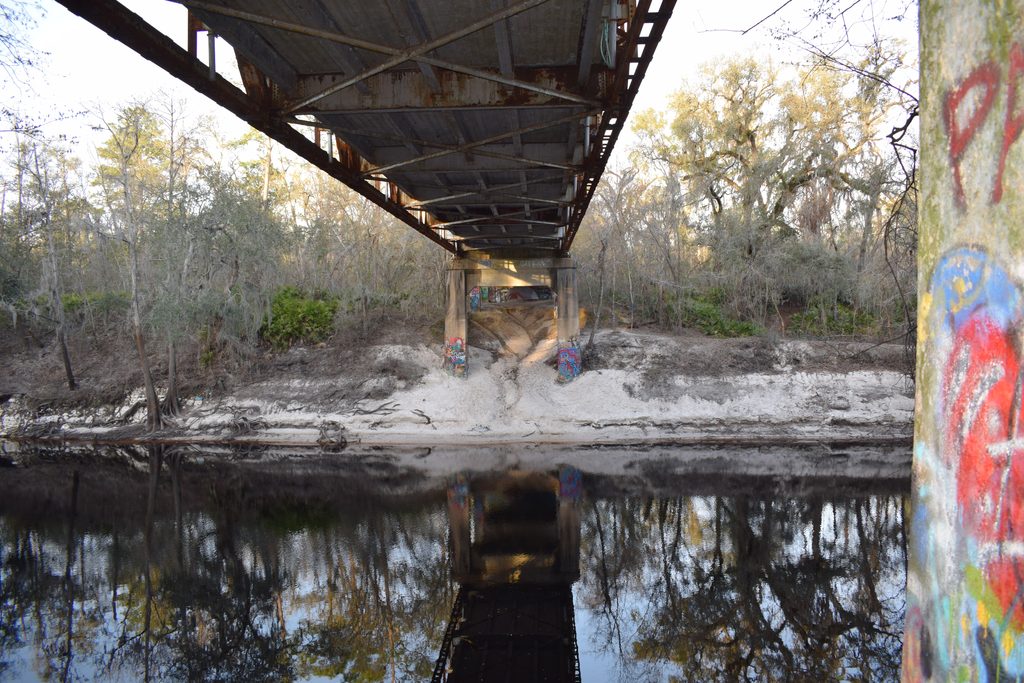
Yet the bridge remained.
Today, it offers something different: an opportunity to experience the engineering of an earlier era while looking out over a river that has shaped the history and culture of northern Florida.
Its graffiti-covered surfaces may not appeal to everyone, but they also illustrate how an old structure can acquire a new identity long after its original purpose has ended.
And perhaps that’s part of what makes places like this so interesting.
History doesn’t simply stop when a road closes or a building is abandoned.
The story continues, sometimes in unexpected ways.
Planning Your Visit to Suwannee Springs Bridge
The historic Suwannee Springs Bridge is located near Live Oak, Florida, along the former U.S. Highway 129 crossing of the Suwannee River.
The old bridge is no longer used for regular automobile traffic and has been accessible as a pedestrian crossing.
Visitors interested in historic engineering, photography, and Florida’s transportation history may find it an interesting roadside stop.
A few things to keep in mind:
- The bridge is an old structure with weathered surfaces, so watch your footing and observe any posted restrictions.
- Graffiti covers much of the bridge, including the roadway and railings.
- The bridge may attract other visitors, particularly photographers and people exploring the area.
- Be cautious around the riverbanks, where trails and embankments may be steep or uneven.
- Check current access conditions before visiting, as restrictions can change.
The nearby Suwannee Springs ruins are another historical attraction worth researching if you’re exploring this part of northern Florida.
As always, respect the historic structures, avoid disturbing the ruins, and leave the places you explore as you found them.
Final Thoughts: History Beneath the Graffiti
The Suwannee Springs Bridge wasn’t exactly what I’d imagined when we first heard about it.
I expected a quiet old crossing tucked away along the river.
Instead, we found a colorful gathering place with plenty of people, a remarkable historic steel structure, and what may be the most ridiculous bathroom suggestion we’ve ever encountered.
But we also discovered something more meaningful.
From that old bridge, we finally caught sight of the Suwannee Springs ruins we’d been searching for.
We didn’t reach them that way.
And that’s okay.
Because not every adventure ends with reaching the destination.
Sometimes it ends with a new discovery, a good laugh, and a reason to come back.
The Suwannee Springs Bridge has carried generations of travelers across the river, watched the highways change around it, and stood through decades of Florida history.
And now, it has one more story to tell.
The day Dusty finally said no to a bathroom stop.
Because every place has a story.
And sometimes, the best ones are the stories you never expected to find.
Explore More With Travel Made Personal
Enjoy discovering Florida’s forgotten places and historic landmarks? Join us as we explore the stories hiding along America’s backroads.
Watch our Stories From the Road adventures on YouTube, explore more destinations here on the blog, and subscribe to our newsletter for new discoveries, historic sites, and unexpected moments from the road.
Real Places. True Stories. Travel Made Personal.
If you see this after your page is loaded completely, leafletJS files are missing.